This week, Apple is building a Whoop, new Macs have launched, and Meta have announced some truly bizarre stuff...
iOS 27 is here - Want to know how to use it?
iOS 27 has been out for almost 2 weeks, and if you've updated and found yourself wondering what's actually changed, iPhone Essentials Plus has you covered. There's a dedicated iOS 27 module with every major feature and every Siri AI capability explained through video walkthroughs, written step-by-step guides, and downloadable PDFs. Over 400 lessons across the entire portal, and growing all the time.
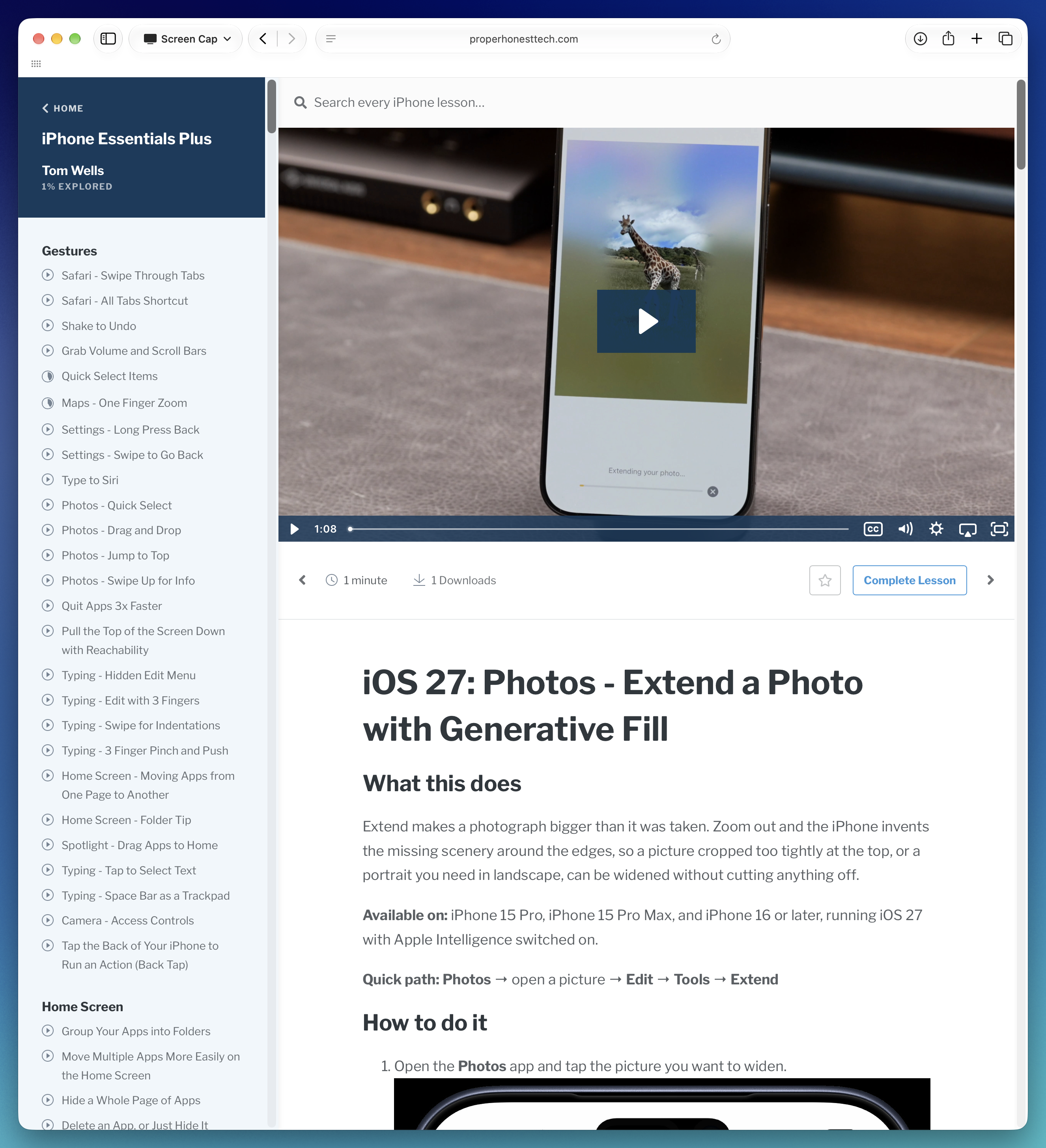
You'll also get askPHT, the built-in AI chatbot that answers your questions and links you straight to the right lesson. No more scrolling through YouTube trying to remember which video had that one tip.
And if you buy before iPhone Essentials launches, (my upcoming beginners course) you get that for free too.
Purchase Links:
Apple Is Building A Whoop. Question Is, Should It?
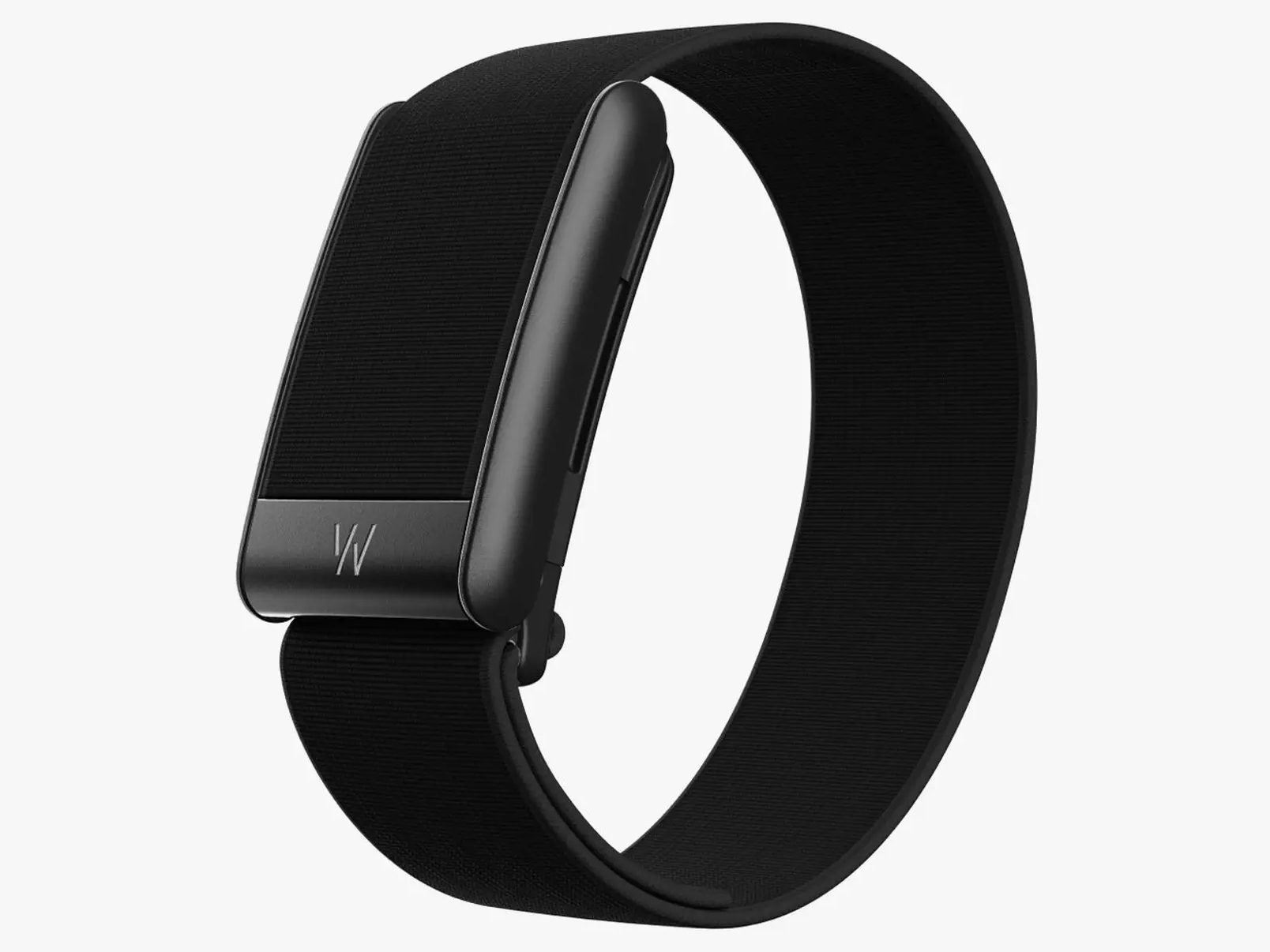
Bloomberg reported earlier this week that Apple is developing a screenless fitness band that sounds a lot like Whoop. Prototypes exist: a thin fabric band attached to a sensor-equipped module that tracks heart rate and other metrics, just without the display, the apps, the notifications, or any of the things that make an Apple Watch an Apple Watch. It's backed by Tim Cook and Eddy Cue, who now runs Apple's health efforts, and members of the Vision hardware team are involved in the engineering. If it ships at all, it won't be before 2028.
What makes this interesting is that Apple's implicit position for years has been that the Watch already covers this ground. Why buy a fitness tracker without a screen when you could have one with a screen and everything else? The Series 12 does heart rate, sleep, ECG, Readiness scores, biological age. From Apple's perspective, the Watch was always the answer. This report suggests Apple no longer believes that.
The screenless category has grown quickly. Whoop, Oura, Garmin's CIRQA, and Google's Fitbit Air have all found audiences among people who want health tracking without another screen in their life. Garmin's shares dropped 2.5% the day the report landed, which tells you how seriously the market takes Apple entering.
So does this cannibalise the Watch? Probably a little, but that's not really the point. The Watch buyer and the Whoop buyer are different people. One wants a wearable that does everything. The other specifically doesn't. Some Watch owners who only use it for fitness might be tempted by a cheaper, simpler alternative. But many screenless band buyers have never owned an Apple Watch and never will, because the product they want doesn't exist in Apple's lineup. People who wear mechanical watches and won't give them up. People who find the Watch too bulky or hate nightly charging. A fabric band with multi-day battery and no screen could be the device that finally gets them into Apple's health ecosystem. That's not cannibalisation. That's expansion.
The risk is that Apple builds something too much like a Whoop and not enough like an Apple product. Add a display, or Siri, or notifications, and it becomes a worse Apple Watch rather than a better Whoop. The report also says Apple is considering smart rings and different Watch sizes, which suggests nobody has settled on a direction yet.
For now, it's a prototype, and Apple kills prototypes all the time. But the Watch has been essentially the same product for ten years, and the fact that Apple is clearly rethinking what its wearable lineup should look like is a good sign.
New Mac mini and Studio Debut
The M6 Mac mini and M5 Ultra Mac Studio both launched on Tuesday, and the reviews are remarkably consistent: enormous performance gains, eye-watering prices, and a Mac Studio that has quietly stopped being a creative workstation and become an AI machine.
The M6 Mac mini is the easier story. Apple's first 2nm chip, the fastest single-core scores of any Mac ever, and up to four times faster at AI tasks than the M4. The only complaint is the $899/£899 starting price, a $300 jump from where the M4 mini launched less than two years ago.
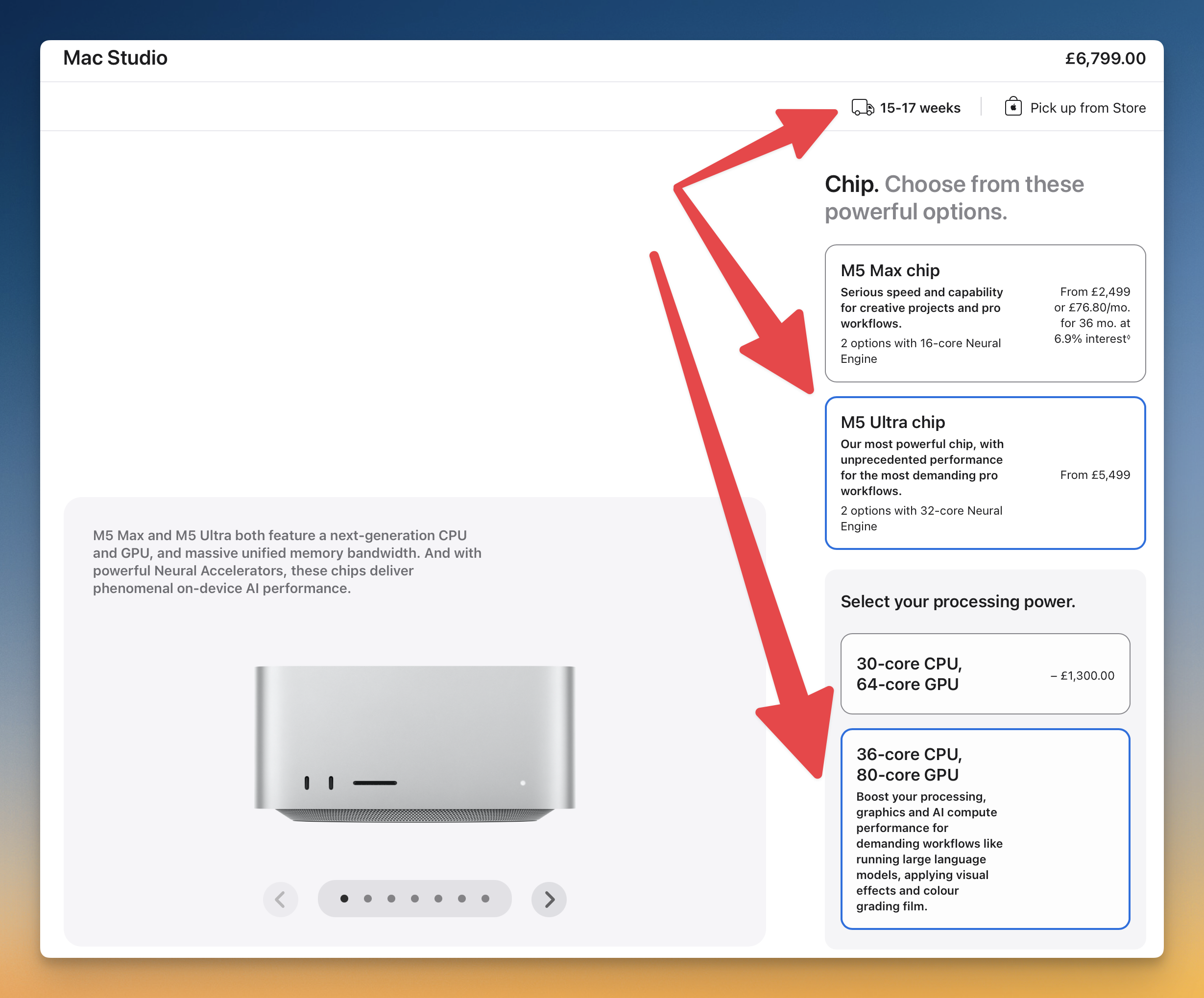
The Mac Studio is more complicated. Every reviewer agrees the M5 Ultra is phenomenal. Local AI processing beats Nvidia's DGX Spark. With 256GB of unified memory, you can run models like DeepSeek v4 Flash entirely on device. Federico Viticci at MacStories called it "the dream machine for local AI agents." CNET said there's "simply nothing else like it."
But read those reviews and notice what's missing. Nobody's talking about Final Cut Pro or Logic. The entire conversation has shifted to how many billion parameters it can hold in memory. John Ternus's own launch-day post described it as a leap in performance "especially for AI." That's the pitch now.
Which leaves me in an odd position. My M2 Ultra still does everything I need, and I've assumed for two years the M5 Ultra would be my next upgrade. Now that it's here, I'm not sure it's aimed at me. The gains for video editing are incremental. The gains for AI are transformative, but I cut videos, I don't train models. And $5,499/£5,499 for a base config that still ships with 1TB of storage is a hard sell for improvements I'd barely touch.
Not that I could get one anyway. The specced-out configurations are already backordered well into next year.
So the M2 Ultra stays, and I'm left wondering what the creative professional's upgrade path actually is. The OLED MacBook Pro? The M7 Ultra in 2028? Apple just released the most powerful Mac ever made, and it's not the one I've been waiting for.
Meta Just Announced Lots, and I Don't Want Any Of It...
Meta Connect took place on Wednesday, and by any measure it was the most comprehensive hardware event the company has ever staged. Four new devices, a new AI agent, a surprise pendant, and a K-pop collaboration. Mark Zuckerberg is no longer hedging his bets on what comes after the smartphone. He's decided, and the answer is everything you can strap to your face or hang around your neck.
Let's go through it, because there's a lot.

The Ray-Ban Meta Gen 3 is the refresh you'd expect. Longer battery life, new frame styles including an Aviator, better camera, and Meta's new Muse AI baked in. Available now from $449/£449. Alongside it, Meta launched its first camera-free glasses, the Ray-Ban Meta Audio, at $349/£349, shipping October 13th. No camera, just open-ear speakers, microphones, and AI. For people who want the smart glasses experience without the privacy concerns of a camera pointing at everyone they talk to, that's a sensible product, and it's telling that Meta felt the need to make it. There's also a cheaper sports model called the Meta Adventurer at $249/£249, and special editions designed by K-pop star Lisa and Kylie Jenner, because of course there are. Meta says there'll be over 100 styles of AI glasses by the end of the year.
Then there's the Meta VR Glasses, which is the product Meta clearly wants you to compare to the Vision Pro. It's an ultra-thin headset, described as being as wearable as glasses, that delivers what Meta calls an "IMAX-grade cinema experience" alongside full spatial computing. Holographic avatars for video calls on WhatsApp and Zoom. Eye and hand tracking. Voice control through Muse. It's $1,299/£1,299, which is a third of what Apple charges for Vision Pro, and it ships in spring. Given what's happened to the Vision Pro over the past six months, the timing is not subtle.
And then Zuckerberg pulled something out of his pocket. The Muse Charm is a small pendant-style device, roughly the size of an earbud case, with a two-inch touchscreen, 5G connectivity, microphones, a speaker, and a fingerprint sensor. It contains Meta's Muse AI agent in a standalone form factor. You clip it to your keys or wear it around your neck, and you talk to it. It can make purchases on your behalf through Walmart, Instacart, Best Buy, and Expedia. It listens. It responds. It's always with you. Pricing wasn't announced, but it ships this autumn. If like me, you're old enough to remember Tamagotchi, it's definitely giving off serious Tamagotchi vibes.
Now, some of this is genuinely interesting. The audio-only glasses are a smart move that addresses a real concern. The VR Glasses at $1,299 could do serious damage to whatever remains of the Vision Pro's market. The hearing enhancement feature, which uses the glasses' microphones to amplify voices in noisy environments for a one-time fee of $149, is the kind of practical accessibility application that I wish Apple had thought of first. And Muse Space, a private virtual environment that isolates your AI interactions from the wider Meta platform, is at least an acknowledgement that people have concerns about where their data goes.
But here's where I land, and I suspect a lot of you are in the same place. I don't trust Meta with any more of my data than I already reluctantly hand over through WhatsApp and Instagram. I use both because everyone I know uses both, and that's the only reason. The idea of voluntarily strapping a Meta camera to my face, or hanging a Meta microphone around my neck, or telling a Meta AI agent to buy things for me from Walmart, is a bridge I'm not willing to cross. Not because I think the products are bad. Some of them look excellent. But because the company behind them has a track record on privacy that no amount of "Muse Space" branding is going to fix.
That's the fundamental problem Meta faces with every hardware product it launches. The technology might be brilliant. The prices might be competitive. The design might be lovely. But at the end of every purchase decision is the question: do I want Meta to know this much about my life? For me, the answer is no, and I suspect that's true for a significant number of people who would otherwise be exactly the target market. Meta is building the most compelling wearable ecosystem outside of Apple, and its biggest obstacle isn't the hardware. It's the logo on the box.
Which is, of course, precisely where Apple's opportunity lies. Apple's smart glasses are still a year or more away. The camera AirPods are 2027. But when they arrive, they'll be built by a company whose entire brand is built on the promise that your data stays yours. Whether that promise is always perfectly kept is a fair debate, but the perception is real, and in a category where you're literally wearing a camera and microphone, perception is everything.
Meta just laid out its vision for the next five years of computing. It's ambitious, it's broad, and in places it's genuinely clever. I just won't be wearing any of it.
Tip of the Week
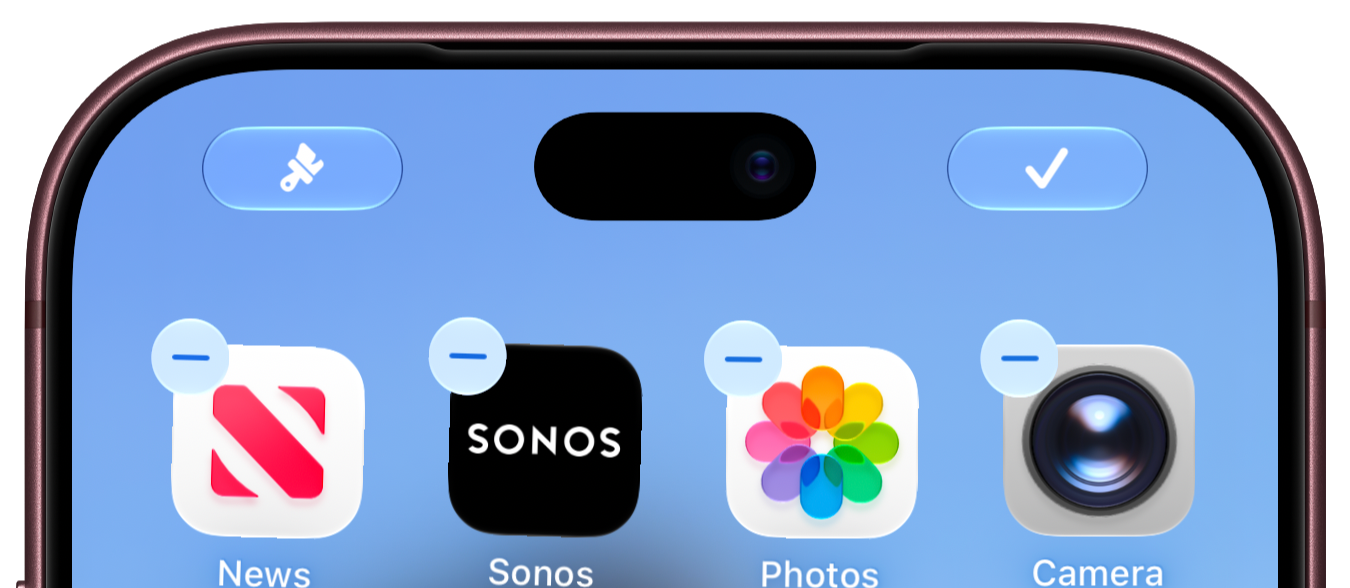
In iOS 27, the Edit Home Screen button no longer says Edit.
When you long-press on the Home Screen now, the Edit button is replaced by a paintbrush, while the Done button is replaced by a Tick.
You'll be pleased to know that functionality remains untouched.