This week, Home products are coming, a new Head of M&A for Apple, and a very strange collaboration is around the corner.
Welcome Home. And then, Welcome Back...
Apple sent out invitations yesterday for a “Welcome Home” event on Tuesday October 13th, confirming what Mark Gurman reported last week: the HomePad, a new Apple TV, and a new HomePod mini are all coming, and they’re getting a proper event rather than a press release. I covered the three devices in detail last week, so I won’t rehash the specs here. If you missed it, the short version is that all three are built around Siri AI, the HomePad is the one I’m most excited about, and I’m planning to buy three Apple TVs and disconnect my LG OLEDs from the internet.
Which makes the other big home news this week a little awkward.
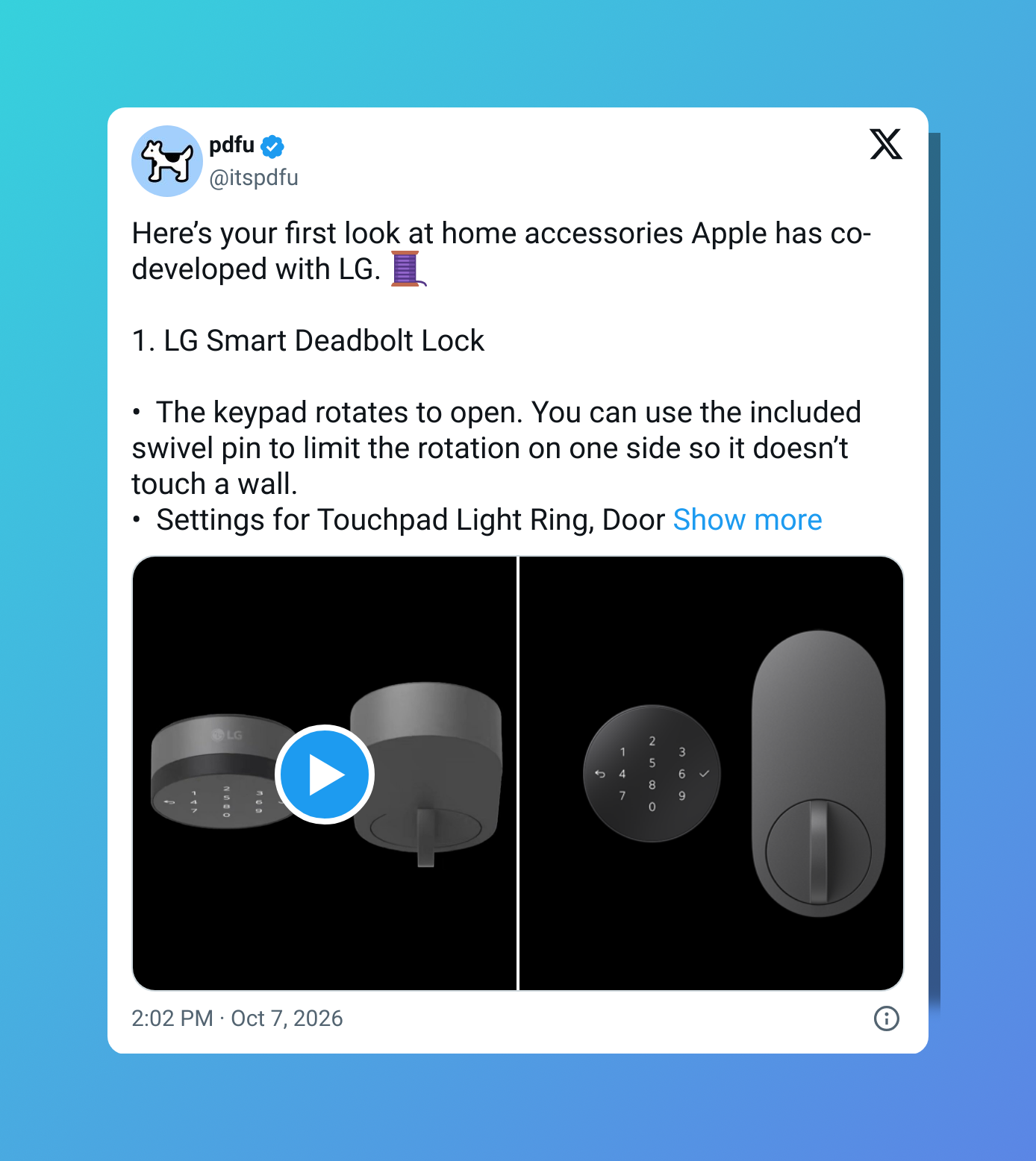
Bloomberg reported on Tuesday that Apple has been co-developing a suite of smart home accessories with LG. Seven products in total: a smart deadbolt lock, a thermostat, a temperature and humidity sensor, a video doorbell, an indoor camera, an outdoor camera, and a floodlight camera. Leaker pdfu has since shared what appear to be the first images, and code in iOS 27.2 reveals a new “second-party” designation in Apple’s HomeKit database that gives these accessories special treatment from the operating system. Schneider Electric is also on the list with a thermostat and sensor of its own. LG will handle manufacturing, branding, and support. Apple designed them, but they won’t say Apple on the box.
I’ll be honest: I need to see this to understand it, because on the face of it, it goes against everything Apple has always been. Apple makes the whole widget. That’s the pitch. That’s why the ecosystem works. The company that refused to let anyone else build an iPhone, that killed the AirPort router rather than license it, that dropped the LG UltraFine monitors the moment it could build its own display, is now putting its name behind cameras and door locks made by a third party. And not just any third party. LG, the TV manufacturer that was the subject of a network-scanning and content-recognition investigation only last month, and whose televisions I’m about to spend several hundred pounds routing around specifically because of what its software does with my data.
Now, there’s a reasonable case for this. Gurman points out that second-party partnerships let Apple expand its home ecosystem quickly without shouldering the cost and complexity of manufacturing and supporting a dozen different accessories. The camera and doorbell market is already well served by Ring, Nest, Eufy, and Aqara, and Apple doesn’t necessarily need to own that category to own the hub that controls it. And crucially, Gurman has clarified that the LG cameras are “completely separate” from Apple’s own privacy-focused home camera and sensor, which are still coming next year. So Apple’s first-party camera isn’t dead. It’s just later.
But the optics are strange, and the trust question is real. If the LG doorbell runs on Apple’s HomeKit Secure Video and the footage goes to iCloud, then fine, that’s the Apple privacy model and the LG badge is just a manufacturing detail. If any of that data touches LG’s own infrastructure, I’m out, and I suspect a lot of people who buy into Apple’s home ecosystem specifically for the privacy story will feel the same. That’s the question I’ll be listening for on Tuesday, and I’d be surprised if Apple doesn’t address it head-on. The accessories themselves aren’t expected to ship for several months, so October 13th will likely be a preview at best, but the partnership itself will need explaining to a sceptical room.
And then there’s the other event.
Bloomberg reported yesterday that Apple is planning a second wave of product announcements “on or around Tuesday October 27th,” with an online presentation and an in-person component for the press, geared towards creative professionals. On the list: the all-new 14-inch and 16-inch MacBook Pro with OLED touchscreens, a Dynamic Island, M5 Pro and M5 Max chips, and a design that’s reportedly “significantly lighter” than the current models. An M6 iMac and an M6 entry-level MacBook Pro, both keeping their current designs. The OLED iPad mini with its A20 Pro chip and relocated camera. And the 512GB M5 Ultra Mac Studio that Apple promised for late October.
So the shape of October is now clear. Home products on the 13th. iPhone Duo pre-orders on the 16th. Duo in hand on the 23rd. Macs and iPad mini on the 27th. That’s the busiest month Apple has had in years, and it’s arriving during a period where the company is also dealing with a Pro Max cellular recall, skin irritation reports on the new Watches, and a $5.7 billion patent verdict. John Ternus’s first autumn as CEO is not a quiet one.
For what it’s worth, the MacBook Pro is the one I’m watching most closely from the second batch. If it really is approaching MacBook Air weight with an OLED touchscreen and M5 Max performance, it might finally answer the question I’ve been asking since the M5 Ultra Mac Studio launched: what’s the creative professional’s upgrade path? Full coverage of the home event next Friday, and the Macs the week after.
Your Devices Got Major Updates; Here's How To Use Them
iOS 27 and macOS Golden Gate are the biggest software updates Apple has shipped in years, and if you’ve installed them and thought “right, now what?”, that’s exactly what iPhone Essentials Plus and Mac Essentials Plus are for. The iPhone course has over 400 lessons, with a full iOS 27 module covering every new feature and every Siri AI capability, plus askPHT, the built-in AI chatbot that answers your question and sends you straight to the right lesson.
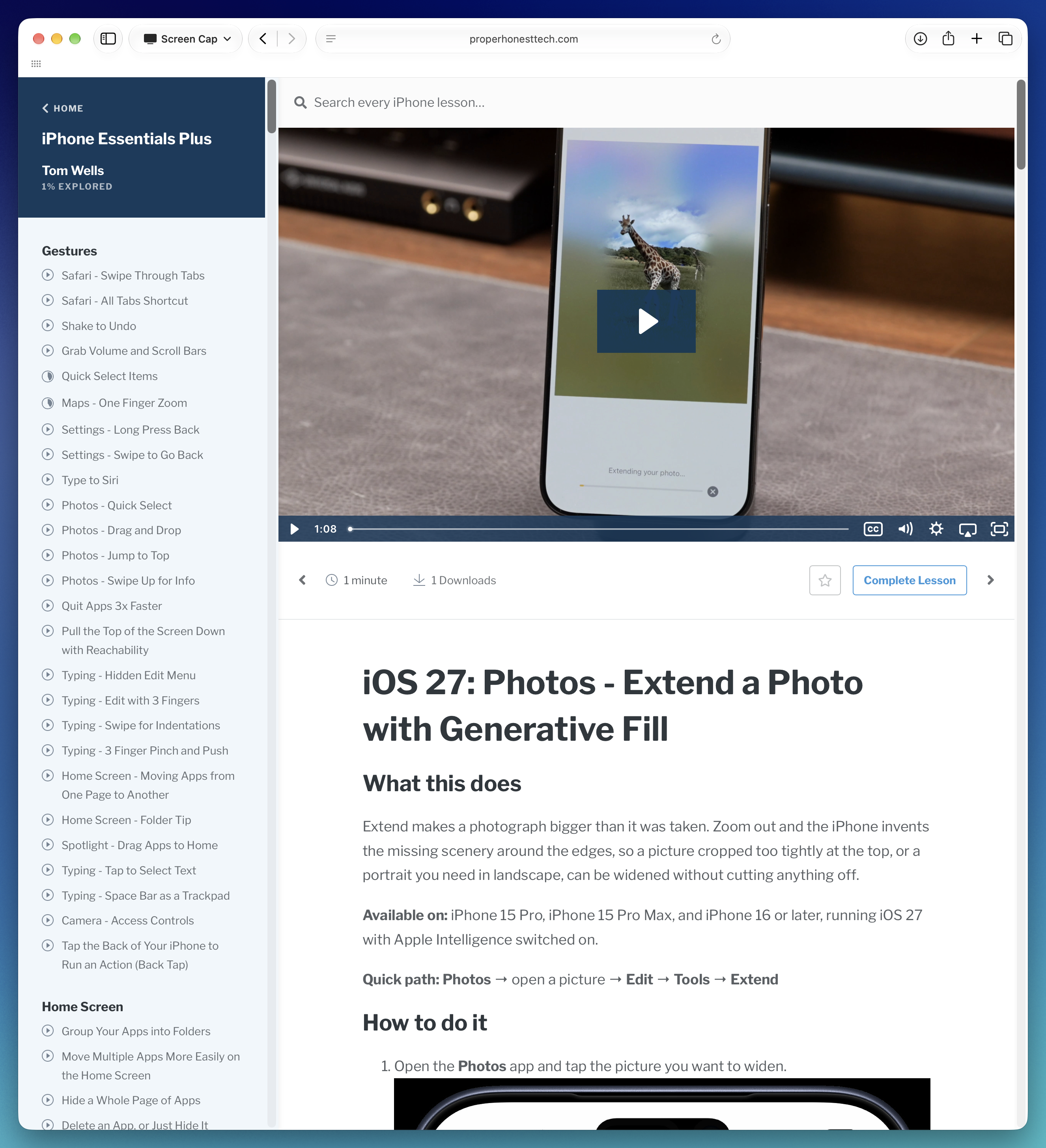
The Mac course has just had a complete refresh, with twenty new lessons on macOS Golden Gate already in and a lot more arriving over the next couple of months. Every lesson comes with a video, a written step-by-step guide, and a PDF you can keep. One payment, lifetime access, all future updates included, and you can now pay in dollars, pounds, euros, or Canadian or Australian dollars. If you’ve been meaning to get to grips with your devices properly, this is the moment.
Purchase Links:
Apple Has a New Dealmaker
Buried under the event invitations and the LG leaks this week was a leadership change that got very little attention but could end up shaping Apple’s next few years more than any single product. Apple has a new head of mergers and acquisitions.
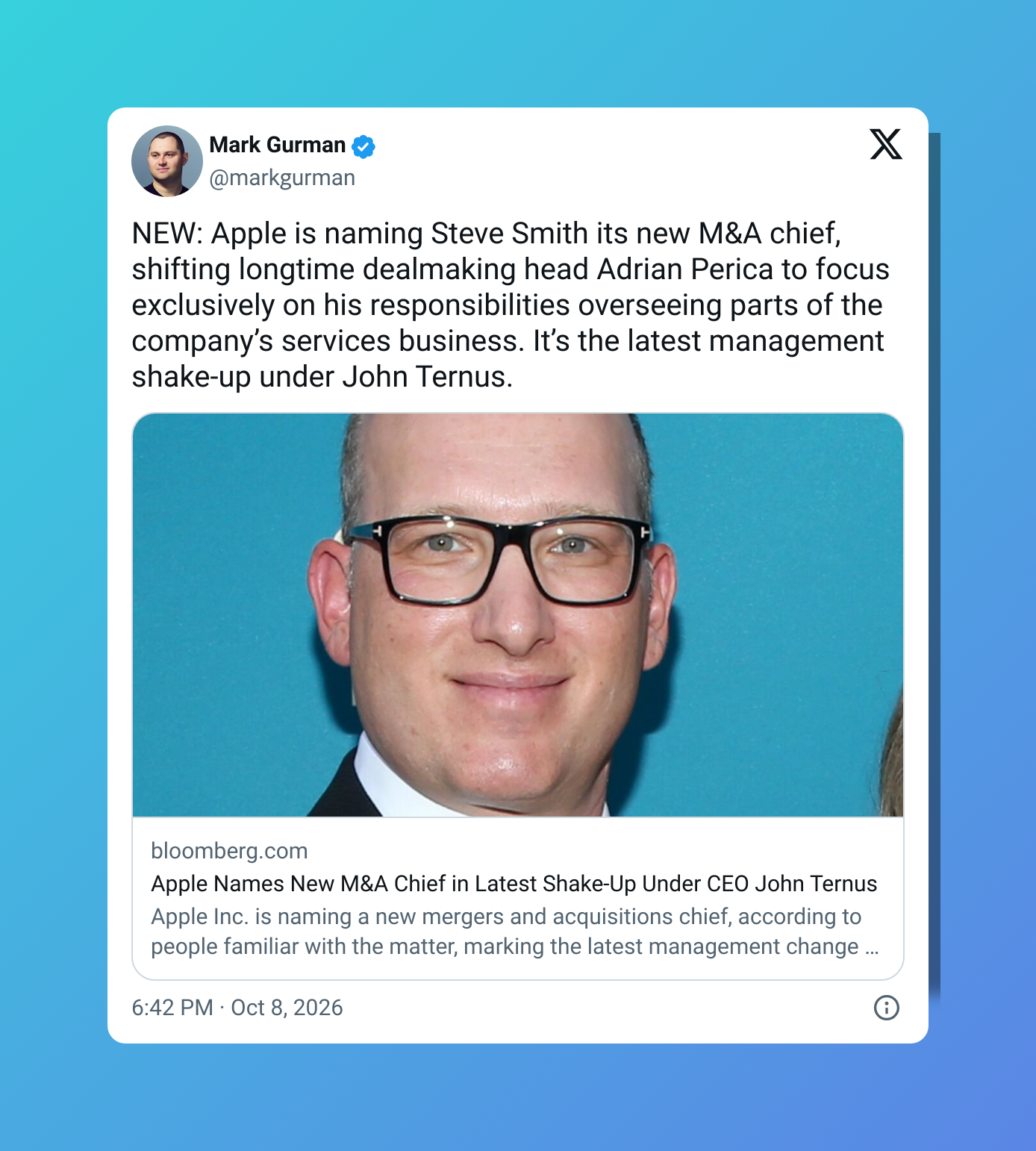
Steve Smith, a longtime Apple veteran who has spent years as the number two in corporate development, is taking over the M&A function from Adrian Perica, who has run it since joining the company in 2009. Perica isn’t leaving. He’s moving fully into Eddy Cue’s services organisation, where he already oversees iCloud, Fitness+, and Apple News, and where Bloomberg says he’s now a leading candidate to eventually succeed Cue himself. Carson Oliver, who’s been running the App Store day to day since Phil Schiller stepped back in August, has been formally promoted to vice president. It’s a reshuffle, not a clear-out, and on the surface it reads like routine housekeeping for a new CEO settling in.
But there’s a detail in there that’s worth pausing on. Perica reported directly to Tim Cook. Smith will report to CFO Kevan Parekh. M&A is moving back under finance for the first time since 2019.
That’s a signal. Under Cook, M&A sat at the CEO’s elbow, which made sense for a company that did a lot of small, quiet, strategic acquisitions: an AI startup here, a chip design team there, buy the talent and the patents, fold them in, never issue a press release. Apple has been one of the most acquisitive companies in tech by volume, and one of the least acquisitive by value. It almost never buys anything big. Beats in 2014, at $3 billion, remains its largest deal ever. For a company worth $5 trillion, that’s remarkable restraint.
Moving the function under the CFO could mean one of two things, and I genuinely don’t know which. The charitable read is that Ternus wants to focus on products and is handing the financial plumbing to the person who manages the money, which is where M&A sits at most large companies. The more interesting read is that Apple is preparing to do more deals, bigger deals, or more complex deals, and wants them structured and evaluated with a finance-first discipline rather than as strategic favours from the CEO’s office.
The context makes the second reading plausible. M&A at Apple doesn’t just cover acquisitions. It handled the OpenAI partnership that put ChatGPT into Siri, a deal that has since collapsed into a trade secrets lawsuit. It handled the Google Gemini arrangement that now powers Siri AI. It’s presumably involved in whatever is or isn’t happening with PrismML, the compression startup Apple was reportedly courting in July. Apple is more dependent on outside AI partners than it has ever been on outside anything, and the person structuring those relationships now reports to the CFO rather than the CEO. Whether that’s about putting the deals on a tighter leash or giving them more room, the next 12 months will tell.
There’s also the question of what Apple might actually want to buy. The memory shortage has exposed how exposed Apple is to component suppliers. The AI gap has exposed how far behind its in-house models sit. The smart glasses and home push rely on partnerships with LG, Schneider, and others. Historically, Apple has solved these problems by hiring teams and building slowly. If Ternus decides that’s too slow, and everything we know about him suggests he thinks Apple has been too slow, then a reorganised M&A team under the CFO starts to look like groundwork rather than reshuffling.
Or it’s just an org chart change and I’m reading tea leaves. That’s entirely possible. But Perica being lined up for Cue’s job, Oliver formalised at the App Store, Smith under Parekh, and all of it landing in Ternus’s first six weeks, feels less like tidying and more like a new CEO quietly arranging the pieces for a company that intends to move differently. We’ll know what that looks like when Apple buys something.
Tip of the Week
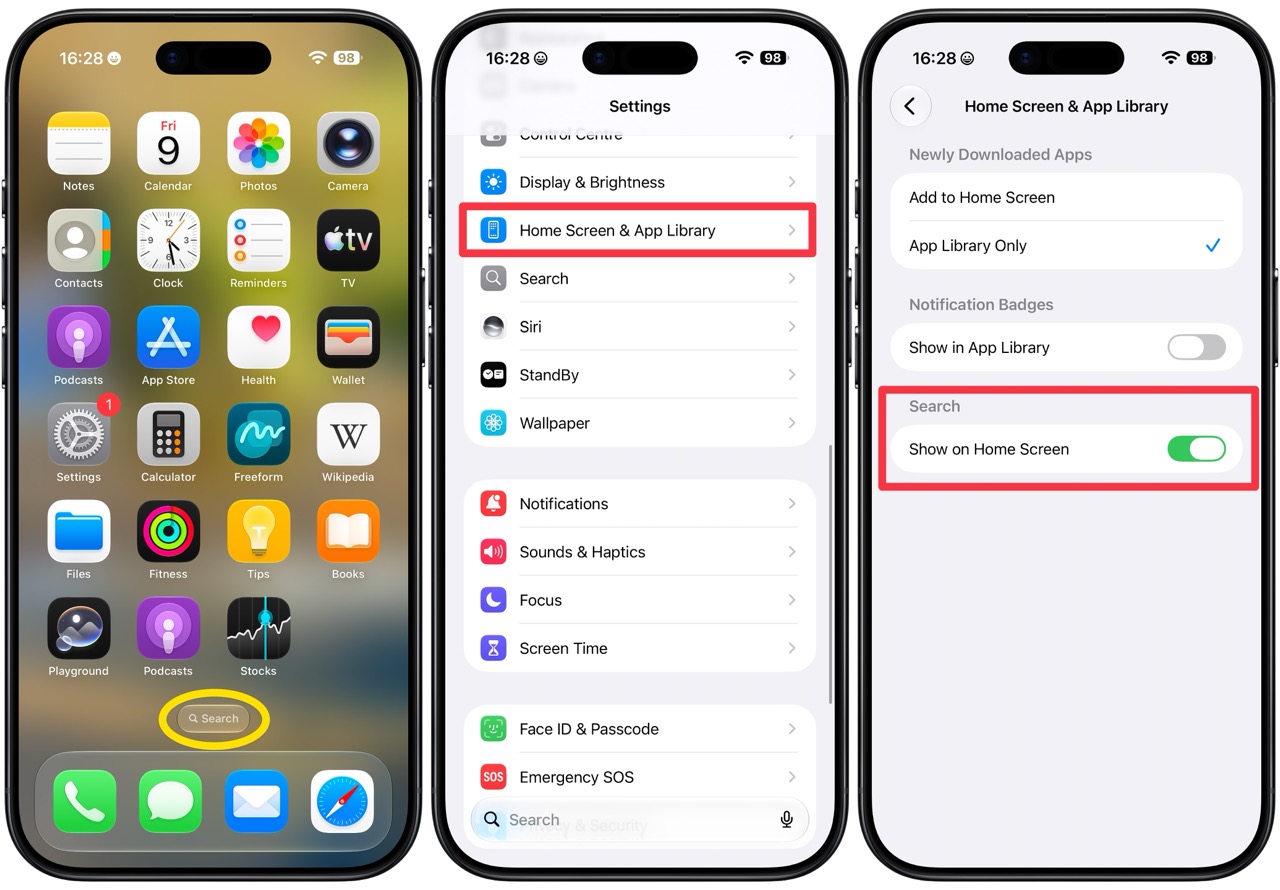
You can enable or disable the Search Button on the Home Screen of your iPhone, by visiting Settings, then Home Screen & App Library, and looking for the Show on Home Screen toggle switch.