This week, the HomePad has appeared out of nowhere, plus more Apple Home products, and the remaining launches between now and Christmas...
HomePad Is Almost Here!
Mark Gurman reported earlier this week that Apple is planning to unveil three new home products on Tuesday October 13th: a brand new smart home hub, the first HomePod mini update since 2020, and the first new Apple TV since 2022. Apple hasn't confirmed anything yet, but Gurman's track record on this sort of thing is close to flawless, and an event invitation is likely to land within the next week.
What's interesting about the timing is that it comes before the iPhone Duo goes on sale. Pre-orders open on the 16th, three days after this event, with the device itself arriving on the 23rd. Apple is clearly keen to get the home story out there while attention is still high from September, rather than waiting until the Duo has sucked all the oxygen out of the room. It's also one of the first genuinely new product categories under John Ternus, which makes it a meaningful early marker of where his Apple is headed.
Let's take them one at a time.
The HomePad
Nobody knows what Apple will actually call it, but "HomePad" has stuck. Codenamed J490, this is Apple's first dedicated smart home display, and it's the device I'm most excited about. According to Gurman, it features a six-inch square display, roughly as thick as an iPhone, with bezels reminiscent of older iPads. The countertop version reportedly draws on the iMac G4's lamp-like silhouette, with a round metal base housing speakers and microphones and an articulated arm supporting a tilting screen. There's a wall-mounted version too. It's USB-C powered with no internal battery, finished in Apple's standard grey aluminium, and has a single FaceTime camera on the front.
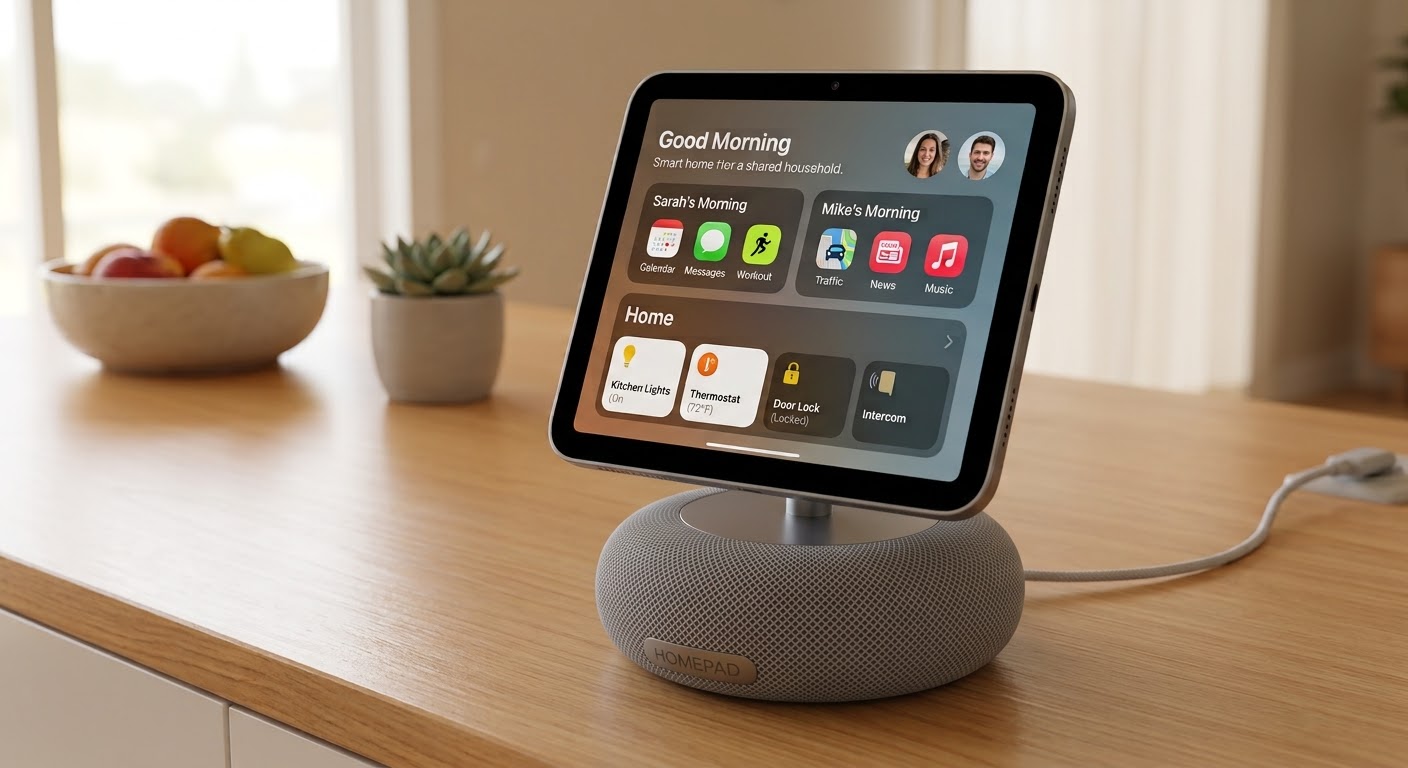
The hardware has reportedly been ready for a long time. Apple has been testing it in employees' homes while waiting for Siri AI to catch up, and that wait is now over. The pitch is a central hub for your home that recognises different household members, surfaces personalised information based on who's in front of it, controls your smart home accessories, handles FaceTime calls, and acts as the physical embodiment of Siri AI in your kitchen or living room. Core apps are expected to include Calendar, Messages, Photos, FaceTime, Notes, Reminders, Music, and Podcasts.
That multi-user piece is the bit I'm most curious about, because it's where every shared smart display has historically fallen apart. My wife and I have separate Apple IDs. So when the HomePad is sitting in the kitchen surfacing messages, showing calendar appointments, or running a photo slideshow, whose messages? Whose calendar? Whose photos? Based on code found in macOS 26.7 and Gurman's reporting, the answer appears to be that it uses facial recognition and what Apple calls "ambient sensing" to work out who's standing in front of it, then switches profiles automatically. Walk up and it shows your stuff. Your partner walks up and it shows theirs. Code suggests personal widget data can be restricted to the specific user whose iPhone is detected nearby, which would be a sensible privacy layer for a device that's always on in a shared room. What happens when you're both standing there, or when the kids wander past, is one of the questions I'll be watching for on the 13th. If Apple has genuinely cracked this, it'll be the thing that sets it apart from everything Amazon and Google have shipped.
There's also a strong sign the launch is imminent. MacRumors confirmed earlier today that Apple Stores around the world have received confidential boxes stamped "Do Not Open Until October 8." They're believed to contain visual merchandising for new product displays, which would line up with a reveal in the week of October 5th and in-store availability on the 13th. Apple doesn't ship marketing materials for products it's not about to announce. This is happening.
Amazon and Google have had products in this category for years, but neither has the ecosystem integration or the privacy positioning that Apple can bring. This is the one I've been waiting for, and it looks like I'm going to have yet another lunchtime of pre-order anxiety ahead.
Apple TV
The new Apple TV is expected to keep the same design but gain a significantly faster processor, likely an A17 Pro or newer, 8GB of RAM, Apple's own N1 wireless chip with Wi-Fi 7, full Siri AI support, and a revised Siri Remote. The current model dates from 2022, so this is long overdue.
I'm planning to buy three. One for each TV in the house. And the reason is only partly about Siri AI.
All three of our TVs are LG OLEDs, and if you've followed the news over the past month, you'll know that LG has been under serious scrutiny over what its smart TV software is actually doing. An investigation by Gamers Nexus and Level1Techs found that LG's webOS TVs scan local networks to identify nearby devices, collect data about surrounding Wi-Fi networks, and use Automatic Content Recognition to fingerprint what you're watching, including content from HDMI inputs. LG has pushed back, saying ACR is opt-in and that it doesn't record conversations, but the Texas attorney general had already forced a settlement in May requiring clearer consent, and the broader picture of a TV manufacturer running an advertising business built on household data is not one I'm comfortable with.
My plan is to disconnect all three TVs from the network entirely and route everything through Apple TV boxes. The TVs become dumb panels. Apple TV handles the apps, the streaming, the Siri, everything. It's not a perfect solution, but it means the only company processing data about what my family watches is one whose business model isn't built on selling it.
HomePod mini
Of the three, the HomePod mini is the one with the least obvious upgrade story. The design is reportedly unchanged, with a faster processor for Siri AI and five new colours: green, pink, blue, white, and black. The current model has been on sale since 2020, which is an eternity in Apple terms, and a six-year-old chip trying to run a modern AI assistant was never going to happen.
What has me genuinely curious is the sound. The HomePod mini has always punched well above its weight for something that size, and if Siri AI finally makes it the smart speaker it always should have been, that becomes a very compelling little device for the money. Assuming the HomePad sounds good enough to take over kitchen duties, which I'm hoping it will, I'd probably put a HomePod mini in the office. Whether the processor upgrade alone justifies replacing one that still works perfectly well is a fair question, and one I'll be able to answer properly once I've tested it.
What this means
Taken together, this is Apple's most coordinated push into the home in years. All three devices are built around Siri AI, which means Apple is betting the house, so to speak, on the new assistant being good enough to anchor an entire product category. Having lived with Siri AI since the first beta, I think that bet is reasonable. It's not perfect, but it's finally good enough to build hardware around.
You Can Now Buy My Products in Your Currency
For the past year or two, one of the most common questions I've had from readers outside the US has been "can I pay in pounds?" or "can I pay in euros?" The honest answer was always no, you had to pay in US dollars and eat whatever conversion fee your bank decided to charge. That's finally changed. As of this week, both iPhone Essentials Plus and Mac Essentials Plus (and the bundle) can be purchased in five currencies: US dollars, Canadian dollars, Australian dollars, euros, and pounds sterling. Pick your currency on the sales page and that's what you'll be charged, with no conversion fees and no surprises on your statement.
It's a small thing, but it's one I've wanted to sort for a long time, and for anyone who's been holding off purely because of the currency hassle, that reason is now gone.
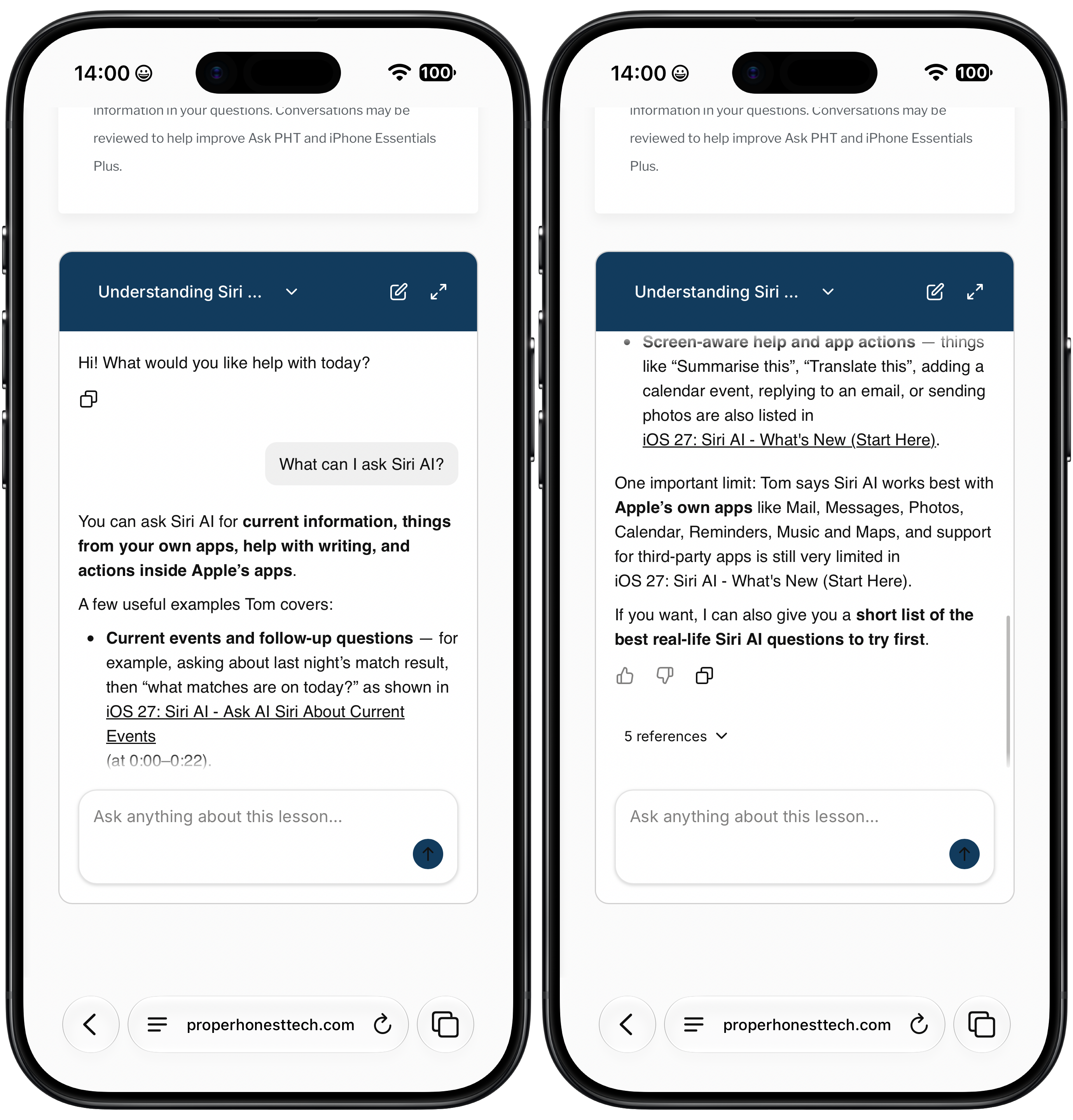
As a reminder of what you're getting: iPhone Essentials Plus is a library of over 400 lessons covering everything your iPhone can do, each with a video walkthrough, a written step-by-step guide, and a downloadable PDF. The iOS 27 module is live and growing weekly, and askPHT, the built-in AI chatbot, will answer your questions and point you straight to the right lesson. Mac Essentials Plus is the Mac equivalent, with macOS 27 content and a portal refresh landing very soon. And if you buy iPhone Essentials Plus before iPhone Essentials, the beginner course, launches, you get that one free.
Purchase Links:
Rumour Roundup - What's Still Coming?
The home event is the headline, but it's been a busy week for leaks across the rest of Apple's lineup. Here's a quick tour of what else has surfaced.
iPad mini: the biggest upgrade it's ever had
Code dug out of Apple's own software by MacRumors contributor Aaron Perris has essentially confirmed the next iPad mini, and it's a far bigger update than I expected. The A20 Pro chip, the same silicon that's in the iPhone 18 Pro, two full generations ahead of the A17 Pro in the current model. 12GB of RAM, up from 8GB. A front camera moved to the landscape edge, finally matching every other iPad. A new vibration-based speaker system with a small cutout at the top of the display. Proper water resistance for the first time on any iPad. And, if the wider rumours hold, an OLED display with 120Hz ProMotion, slightly larger than the current 8.3 inches.
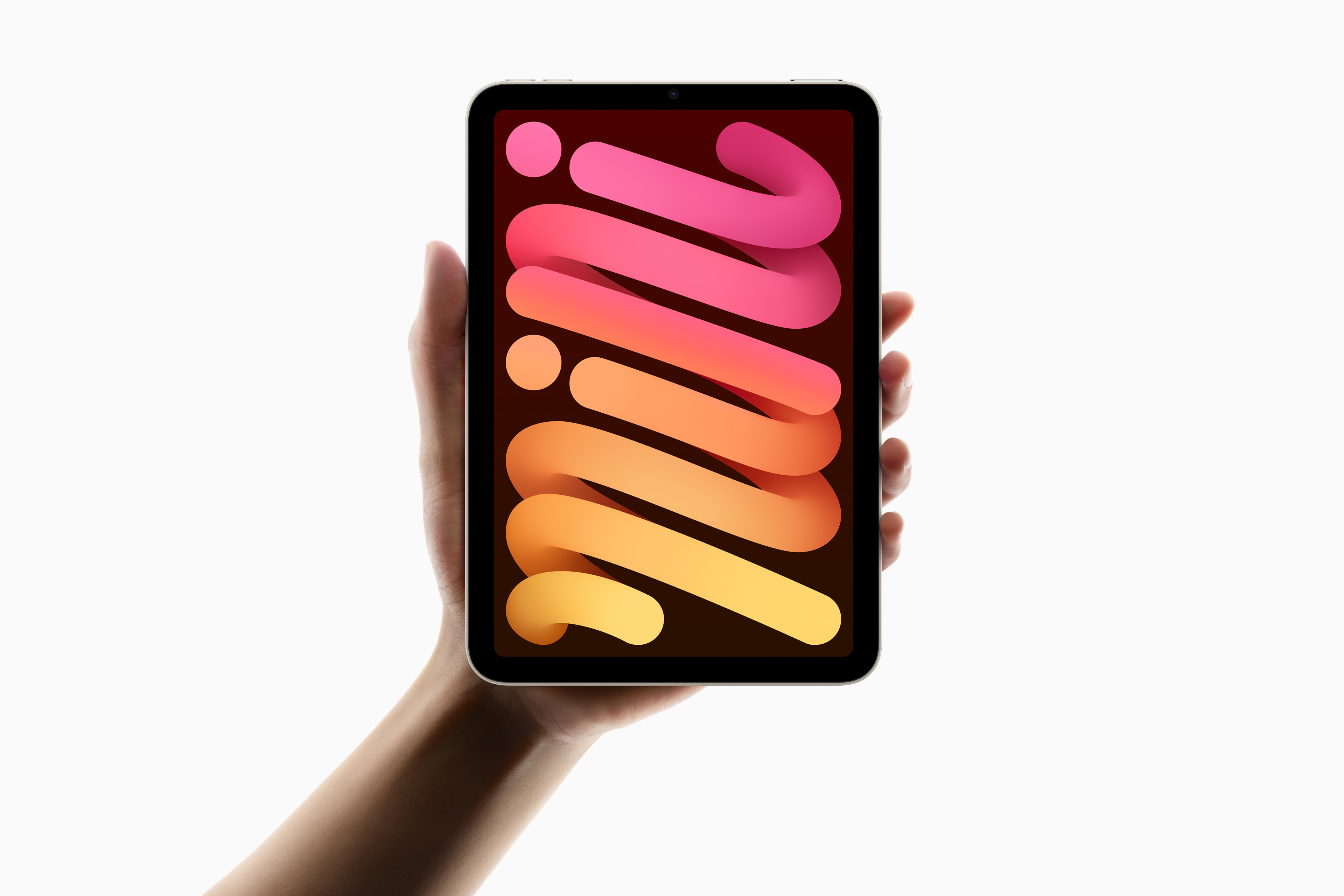
Gurman says it's coming by the end of October. The current model launched two years ago and still starts at $599/£599, so I'd expect the new one to land somewhere around there, memory shortage permitting. As a longtime iPad mini owner whose current one looks increasingly dated next to my iPad Pro, this is the Apple product I'm most looking forward to that nobody's really talking about. The home hub and the Duo are getting all the attention. The iPad mini might end up being the best value thing Apple ships this autumn.
iPhone Duo: five StandBy modes Apple hasn't mentioned
Developer pdfu found five unannounced StandBy views buried in the iOS 27.1 simulator: Home Camera, Home Modular, Flow, Fade, and Snoopy. StandBy on the Duo is already a bigger deal than on other iPhones because the device can prop itself up without a stand and the feature works even when it's not charging. Home Camera and Home Modular suggest Apple wants your partially folded Duo to double as a smart home control surface, which ties neatly into everything launching on the 13th. Not every hidden view will necessarily ship on day one, but it's another sign that Apple has thought about the Duo as more than just a phone that bends.
Vision Pro: not dead, just very far away
After last month's layoffs, you'd be forgiven for assuming the Vision Pro line was finished. Gurman's Power On newsletter suggested otherwise over the weekend. Apple is reportedly working on a completely revamped headset codenamed N224, with four different concepts on the table. One keeps the familiar front but swaps in titanium and plastic to cut weight. Others experiment with different material mixes. And one moves the processor into an external puck, Meta-style, though senior Apple executives reportedly hate that idea after watching the tethered battery become one of the current model's most-complained-about features.
The target is late 2028 or early 2029. Smart glasses remain the priority, and The Apple Post reports the project is widely considered to be on "life support" internally. As someone who owns Vision Pro, I'll take the news that Apple is at least still thinking about it. But four concepts and no decision, two years out, with the team already gutted, doesn't inspire enormous confidence. The honest read is that Apple hasn't decided what the Vision Pro is actually for, and until it does, no amount of material science is going to save it.
Tip of the Week
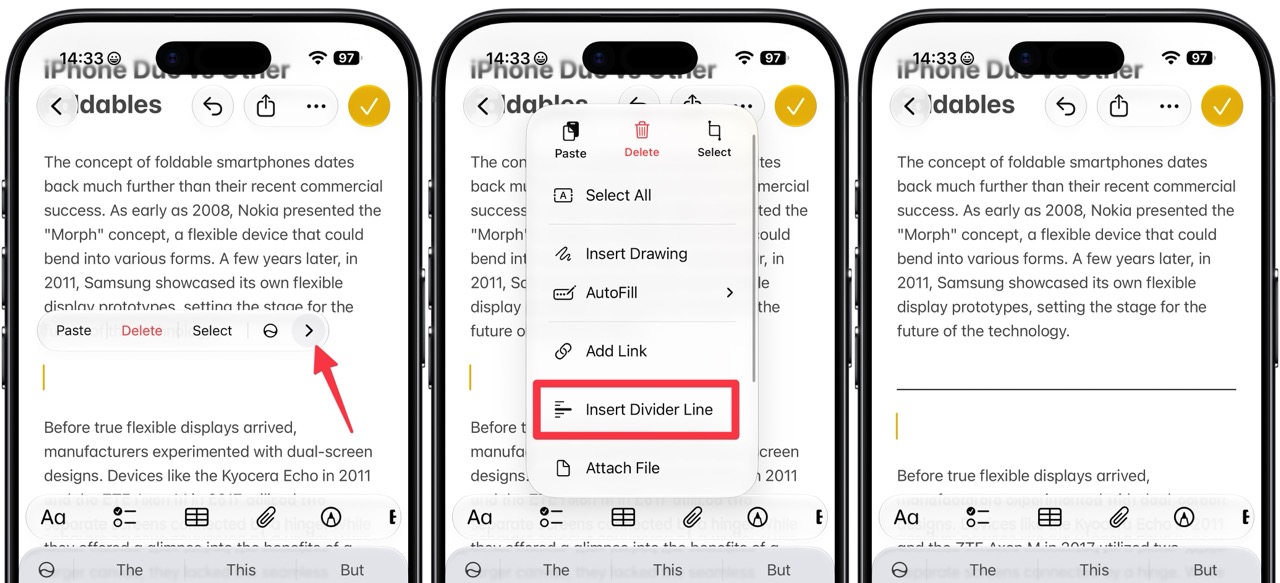
Did you know, in the Notes App, you can add Divider Lines? Simply long-press to bring up the contextual menu, tap the right pointing arrow, and choose Insert Divider Line.