This week, that Mac you were planning to buy just got WAY more expensive, some smart-glasses news, and more.
Apple Just Raised Prices. It's Painful...
It happened. After weeks of Tim Cook warning that price increases were "unavoidable," Apple pulled the trigger yesterday. The online store went down briefly and came back up with higher prices across virtually every Mac, iPad, and home product in the lineup. iPhones, Apple Watch, and AirPods have been spared, for now at least, but everything else has gone up, and in some cases, by a lot.
Here's the damage. The MacBook Neo, which launched just three months ago as Apple's most affordable laptop at $599/£599, now starts at $699/£699. The MacBook Air jumps from $1,099 to $1,299. The 14-inch MacBook Pro goes from $1,699 to $1,999. The iMac climbs from $1,299 to $1,499. On the iPad side, the iPad Air rises from $599 to $749, the iPad Pro from $999 to $1,199, and even the base iPad goes up $100 to $449. The HomePod mini, Apple TV, and Vision Pro have all been increased too. Across the board, the average price increase is just under $250 per product.
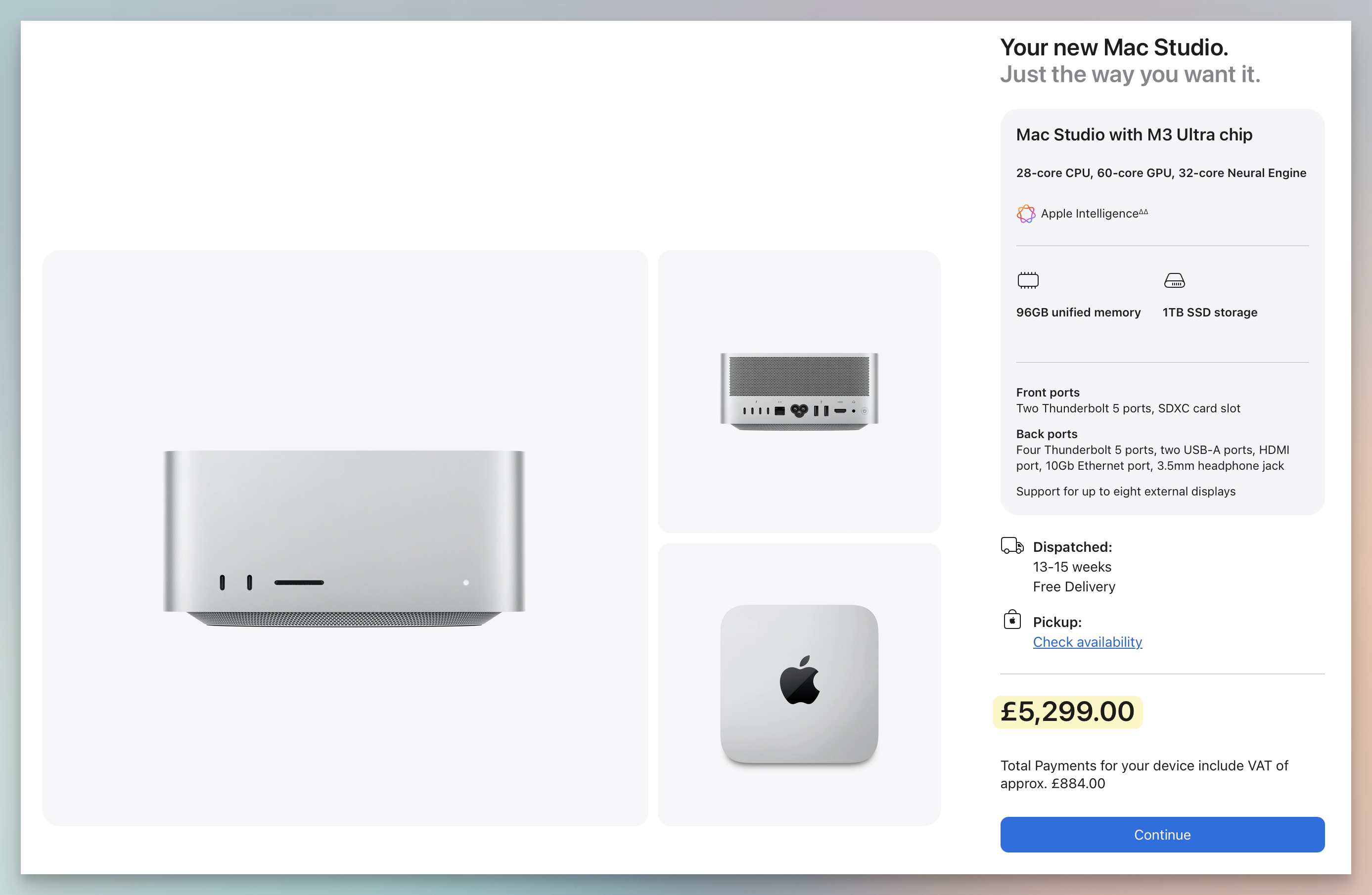
But the real eye-watering numbers are at the top end. The M4 Max Mac Studio jumps from $1,999 to $2,499, a $500 increase. And the M3 Ultra Mac Studio, the one I've been keeping my eye on as a benchmark for what the M5 Ultra might cost, goes from $3,999 to $5,299. That's a $1,300 increase on a single product. Here in the UK, the base M3 Ultra has gone up by roughly £1,500. What makes this especially galling is that even if you'd seen this coming and tried to get ahead of it by ordering last week, you pretty much couldn't. The Mac Studio has been virtually impossible to buy for weeks now, with delivery estimates of 12 to 15 weeks even on base configurations. So you couldn't buy it at the old price, and now it costs $1,300 more. Brilliant.
I'm seriously considering an M5 Ultra Mac Studio as my next machine (an upgrade from my current M2 Ultra config), and today's numbers have genuinely given me pause. If the M3 Ultra has just gone up by $1,300 before its replacement has even been announced, what's the M5 Ultra going to cost when it arrives, probably in October? I really hope Apple doesn't layer another increase on top when the M5 range drops, but at this point, who knows.
Apple's stock dropped 5% on the news, which tells you that Wall Street wasn't expecting increases this aggressive either. An Apple spokesperson said the company has "never seen a component price increase this much, this quickly" and that it had been shielding customers from the rises for as long as it could, but had now reached a point where it was no longer sustainable. DRAM prices have risen by as much as 98% in the first quarter of 2026 alone, with a further 58 to 63% increase expected this quarter, according to industry tracker TrendForce. The cause is the same one we've been discussing in this newsletter for months: AI data centres are consuming memory at an extraordinary rate, and the chip manufacturers are prioritising the customers willing to pay the most.
What makes today particularly painful is the collateral damage to the MacBook Neo. Three months ago, that laptop was a genuine game-changer. A $599 Mac that was outselling everything, bringing first-time buyers into the ecosystem, and forcing Chromebook and Windows manufacturers to respond. At $699, it's still competitive, but it's lost the $100 advantage it had over Dell's XPS 13 and it's now more expensive than several Chromebooks from Lenovo and ASUS. The Neo was Apple's most exciting product story of 2026, and today's price increase takes some of the shine off it. That $599 price point was magic. $699 is just a laptop.
The fact that iPhones have been left untouched today is notable, but don't get too comfortable. Cook's exact words last week were that price increases had become unavoidable, and Apple's statement today said these were increases "for iPad and Mac," with the company hinting that "more price adjustments to additional products" may follow. With the iPhone 18 Pro, Pro Max, and Ultra all expected in September, the question of whether those devices will carry higher launch prices than their predecessors has gone from speculation to near certainty.
It's tempting to wonder whether Apple's strategy is to absorb the hit on Macs and iPads now but hold the line on iPhones and Apple Watches when they launch in September. The logic would be that iPhones are Apple's most price-sensitive product in terms of volume, and raising prices there risks far more damage to upgrade rates than raising prices on a Mac Studio that sells in comparatively tiny numbers. But in terms of economies of scale, it's hard to see how that works. iPhones contain the same memory chips that have driven today's increases. If a HomePod mini needs a $30 price hike, an iPhone with significantly more RAM and storage is going to face the same cost pressures. Apple can't absorb those increases on hundreds of millions of units forever.
Today isn't Apple's fault. Every electronics company on the planet is dealing with the same pressures. Microsoft has raised Surface prices. Samsung has raised Galaxy prices. The Steam Deck has gone up by 50%. When the companies building AI infrastructure are willing to pay whatever it takes for memory, everyone else gets squeezed. Apple held out longer than most, and for that it deserves some credit. But understanding why prices have gone up doesn't make it any less painful when you're staring at a Mac Studio that costs $1,300 more than it did yesterday.
If you've been thinking about buying a Mac or an iPad, today's prices are the new reality, and there's no indication they're coming down any time soon. The global memory shortage is expected to continue well into 2027. If anything, prices may go up further before they come back down. It's not the news any of us wanted, but it's the news we've got.
You watch the videos? But how much do you remember?
If you're anything like most of my audience, you've probably watched dozens of iPhone tips videos over the years. Maybe even hundreds. You've bookmarked a few, saved some to Watch Later, maybe even scribbled a note or two. But when you actually need that tip, when you're standing there trying to remember how to do that thing you definitely saw in a video once, it's gone. You can't remember which video it was in, what it was called, or whether it was even on my channel or someone else's.
That's not a you problem. That's a content problem. YouTube is brilliant for discovery, but it's terrible for reference. Tips get buried in ten-minute videos, mixed in with ads and sponsor reads, and once you've scrolled past them, they're effectively lost. You'd have to rewatch the entire video just to find the one thing you needed.
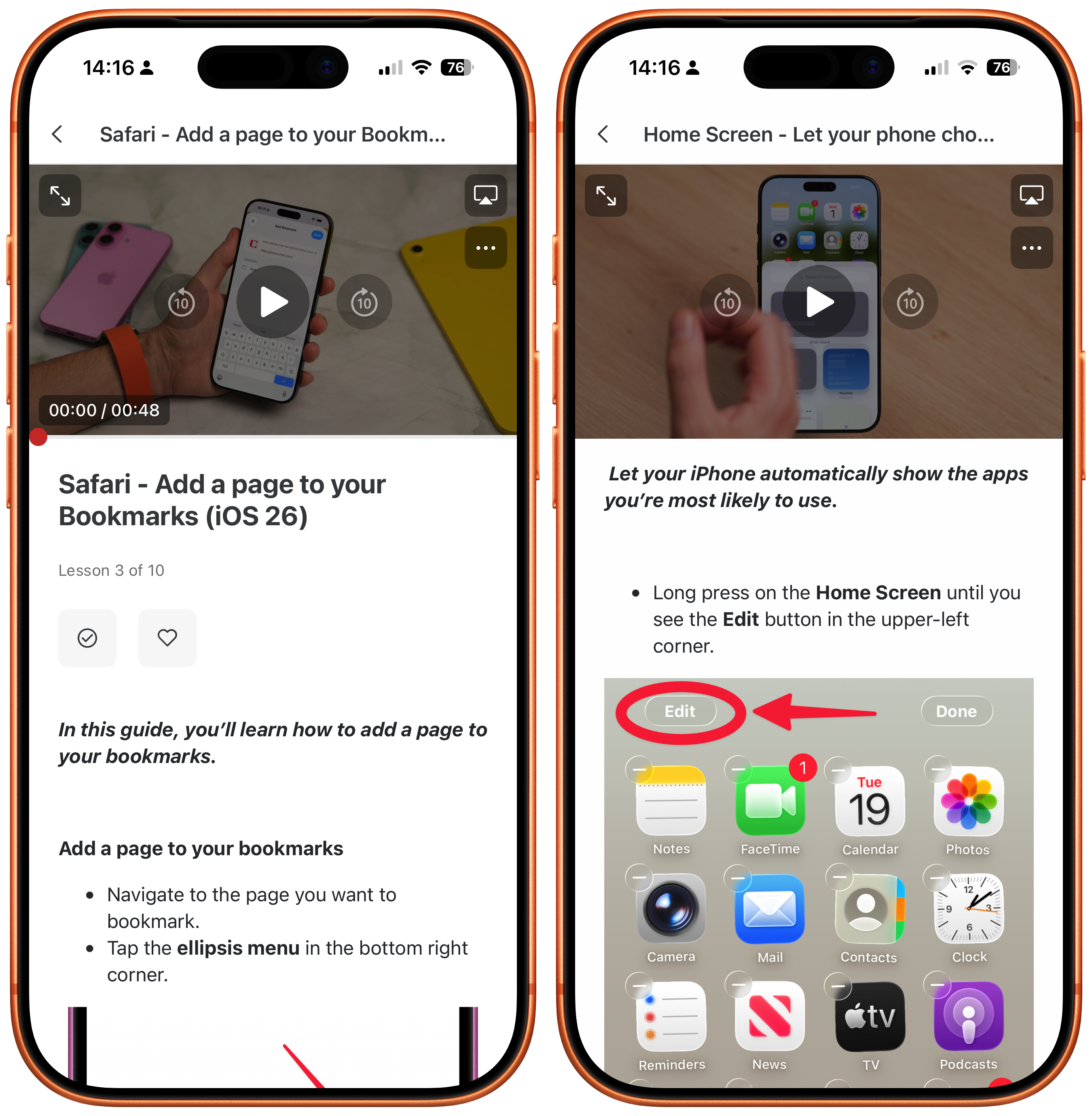
iPhone Essentials Plus was built to solve exactly this. It's not another set of videos to watch and forget. It's a structured, searchable library of over 250 lessons (and growing), each one focused on a single topic, with a video walkthrough, a written step-by-step guide, and a downloadable PDF you can keep. The tips you've half-remembered from a YouTube video, organised and accessible whenever you need it.
The course is updated regularly as Apple releases new features, so it stays current with your phone. I've also recently added ad-free, sponsor-free versions of my YouTube videos as bonus content, plus a brand new standalone course called iPhone Battery Made Easy is now included at no extra cost.
It's a one-time purchase, no subscription, with lifetime access. If you've ever thought "I know I saw a tip for this somewhere," this is the answer.
Purchase Links;
- iPhone Battery Made Easy
- iPhone Essentials Plus
- Mac Essentials Plus
- iPhone & Mac Essentials Plus Discount Bundle
The Smart Glasses Race Just Got Interesting
It's been a big week for smart glasses outside of Apple, and the contrast between the two announcements couldn't be more stark.
First, Snap unveiled Specs, its first consumer AR glasses, at the Augmented World Expo last week. The pitch was grand. CEO Evan Spiegel described them as a "see-through computer" that would free people from looking down at their phones. The price? $2,195. The internet's reaction? Merciless. A video of Spiegel wearing the glasses went viral almost immediately, with commenters pointing out that they looked enormous, sat awkwardly on his face, and gave off strong "guy who got tricked into beta-testing a sci-fi prop" energy. Snap's stock dropped nearly 10% on the day of the unveiling. And to make matters worse, it's now been reported that Snap is in talks to pay Robert Downey Jr. $100 million in stock to become the face of the product. That's roughly 1.3% of Snap's entire market cap, spent on trying to convince people that a pair of $2,195 glasses that the internet has already decided look ridiculous are actually cool. It's the kind of decision that makes you wonder who's running the show over there.
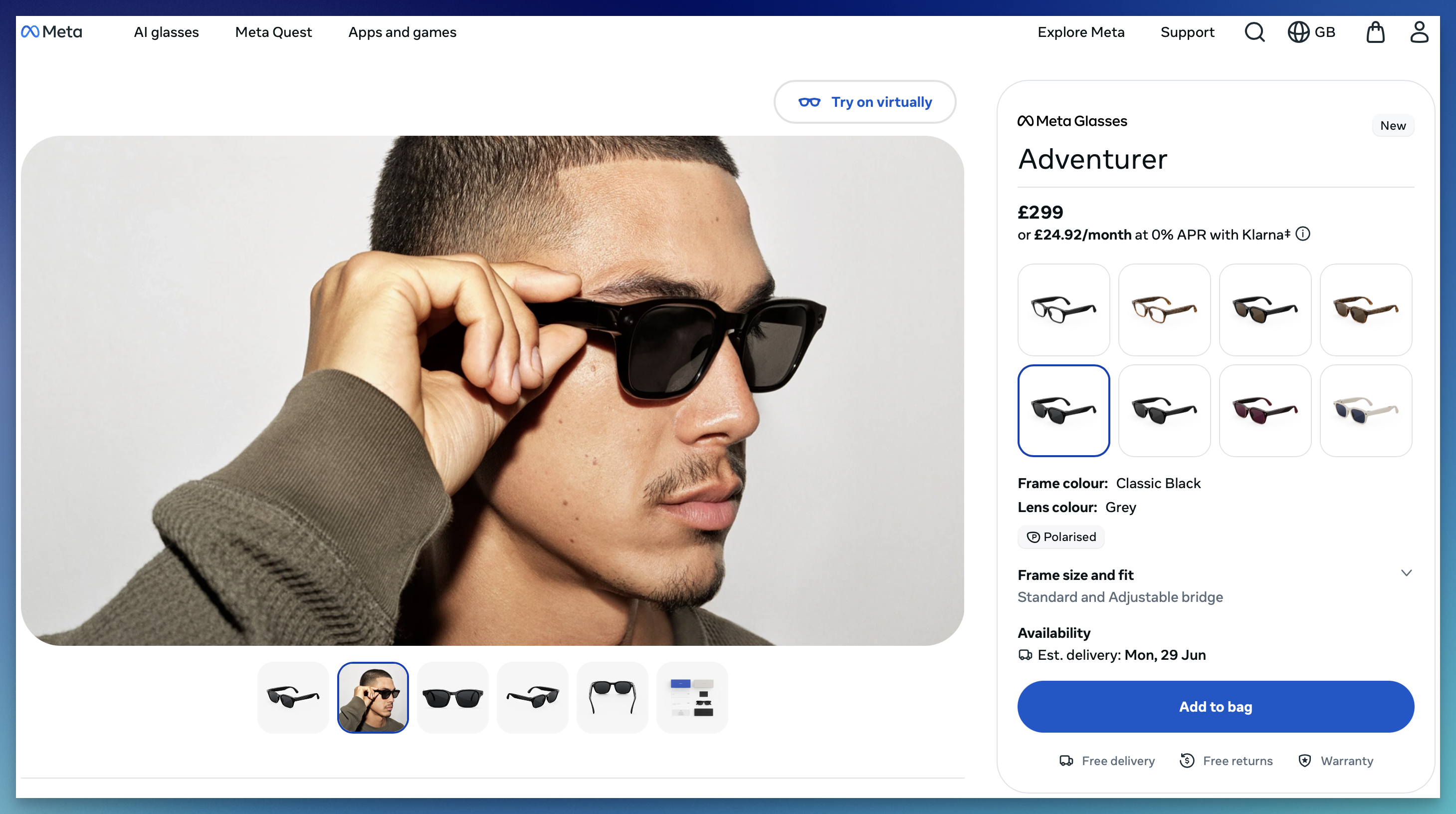
Then, on Monday, Meta did something far more interesting. It launched smart glasses under its own brand for the first time, dropping the Ray-Ban name and pricing the new Adventurer and Fury models at $299/£299 each. The hardware is essentially identical to the Ray-Ban Meta Gen 2, which starts at $359/£359: same 12-megapixel camera, same 3K video, same five-microphone array, same eight-hour battery life. The only real difference is that you're not paying for the Ray-Ban branding. There's also a third model called Starfire, designed with Kylie Jenner, at $399/£399, because apparently that's where we are now.
Here's why this matters. Meta already dominates the smart glasses market with roughly 80% market share. It shipped seven million AI-enabled glasses in 2025, and shipments surged 167% year-on-year in Q1 2026. Daily usage has tripled. The $299 price point removes the last meaningful barrier for anyone who's been curious but not quite curious enough to spend $359 on a pair of Ray-Bans with a camera in them. At $299, these are impulse-purchase territory for a lot of people.
And these are the glasses I think Apple has in its sights. Not the $2,195 Snap Specs with their full AR display and sci-fi ambitions. Not the high-end Meta Ray-Ban Display glasses at $799. The $299 Meta glasses that do a handful of things well: take photos, play music, translate languages, answer questions about your surroundings through a camera and AI, and do it all without looking like you're wearing a computer on your face. That's almost exactly the product description of Apple's rumoured glasses, which we've discussed in previous newsletters. Cameras, speakers, microphones, Siri integration, no display, premium materials, and a design that's meant to look like a normal pair of glasses.
The difference, when Apple eventually enters this market, will come down to three things: ecosystem integration, privacy, and design. Meta's glasses feed everything through Meta AI. Apple's will feed everything through Siri and Apple Intelligence, tightly woven into your iPhone, your Apple Watch, your messages, your calendar, and your photos. For anyone already deep in the Apple ecosystem, that integration is going to be significantly more compelling than what Meta can offer. And Apple's privacy-first positioning, love it or roll your eyes at it, is a genuine differentiator when the product in question has a camera pointed at everything you look at.
Google and Samsung are also entering the race with their own Gemini-powered AI glasses later this year, which means by the time Apple's glasses arrive in 2027, the market will already have multiple established players. Apple will be late, as usual. But as we've seen time and time again, being late hasn't stopped Apple before. It arrived late to smartphones, late to smartwatches, and late to wireless earbuds, and it now leads all three categories. The question is whether it can pull off the same trick with a camera on your face.
This week showed us the two extremes of the smart glasses market. On one end, a $2,195 pair of AR glasses that nobody asked for and nobody seems to want. On the other, a $299 pair that does just enough to be genuinely useful without trying to reinvent computing. Apple will be aiming squarely at the latter. And if the rumours about its design, materials, and Siri integration are anything close to accurate, Meta's 80% market share might not feel quite so comfortable this time next year.
Apple is Skipping a Chip... Again...
Just when you thought Apple's chip roadmap couldn't get any more complicated, Gurman dropped a bombshell yesterday. Apple is planning to skip the high-end variants of its M6 chip entirely, meaning there will be no M6 Pro, no M6 Max, and no M6 Ultra. Instead, Apple will jump straight to the M7 generation for its professional and high-end chips, with a major focus on AI performance.
If this sounds familiar, it's because Apple has done this before. The M4 Ultra never happened either. The current Mac Studio still ships with the M3 Ultra because Apple skipped that generation at the top end. But doing it twice in a row is unusual, and it suggests that Apple is making a deliberate strategic choice rather than just dealing with a timing issue.
The base M6 chip will still exist. It's expected to arrive later this year, built on TSMC's 2nm process, and will likely power devices like the iMac, Mac mini, MacBook Air, and iPad Pro. But for the machines that need the Pro, Max, and Ultra chips, the MacBook Pro, the Mac Studio, and the upcoming MacBook Ultra, Apple is reportedly holding out for M7. The M7 generation, codenamed "Borneo," is said to be built from the ground up with AI workloads as a primary design consideration, which would represent a meaningful shift in how Apple approaches its silicon.
What this means practically is that if you're waiting for a new Mac Studio with an Ultra chip (like I am), you might now be waiting for the M7 Ultra rather than the M5 Ultra we were all expecting. The timeline for that is unclear, but it could push the next truly high-end Mac Studio into 2027. For someone like me who's been planning to buy the next Ultra Mac Studio, the goalposts just moved again.
It's a bold move, but it also makes a certain amount of sense. With Nvidia, Qualcomm, and Intel all pouring resources into AI-optimised silicon, Apple's current Neural Engine is starting to look underpowered by comparison. Nvidia's RTX Spark chip offers roughly 1,000 TOPS of AI compute versus Apple's 38 TOPS. If the M7 generation is genuinely being designed to close that gap, skipping a generation at the high end to get there faster might be the smartest thing Apple can do right now. But for anyone who's been patiently waiting to upgrade, it's yet another delay in a year that's been full of them.
John Ternus Planning a Return to Old-Apple Values
Bloomberg's Mark Gurman published a fascinating piece this week arguing that incoming CEO John Ternus's top priority should be reviving Apple's industrial design team, a group that has, by Gurman's account, "lost its way" since Jony Ive walked out the door in 2019.
The backstory is worth understanding. Under Steve Jobs, Ive was arguably the second most powerful person at Apple. The design team sat at the centre of every product decision, and other departments worked around whatever vision came out of the design studio. That's how you got the iMac G3, the iPod, the iPhone, the MacBook Air. Products that didn't just work well but made you feel something when you held them. When Ive left, Apple handed oversight of the design team to COO Jeff Williams. As Gurman put it, "Apple replaced one of the most influential designers in history with the company's top supply chain executive." Since then, other key designers have departed too, including Evans Hankey and Alan Dye, who left for Meta last year. Apple currently has no senior executive occupying anything like the design leadership role Ive once held.
Tim Cook turned Apple into a nearly $4 trillion company, and his legacy in terms of operational excellence, supply chain mastery, and financial performance is beyond question. But somewhere along the way, Apple stopped being the company that made you gasp when it unveiled a new product. The designs became iterative. The iPhones started looking like last year's iPhones. The Macs got faster but not more interesting. The magic, for want of a less clichéd word, faded a bit. The Vision Pro was probably the closest Apple came to recapturing that feeling, and for about ten minutes during the keynote, it genuinely did. But the product itself couldn't sustain it, and a gasp followed by disappointment is arguably worse than no gasp at all.
Ternus appears to recognise this. According to Gurman, he's been spending considerable time with Apple's industrial design group ahead of his September takeover, and in a recent meeting with employees he said that "the most beautifully designed thing that most customers own is an Apple product" and that the company was "going to keep focusing on design, because design is core to what we do at Apple." Gurman's take is blunter: Ternus "needs to prioritise making Apple's products cool again."
Whether Ternus, an engineer by training rather than a designer, can actually pull this off is the big question. But the product roadmap he's inheriting gives him plenty of opportunities to try. The foldable iPhone, the smart glasses, the camera-equipped AirPods, the OLED touchscreen MacBook Pro, and a 20th anniversary iPhone in 2027 are all products where bold, distinctive design isn't just nice to have, it's essential. If any of those devices arrive looking like another safe, iterative Apple update, it'll be a missed opportunity. If they arrive looking like something Jony Ive would have been proud of, Ternus might just pull off the thing that Cook, for all his achievements, never quite managed: making people fall in love with Apple hardware all over again.
It's early days. But for the first time in a while, there's a sense that someone at the top of Apple cares about this stuff as much as the customers do. And that, on its own, is worth getting excited about.
Tip of the Week
Did you know you can quickly reveal or hide additional menu options within the Camera app?
In the Camera app, swipe up from the black bar at the bottom of the screen to open menu options. Swipe down on the menu to make it disappear.