This week, the iPhone 18 Pro has leaked, Tim Cook has been working the phones, and yet more new products are being rumoured.
The iPhone 18 Pro has leaked, and Apple is furious...
If you've been anywhere near tech Twitter this week, you might have caught a glimpse of something Apple really, really didn't want you to see. Videos surfaced on Monday showing what appears to be the iPhone 18 Pro undergoing drop testing in a laboratory setting. A silver device, no two-tone finish like the iPhone 17 Pro, three rear cameras on the familiar plateau, and the Apple logo on the back. Within hours, the videos were gone. The accounts that shared them were suspended. Posts were replaced with warnings about rule violations. And Apple's fingerprints were all over the cleanup.
Here's what happened. A ransomware group calling itself World Leaks breached Tata Electronics, one of Apple's key manufacturing partners in India, earlier this month. The haul was enormous: over 630 gigabytes of stolen data, including Apple-watermarked confidential documents, iPhone 18 Pro component details, supplier mapping for both the Pro and Pro Max, A20 Pro chip data sheets, logic board designs, codenames, and photographs and video of iPhone 18 Pro prototypes being drop-tested at a Tata facility in early 2026. Reuters confirmed the breach and reported that Apple is "concerned" about the leak, which is about as close to panic as Apple's corporate communications ever get.
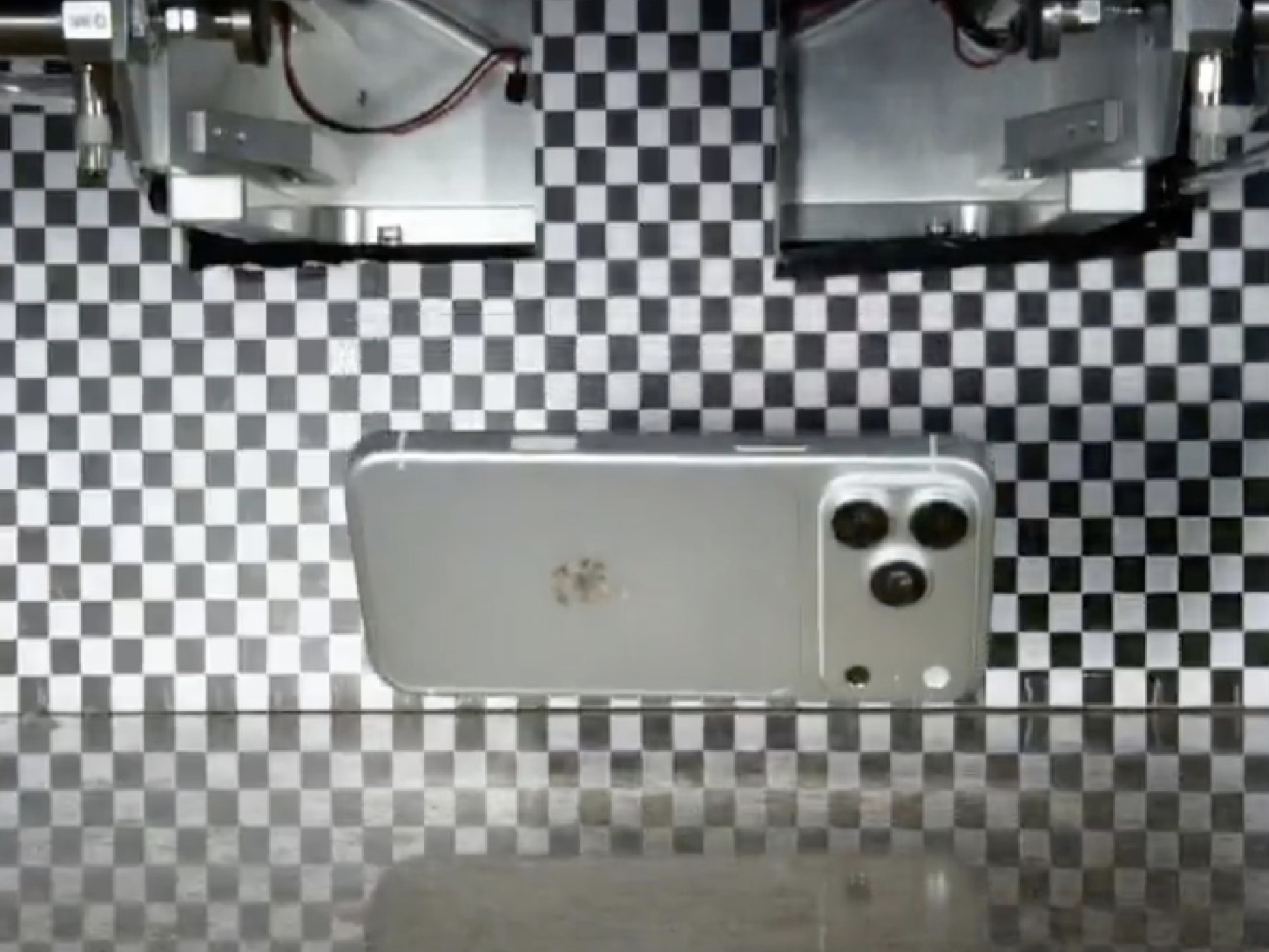
The videos first appeared on X via the @EVLeaks account, a handle previously associated with well-known leaker Evan Blass, who has an excellent track record with smartphone leaks. That association is what initially gave the footage credibility. However, Blass has since confirmed that he retired from leaking in May due to health issues and that someone else had taken control of the account. The account was suspended within hours of posting, which prompted Blass to quip that Apple had managed to do "what Samsung never could."
What's telling is the speed and aggression of Apple's response. Apple rarely engages with the rumour mill directly. Dummy units, renders, case leaks, analyst predictions: these are all things Apple has historically ignored or tolerated. But this is different. This isn't speculation or educated guesswork. This is stolen property: actual video, actual documents, actual engineering data taken directly from a manufacturing partner. Apple's legal team moved to get accounts suspended and content removed within hours, which is unusually fast even by Apple's standards. MacRumors noted that the speed of the takedowns "may indicate that the company is moving more aggressively than usual in the face of a major data breach."
The implication is clear: this footage is almost certainly real. If it were fake, Apple would have no legal basis to demand takedowns and no reason to care. The fact that Apple mobilised its legal team to scrub the internet suggests that what people saw in those videos is genuinely what the iPhone 18 Pro looks like, and Apple is furious that the world has seen it three months early.
This also isn't happening in isolation. Apple is already in the middle of suing Jon Prosser for allegedly obtaining leaked iOS 26 information through physical access to a development device. That lawsuit sent a clear message to the leaker community: Apple is willing to go to court. The Tata breach is a different kind of problem, one that's harder to control because the data is already out there on the dark web, but Apple's response has been just as aggressive. It's working with Tata on long-term security improvements, and you can bet that the relationship between the two companies is under significant strain right now.
For what it's worth, the videos themselves didn't reveal anything earth-shattering in terms of design. The iPhone 18 Pro looks like a refinement of the 17 Pro, with what appears to be a smaller Dynamic Island, a slightly thicker camera module, and the return to a single-tone finish. If you were hoping for a dramatic redesign, this isn't it. But that's almost beside the point. What makes this story significant isn't what the phone looks like. It's the fact that Apple's supply chain was breached, its most confidential engineering data was stolen, and video of an unreleased product ended up on social media for the world to see. For a company that treats secrecy as a core part of its identity, that's about as bad as it gets.
Some of the footage is still circulating if you know where to look, but Apple is clearly playing whack-a-mole to stamp it out. Whether it succeeds or not, the bell has been rung. The iPhone 18 Pro has been seen in the wild, three months before Apple planned to show it to anyone. And somewhere in Cupertino, a very uncomfortable conversation about supply chain security is already underway.
You watch the videos? But how much do you remember?
If you're anything like most of my audience, you've probably watched dozens of iPhone tips videos over the years. Maybe even hundreds. You've bookmarked a few, saved some to Watch Later, maybe even scribbled a note or two. But when you actually need that tip, when you're standing there trying to remember how to do that thing you definitely saw in a video once, it's gone. You can't remember which video it was in, what it was called, or whether it was even on my channel or someone else's.
That's not a you problem. That's a content problem. YouTube is brilliant for discovery, but it's terrible for reference. Tips get buried in ten-minute videos, mixed in with ads and sponsor reads, and once you've scrolled past them, they're effectively lost. You'd have to rewatch the entire video just to find the one thing you needed.
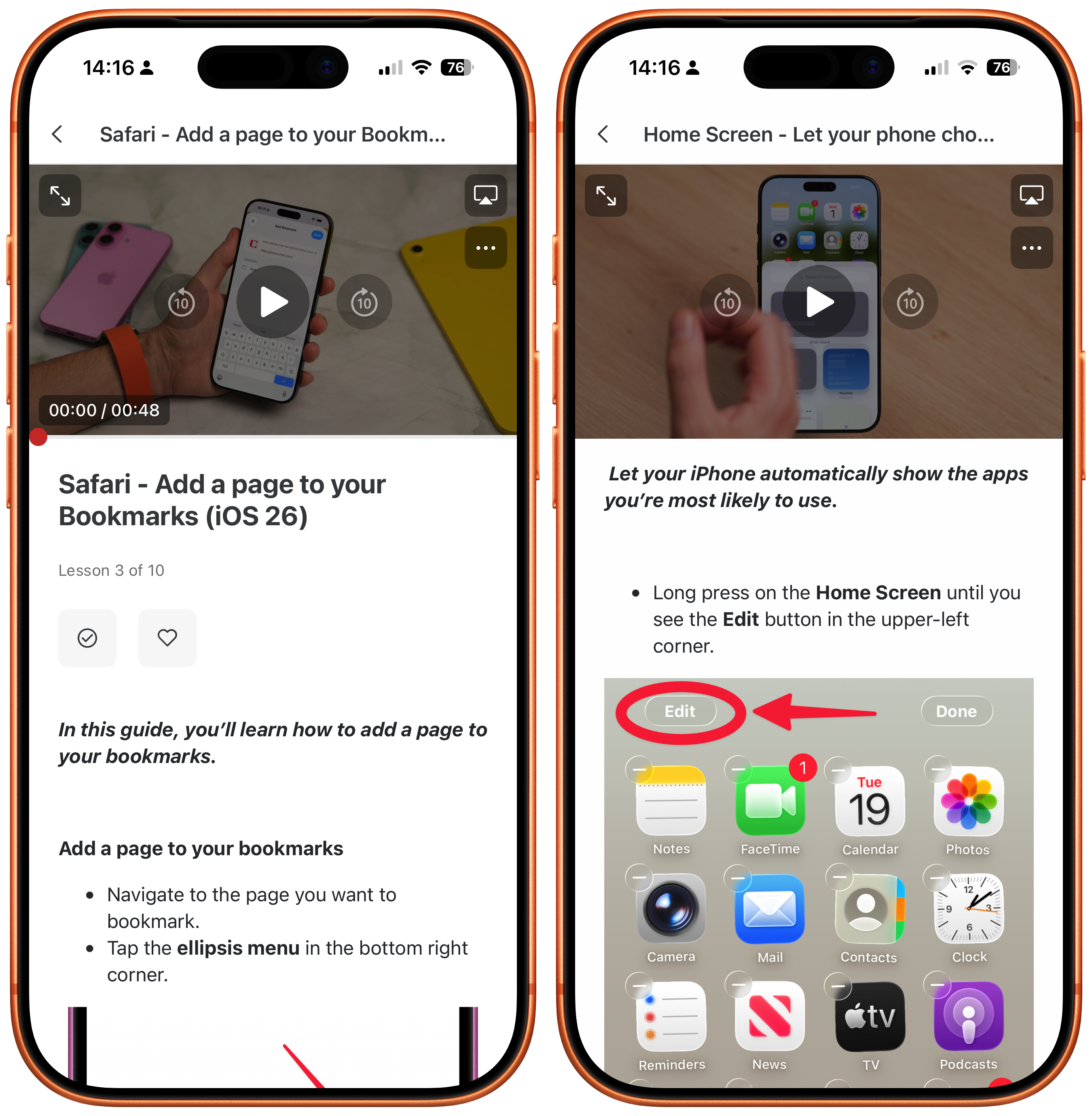
iPhone Essentials Plus was built to solve exactly this. It's not another set of videos to watch and forget. It's a structured, searchable library of over 250 lessons (and growing), each one focused on a single topic, with a video walkthrough, a written step-by-step guide, and a downloadable PDF you can keep. The tips you've half-remembered from a YouTube video, organised and accessible whenever you need it.
The course is updated regularly as Apple releases new features, so it stays current with your phone. I've also recently added ad-free, sponsor-free versions of my YouTube videos as bonus content, plus a brand new standalone course called iPhone Battery Made Easy is now included at no extra cost.
It's a one-time purchase, no subscription, with lifetime access. If you've ever thought "I know I saw a tip for this somewhere," this is the answer.
Purchase Links;
- iPhone Battery Made Easy
- iPhone Essentials Plus
- Mac Essentials Plus
- iPhone & Mac Essentials Plus Discount Bundle
Price Rises, One Week On
Last week we covered the specifics of Apple's price increases. This week, I want to talk about something that's become clear in the days since: the widespread assumption that these prices are temporary is almost certainly wrong.
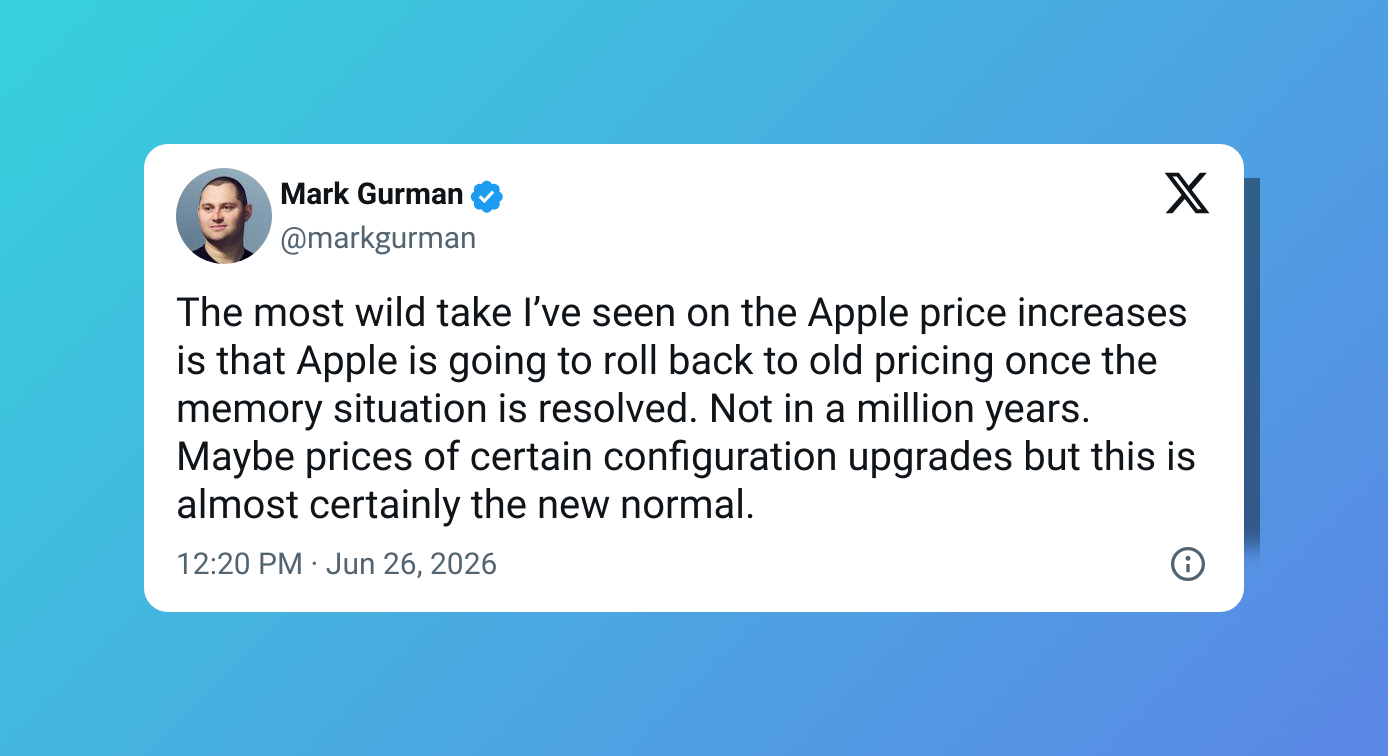
I've seen a lot of comments across social media and forums from people saying they'll simply wait. Wait for the memory shortage to ease. Wait for component costs to come down. Wait for Apple to "return pricing to normal." Bloomberg's Mark Gurman addressed this directly on X this week, and he didn't mince his words. "The most wild take I've seen on the Apple price increases is that Apple is going to roll back to old pricing once the memory situation is resolved," he wrote. "Not in a million years." He conceded that prices on certain configuration upgrades might come down eventually, but the base prices? Those are here to stay. This is, in his words, "almost certainly the new normal."
And honestly, he's right. When was the last time Apple lowered the starting price of a product without simultaneously removing features or introducing a cheaper tier below it? Apple doesn't do price cuts. It never has. Once a price point is established and consumers have demonstrated a willingness to pay it, that becomes the floor. The $599 MacBook Neo was magic while it lasted, but the $699 MacBook Neo is now the product that exists. The $1,099 MacBook Air is gone. The $1,299 MacBook Air is what you can buy. Waiting for Apple to undo that is like waiting for your rent to go back down. It's a nice thought, but it's not how the world works.
What's been particularly frustrating to watch is people realising, too late, that they should have bought when they had the chance. In the weeks before the price increases, there were enough signals to act on. Tim Cook's Wall Street Journal interview, Gurman's "fairly imminent" warning, the Prime Day deals that briefly had MacBook Airs at $350 below Apple's new list price. Those windows have now closed. And for products like the Mac Studio, where delivery times were already stretching to 12 to 15 weeks before the increase, you couldn't even buy at the old price if you'd wanted to.
The other uncomfortable reality is that this probably isn't the end. Apple specifically said last week's increases applied to "iPad and Mac." iPhones were left untouched, but with the iPhone 18 Pro, Pro Max, and Ultra all due in September, the same memory cost pressures apply. If Apple is charging $100 more for an iPad and $200 more for a MacBook Air, it's hard to imagine the iPhone getting a free pass when it contains the same components that caused the problem. Gurman has been careful not to confirm iPhone price increases, but he hasn't denied them either. The silence is telling.
What makes this moment different from previous Apple price adjustments is the context. This isn't Apple deciding to charge more because it can. This is a genuine supply chain crisis driven by forces entirely outside Apple's control. AI data centres are consuming memory at a rate nobody predicted. DRAM prices have nearly doubled this year. Every major electronics manufacturer has raised prices. Apple actually held out longer than most. But that context, while it explains the increases, doesn't change what they mean for the person standing in an Apple Store trying to decide whether to upgrade.
The back-to-school promotion, which is expected to launch any day now, will soften the blow slightly for students. Free AirPods or an Apple Pencil Pro with a qualifying purchase is nice, but it doesn't offset a $200 price increase on the laptop itself. It's a plaster on a much bigger wound.
For what it's worth, I don't think this changes the fundamental value proposition of Apple products. A MacBook Air at $1,299 is still an excellent laptop. An iPad Pro at $1,199 is still the best tablet you can buy. The products haven't got worse. They've got more expensive. And that's a distinction worth making, even if it doesn't make your bank account feel any better about it.
But if you've been holding out hoping that prices will come back down once the memory shortage eases, it's time to let that go. The shortage will ease eventually, probably sometime in 2027. The prices won't follow it down. Apple has found a new floor, and it's not going anywhere.
New iPad Pro and MacBook Pro incoming
Gurman dropped another roadmap update this week. Apple is reportedly testing four new iPad Pro models, in both 11-inch and 13-inch sizes, for a spring 2027 release. Alongside them, a redesigned entry-level 14-inch MacBook Pro, codenamed K104, is targeting the first half of next year.
The iPad Pro refresh sounds like an internals-only upgrade. No design changes, same screen sizes, but faster chips and a vapour chamber cooling system that Apple has apparently been testing to improve sustained performance under heavy workloads. The chip situation is the interesting part: Apple is aiming to have the M7 ready by early 2027, which means the new iPad Pros could skip M6 entirely and launch with M7 silicon that's been designed from the ground up for AI. If M7 isn't ready in time, they'll fall back to M6. Either way, both chips will be built on TSMC's new 2nm process.
The MacBook Pro story is arguably more exciting. Apple had apparently already finished work on a refreshed entry-level model, codenamed J804, with the current design and an M6 chip. That was supposed to launch this year. Instead, Apple appears to have shelved it in favour of the K104, which will adopt the new design language being introduced on the high-end OLED touchscreen MacBook Pro expected later this year. That means the entry-level MacBook Pro would get the same visual overhaul as its more expensive siblings, potentially making it the first major redesign of the base MacBook Pro in years. It's expected to launch with the M7 chip, which ties into last week's news about Apple skipping M6 Pro and Max entirely to fast-track the AI-focused M7 generation.
Spring 2027 is shaping up to be packed. These products would land alongside the iPhone 18, iPhone 18e, and iPhone Air 2, making it one of the most product-dense launch windows Apple has ever attempted. Whether the current pricing environment makes any of it affordable is, of course, another question entirely.
Tim Cook's New Role has Already Started
Tim Cook doesn't officially become executive chairman until September. But if this week is anything to go by, the transition has already begun. While John Ternus is no doubt quietly getting to grips with the internal machinery of running a $4 trillion company, Cook has spent the week doing what he does best: working the phones.
On Monday, Cook held a video call with Henna Virkkunen, the EU's technology chief, over the standoff that's currently blocking Siri AI from launching in Europe. Both sides described it as a "constructive exchange on topics of common interest." If that sounds like the kind of deliberately vague language that follows a meeting where nothing was actually resolved, that's because it almost certainly was.
The backstory: Apple announced at WWDC that Siri AI will not be available in the EU when iOS 27 launches in September. The reason is a dispute over the Digital Markets Act, which requires Apple to give rival AI assistants the same system-level access as Siri. Apple proposed a compromise called the "Trusted System Agent," essentially intermediary software that would let third-party assistants securely access iPhone capabilities, along with an 18-month transition period. The EU rejected it, saying Apple was effectively seeking a blanket exemption from its interoperability obligations. Apple says the EU refused to engage constructively. The EU says Apple failed to develop the necessary interoperability features. Both sides have been trading public barbs for weeks, and meanwhile, roughly 450 million European iPhone and iPad users are facing the prospect of being locked out of Apple's biggest new feature this year. Given that Europe accounted for nearly 27% of Apple's total sales last year, that's not a position anyone at Apple is comfortable with.
But the EU isn't the only fire Cook has been fighting. Bloomberg and the Financial Times both reported this week that Apple has been actively lobbying the Trump administration for clearance to purchase memory chips from two Chinese companies: ChangXin Memory Technologies (CXMT) and Yangtze Memory Technologies (YMTC). Both are on the Pentagon's blacklist of companies with alleged ties to the Chinese military.
Apple isn't technically banned from buying chips from either company. They're on the Pentagon's 1260H list, which identifies Chinese firms believed to support Beijing's military apparatus, but that's a step below the Entity List, which would impose outright restrictions. What Apple is seeking is a guarantee from the White House that neither company will be moved to the Entity List while Apple is doing business with them. In other words, Apple wants permission and a promise that the rug won't be pulled from under it mid-contract.
The reason is the same one behind everything else we've been discussing in this newsletter for months: the memory shortage. DRAM and NAND prices have surged to record levels. Apple has already raised prices across its entire Mac and iPad lineup. And the companies that currently dominate global memory production, Samsung, SK Hynix, and Micron, are selling everything they can make to AI data centres at prices Apple can't match. CXMT and YMTC offer a potential lifeline: cheaper memory from manufacturers who aren't being consumed by the insatiable appetite of AI.
Cook has reportedly been personally involved in the lobbying effort, making appeals to Treasury Secretary Scott Bessent among other administration officials. The discussions focus on sourcing memory specifically for devices sold in China, which would somewhat reduce the political sensitivity of the arrangement. But it's still an extraordinary position for Apple to be in. This is a company that has spent years positioning itself as a champion of American innovation, security, and privacy. Going to the White House and asking for permission to buy components from companies the Pentagon considers military-linked is not a comfortable look.
The geopolitical stakes are real. Washington and Beijing are in the middle of an escalating technology war. Trump has criticised tighter European tech regulation for hurting American companies while simultaneously tightening restrictions on Chinese chipmakers. Apple is caught directly in the middle, trying to maintain its manufacturing relationship with China while navigating an increasingly hostile political environment in Washington. It's a tightrope that gets thinner every year.
Step back from the specifics and something interesting emerges about the shape of Apple's leadership transition. Cook isn't winding down. He's doing exactly what a chairman should be doing: managing the relationships that sit above and around the company, the regulators, the politicians, the trade negotiations, the diplomatic standoffs that determine whether Apple's products can actually reach the people who want to buy them. Ternus, meanwhile, gets to focus on what he's best at: building the products themselves. It's a clean division of labour, and it might actually work better than having one person try to do both.
For EU readers of this newsletter hoping for Siri AI in September, I wish I had better news. Whether Cook's diplomacy can break the DMA impasse before launch remains to be seen. On the Chinese chips front, whether the Trump administration grants clearance is equally uncertain. Approving a deal with blacklisted Chinese companies would set a significant precedent and draw scrutiny from both sides of the aisle. But the fact that Apple is willing to take the reputational risk of even asking tells you just how desperate the supply situation has become.
This is the world Apple operates in now. One day you're lobbying the EU to let you launch Siri. The next you're lobbying the White House to let you buy Chinese chips. And the man doing both, at least for the next two months, is Tim Cook. It's fitting, in a way. The CEO who turned Apple into a $4 trillion company by mastering the global supply chain is spending his final weeks in the job trying to stop that same supply chain from unravelling beneath him. Come September, that'll be Ternus's problem. But the phone calls? Those will still be Cook's department.
Tip of the Week
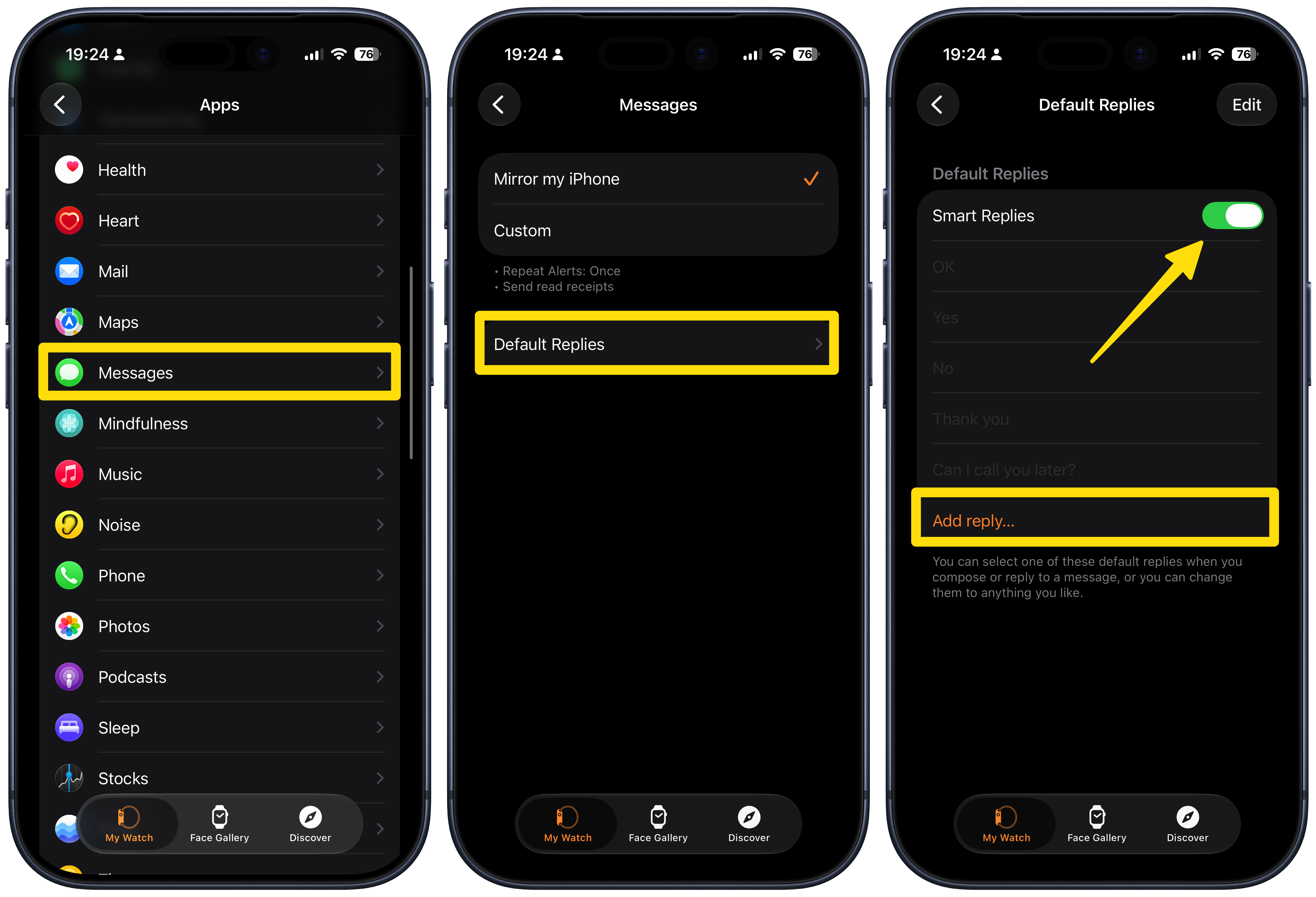
Did you know you can customise the default replies for messages on your Apple Watch? To do this, open the Watch app on your iPhone. Scroll to and select 'Messages', then tap on 'Default Replies'. Optionally, enable or disable 'Smart Replies'. Select 'Add Reply' to type in and save your custom responses. These custom replies will be available for use on your Apple Watch when responding to messages.