This week: everything about the new iPhones, including the foldable Duo, plus new Watches and AirPods...
Predictions, Products, and the phone that saved the show
If you read last week's issue, you'll know I laid out a full set of predictions for Wednesday's "Surprise and Shine" event. The good news is that I got most of them right. The bad news is that's not really a compliment. It says more about how predictable Apple events have become than about me. Seventy-seven minutes, and it played out almost line for line the way the rumour mill said it would.
Almost.
Because then Apple showed the iPhone Duo, and for a few minutes I remembered why I do this for a living.
So let's go through it product by product. I'll score last week's predictions as we go, and I'll tell you honestly what's worth your money and what isn't.
Tim Cook & John Ternus
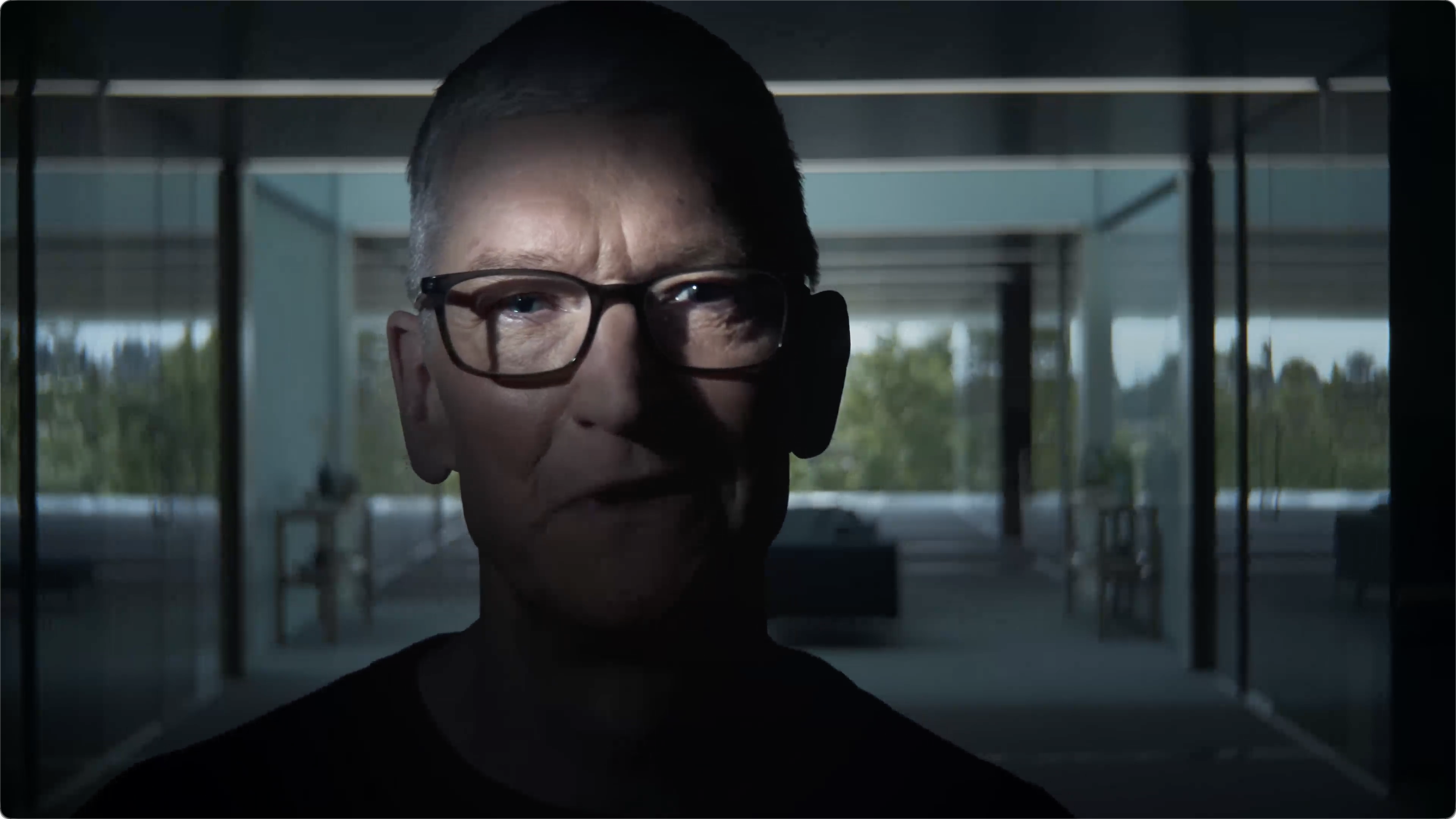
Last week I said Tim Cook wouldn't feature. I was wrong, and I'm glad I was.
The event opened with Cook handing over to Ternus, and it was exactly the right way to do it. Brief, dignified, no lingering. Ternus then carried the rest of the show, and he was fine. Composed, clearly comfortable up there, but not someone who lifts a room. Which left the keynote where Apple keynotes usually end up: polished, professional, and a little flat, with Craig Federighi once again the only presenter on show who looks like he's actually enjoying himself.
AirPods 5
Two models, and for the first time at this price, open-ear Active Noise Cancellation on both.
The base model at £119 or $129 gets ANC, Adaptive Audio, Conversation Awareness, and up to 4 hours of listening with noise cancellation on, 20 hours with the case. The Wireless Charging Case version at £139 or $149 stretches that to 5 hours and 22 total, and adds stem volume controls, a Find My speaker in the case, and charging on Qi pads or an Apple Watch charger. That £20 is buying you rather more than a wireless case, and if you're already spending £119, I'd just spend the £139.
Apple says the ANC is up to 1.5 times better than AirPods 4 with ANC. Note the comparison: that's against the last open-ear model, not the Pros, and it's worth keeping your expectations there. But if you've wanted noise cancellation without paying Pro money, this looks like a proper answer to that, and good value with it. Pre-orders are open now, shipping 18th September.
Apple Watch Series 12 & Ultra 4
I predicted boring, iterative hardware. I was half right. From the outside, not much has changed. Underneath, there's more going on than I gave Apple credit for.
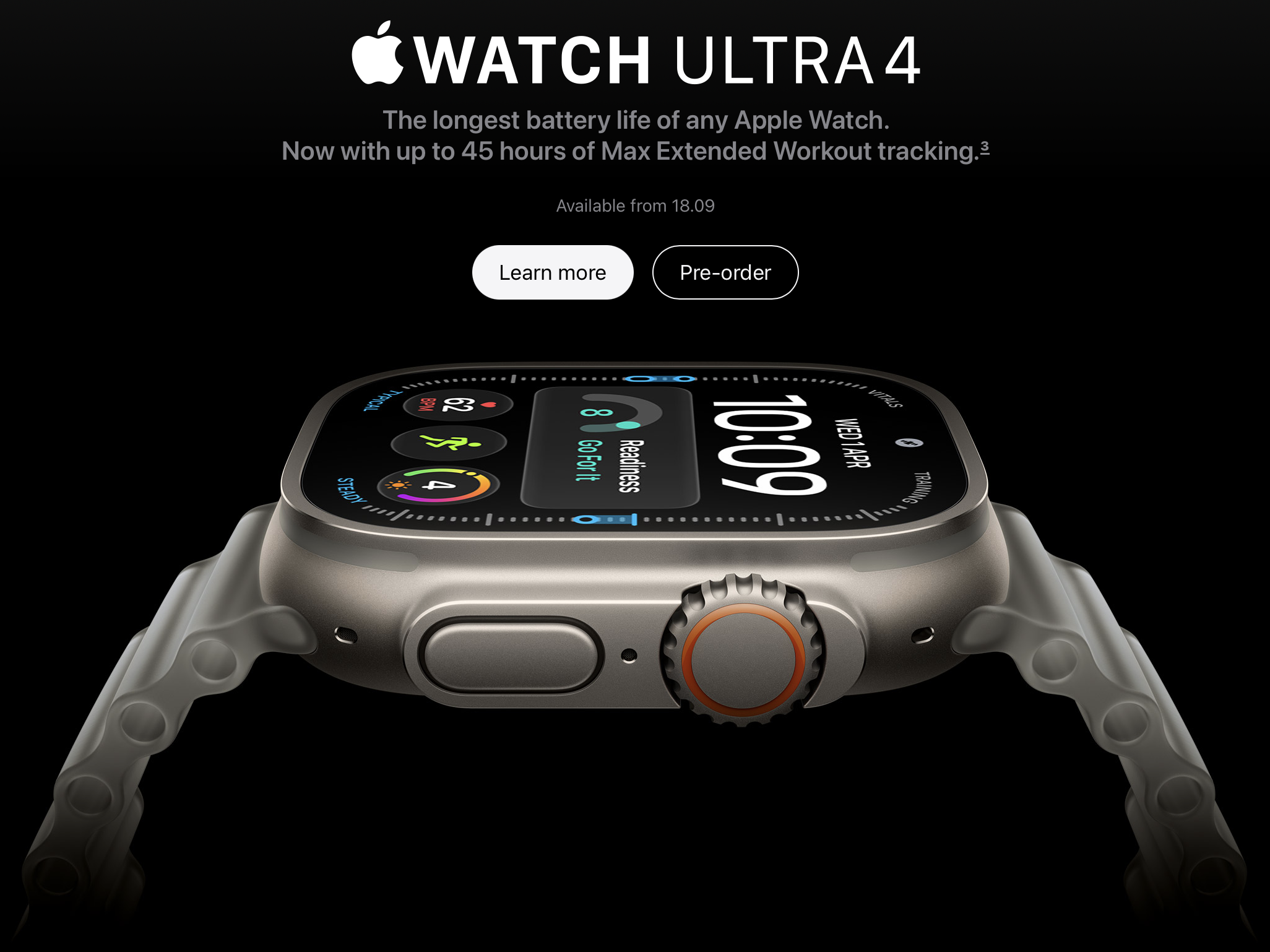
The headline is a new Health Sensing System. Heart rate every five seconds, HRV every five minutes, which Apple says is 60 and 24 times more often than Series 11. That feeds a daily Readiness score that shifts through the day as your activity and vitals change, and a redesigned Health app with a "Health Age" number and a new Longevity tab. It's properly interesting stuff, with one catch: the full Health redesign doesn't arrive until later this year, so what ships on the 18th is the sensors, not the whole experience.
Series 12 comes in aluminium at 42mm and 46mm, titanium, and for the first time ceramic at 43mm and 47mm in pearl white or night blue. I'll say it plainly: I think the ceramic is ugly. That's a taste thing, and yours may differ, but I'm not putting one on my wrist. Aluminium starts at £369 or $399. The Ultra 4 is £749 or $799, with up to 50 hours of normal use and 84 in Low Power Mode. Both ship on 18th September.
But the real story here is Audio Intelligence, and it's the reason I'll be buying both watches to test.
Four features live under that name. Sound Recognition flags things like sirens, alarms and a crying baby. Automatic Music Recognition uses Shazam to tell you what's playing in the background. Live Rewind lets you double-press the crown to see the last 15 seconds of speech as text on your wrist. And Siri Recap writes short summaries of conversations, the sort of thing you'd otherwise forget: the takeaways from a meeting, or a recommendation someone dropped in passing.
Now the caveats, and there are a few. Live Rewind and Siri Recap arrive in beta, later this year, English only. You need a Series 12 or Ultra 4 paired with an iPhone 16 or newer, so the 15 Pro is out. Recaps delete themselves after seven days unless you save them, and Live Rewind transcripts vanish about 30 seconds after your screen dims. These are summaries rather than word-for-word transcripts, and Apple is upfront that they can be wrong or miss things.
What actually excites me is less the features themselves than what they point to. The iPhone has Visual Intelligencethrough its camera. The Watch now has Audio Intelligence through its microphones. And camera-equipped AirPods, which we know are coming, could eventually do both at once. Put those together and you get a set of wearables built to help you understand what's around you and catch the things that matter. That's my reading rather than anything Apple has confirmed, but the pieces are being laid out in plain sight.
So should you upgrade? Unless Audio Intelligence is the thing you've been waiting for, holding on to an Ultra 3, a Series 11 or even a Series 10 is a perfectly sensible decision.
iOS 27 is out on Monday
It's official: iOS 27 lands on Monday 14th September, along with every other Apple update and the first English beta of Siri AI. That's a big week for your iPhone, and I'm planning to make it a big week here too.
There's a lot coming on YouTube over the next few days. But right now, as I write this, I'm also uploading a huge batch of new lessons on iOS 27 and Siri AI to iPhone Essentials Plus, so that by the time the update reaches your phone, the guides are already waiting for you.
If you're not a member yet, here's what that gets you. iPhone Essentials Plus is more than 400 step-by-step lessons, each one taught three ways: a video, a written guide with screenshots, and a printable PDF. You pay once and get lifetime access, including every new lesson and every update I add from here on, which this month means everything I'm learning about iOS 27 and Siri AI, as I learn it.
One more thing worth knowing. I'm also building iPhone Essentials, a new structured course that takes you through the fundamentals from start to finish. Join iPhone Essentials Plus before that launches and you'll get iPhone Essentials for free. Once it's out, the two will be sold separately, so if you've been meaning to sort your iPhone out, now is the best time to do it.
Purchase Links;
iPhone 18 Pro and Pro Max
Apple opened with the Pro phones, which is not how these events normally go. I can't remember them ever leading with the Pro, and it's hard not to read it as a quiet admission: not much to shout about here, so get it done early and let the Duo close the show.
Because the design hasn't moved. Aluminium again, in black, silver, glacier and burgundy. The burgundy is lovely, but I'll be honest, I'm far more pleased that black is back. The Dynamic Island is smaller and now holds three Live Activities. Inside is the A20 Pro on a 2nm process, with Apple claiming up to 40% more GPU performance and 50% more memory bandwidth than the A19 Pro, a bigger vapour chamber to keep it there under load, and fast charging that gets you to roughly 50% in 15 minutes if you've got a 60W adapter to hand.
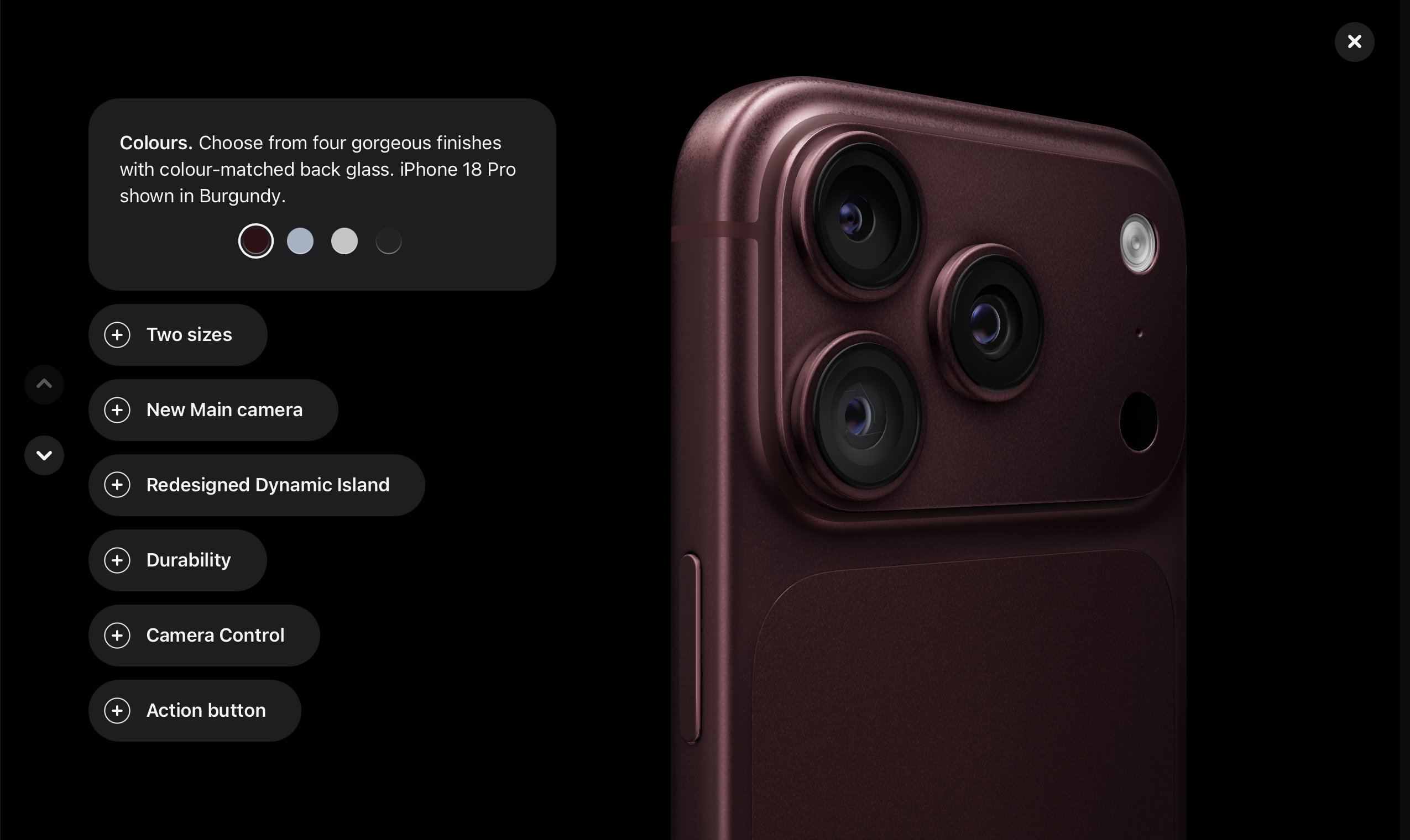
The real story is the camera, and I'm happy to report that last week's prediction held up: the variable aperture is on both Pro sizes, not just the Max. The 48-megapixel main camera now has four settings, f/1.4, f/1.8, f/2.8 and f/4, controlled by six thin blades. Alongside it sit a 48-megapixel ultrawide, a 4x telephoto with an 8x optical-quality crop, and an 18-megapixel front camera. Apple has finally added proper manual controls too: white balance, shutter speed and aperture, plus a histogram. Photographic Styles 3 brings texture and grain, and video gets 4K Dolby Vision time-lapse and cinematic effects you can apply after the fact, now at 60fps.
There's also Reference Image, an optional feature that signs photos straight off the sensor with provenance data. It's a good idea, and it's also worth being clear about what it does. It proves where a photo came from. It doesn't prove that what's in it actually happened.
Now, price. The 18 Pro starts at £1,199 or $1,199, the Pro Max at £1,299 or $1,299. That's £100 up on last year in both cases, which stings a little, but is nowhere near as bad as a lot of us feared going in. Pre-orders open tomorrow, Saturday 12th September, at 1pm BST, with phones shipping on the 18th. A Saturday rather than Apple's usual Friday, because the Friday slot falls on today's 9/11 anniversary.
Should you upgrade? From a 17 Pro, the variable aperture is the whole argument. If you care about photography it's a big deal; if you don't, everything else here is iterative and you can sit this one out. From a 15 Pro or older, there's more than enough to justify the move.
iPhone Duo
And then there was one. Not the iPhone Ultra. Not the iPhone Fold. The iPhone Duo.
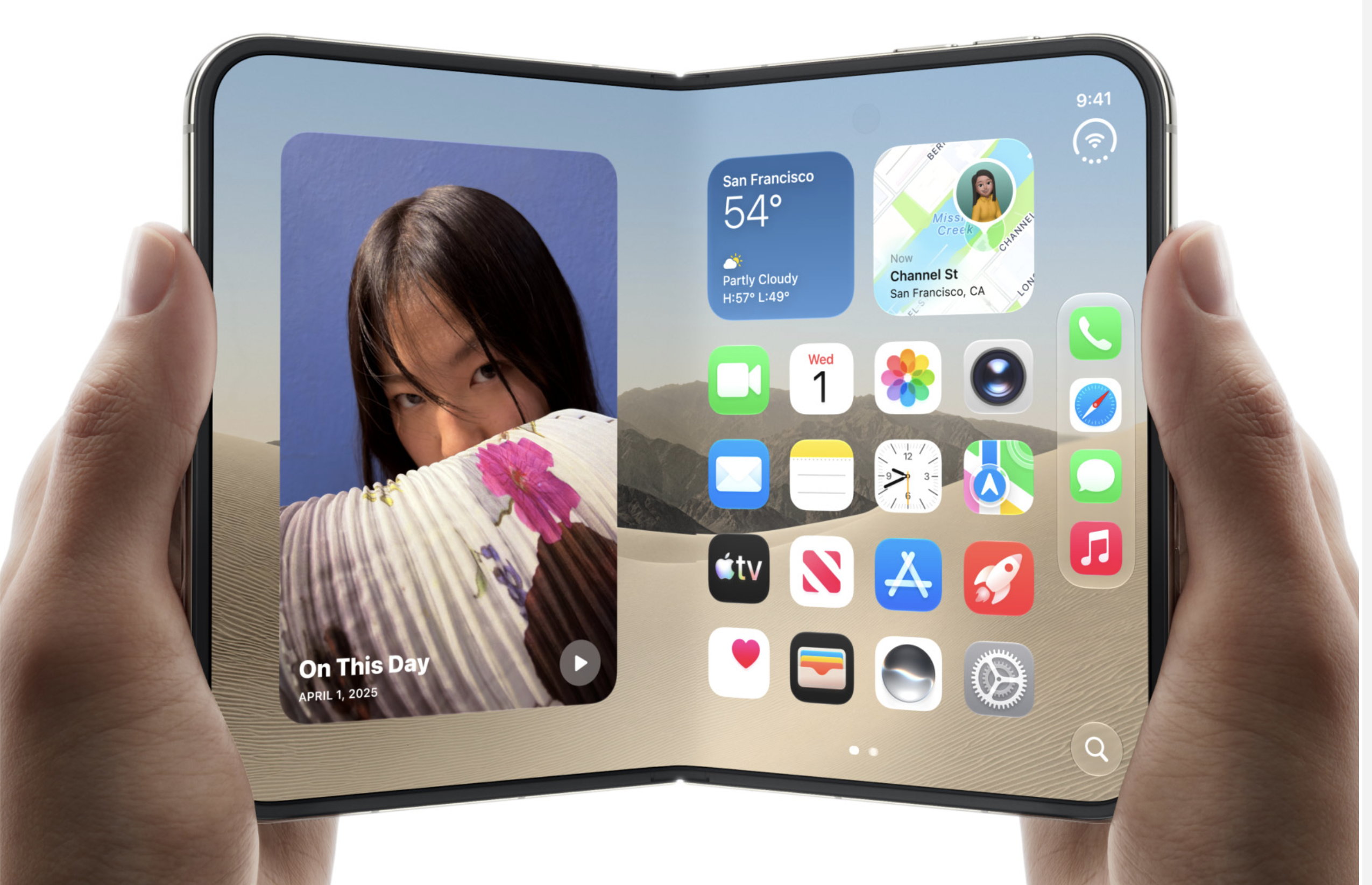
The name leaked a few days before the event and, in hindsight, it's the right one. "Ultra" would have told you this sits above the Pro in every way, and it doesn't. This is a phone with real compromises: Touch ID rather than Face ID, two rear cameras rather than the Pro's three, eSIM only. "Duo" is honest about what you're buying. Two screens, two ways of using it, one device.
Let's get the numbers out of the way, because there are a lot of them. A 5.4-inch outer display and a 7.6-inch inner one, which Apple says gives you 50% more screen than a Pro Max. Both OLED, both 120Hz ProMotion, both always-on, both up to 3,000 nits outdoors. The inner screen has a nano-texture finish to cut glare, and the FaceTime camera hidden inside it is remarkably hard to find (it's in the image above, have a go). The titanium frame and hinge come in at 254 grams, the hinge alone made from 100% recycled titanium and more than 100 individually engineered parts. 5.2mm open, 11.3mm closed. Night Sky or Star White. 256GB up to 2TB. IP68. And, the one that caught me off guard, 25W MagSafe and Qi2 charging. Very welcome.
Then there's the camera, and this is the bit that bothers me. A 48-megapixel main, a 48-megapixel ultrawide with a 2x optical-quality crop, and no telephoto at all. On a two-thousand-pound phone. I've heard early testers compare the system to the iPhone 17e, which is not a sentence I wanted to write about Apple's most expensive iPhone, though I'll hold judgement until I've used one. Up front you get a 12-megapixel Center Stage camera on the outside and that concealed 1080p one inside. Battery is rated at 24 hours of typical use, 31 hours of video on the inner screen and 44 on the outer.
Where Apple has clearly spent its time is the software, and some of it is smart. DuoPreview shows your subject the shot on the outer screen while you compose on the inner. KidCue plays attention-grabbing animations to get children looking at the lens, which as a parent I'm more excited about than I probably should be. SmartTake fires when everyone's ready. DuoFaceTime uses the outer display to pull nearby people into a call. SplitView runs two apps side by side with drag and drop between them, and a half-folded Duo becomes its own stand for hands-free video, FaceTime and StandBy. Apple Pencil support over USB-C is coming later this year, but not at launch.
And the unfolding animation is lovely. Open the phone and iOS does a gradual blur that makes the screen look almost translucent, as if you're looking through it. It's a small thing, it's very Apple, and it's the kind of detail that goes some way to explaining why this company takes so long to ship anything.
The price is the price. £1,999 or $1,999 for 256GB, and a fully specced one sails past three thousand. Cases from £79 in navy or sand, a Folio Kickstand at £129. It ships with iOS 27.1, pre-orders open on 16th October, it's in hands on the 23rd, and another 28 countries and regions follow on the 30th.
So. Will it sell?
Here's the case for. The last time Apple asked people to pay this kind of money for something new, it was the Vision Pro, and the Vision Pro had a problem the Duo doesn't. Nobody understood it until they'd sat through a 30-minute guided demo, and it's hard to build desire for something people can't casually pick up in a shop. The Duo can be picked up in a shop. You open it, and the whole proposition lands in about two seconds. That single, physical moment of unfolding it yourself is worth more than any keynote, and it's something the Vision Pro never had the luxury of.
And here's the case against, which I can't shake. I'm as excited about the Duo as I've been about any Apple product in years, and I still feel like I've seen this film before.
Folding phones aren't new. Samsung has been making them for the best part of a decade, Google has had a go, and the pitch has barely changed in all that time: a phone that opens into a small tablet, two apps at once, better selfies from the main cameras. Apple's version of that pitch on Wednesday was slicker, but it was the same pitch. And for all those years of trying, folding phones have stayed what they were at the start: a product enthusiasts adore and almost everybody else walks straight past. The people who wanted one already have one. The people who didn't have never been given a reason to change their minds, and I didn't hear that reason this week either.
Multitasking is the closest Apple got, and I have my doubts. Luke Miani made the point that SplitView looks wonderful right up until you bring up the keyboard and it swallows roughly half the inner display. How much of that extra screen is really left when you're typing? I don't know yet. Real-world use will settle it, but I've heard the same promise from other foldables and it has never quite delivered. Apple Pencil support, when it arrives, is nice to have rather than a reason to buy. And a starting price north of two grand means the Duo has to justify itself harder than any iPhone before it.
What worries me more than any of that is Apple's own history. I think Apple built the perfect iPhone with the Pro and the Pro Max. Then it kept trying to sell something alongside them, and the market kept politely declining. The mini. The Plus. The Air, which I wanted to love and couldn't quite. Every one of those was a good phone that wasn't the phone most people wanted. The Duo is far more ambitious than any of them, and far more expensive. Apple will tell you the plan is a long game: plant the category now, let the second and third generations do the selling. I'd like to believe that. I've just watched this company quietly retire too many "second iPhones" to take it on trust.
Which brings me to the question I keep coming back to: could it replace my Pro?
The Pro has been my Goldilocks phone for years. I've spent the past twelve months bouncing between it and the Air, wanting the Air to become my daily driver, and every time the Pro's telephoto drags me back. With young kids, being able to grab a quick zoomed shot without getting in their faces is something I do constantly. It's not a nice-to-have, it's how most of my photos happen. And the Duo doesn't have one.
What changes the maths is iPhone Handoff. It lets you use one phone number across two iPhones. The catch is that it needs iOS 27, Wi-Fi, and a carrier that supports it, and right now that list is T-Mobile in the US and Telekom in Germany. No UK carrier has said a word yet. But if it does come here, I'd seriously consider carrying both: a Pro for the camera, a Duo for everything else. I'm aware that's a luxury almost nobody can justify, and I'm not pretending otherwise. For what I do, though, it might be the setup I've been circling for a year without knowing it.
Because the way I'd actually use a Duo is boringly simple. Fire off a WhatsApp with it closed, then open it up to read a book, catch up on an article or watch some YouTube. Some of Apple's own scenarios felt forced, particularly the one where you watch Netflix on a half-folded phone with a tiny viewing area. Using it as its own tripod, though, makes complete sense, and I suspect that's the one that'll quietly become the habit.
Apple has made the folding phone I'd most want to own. I'm just not convinced it's made the one most people will.
What else happened?
Apple quietly put $100 on everything in the existing lineup. iPhone 16 is now $799, iPhone 17e $699, iPhone 17 $899 and iPhone Air $1,099. Last year's Pros have gone from Apple's own range entirely, so if you wanted a cheaper 17 Pro, that window closed on Wednesday.
Every operating system lands together on Monday 14th September: iOS 27, iPadOS 27, macOS Golden Gate, watchOS 27, tvOS 27 and visionOS 27. Siri AI goes into English beta the same day, with French, Japanese, Korean, Portuguese and Spanish following in October. If you're in the EU, though, it's not coming to iOS, iPadOS or watchOS at launch.
And for the record, what we didn't get: no iPhone 18, no Air 2, no HomePod, no Apple TV, no Macs, no iPads. Which brings us neatly to the next question.
What's next?
I'd expect up to two more events before Christmas. One for the Mac, which is where the iMac refresh and the OLED touchscreen MacBook Pro redesign would make sense. And possibly a separate Home event for the Apple TV, the HomePod, and the rumoured HomePad, security camera and doorbell. That's a lot of hardware still sitting in the wings.
My Verdict
Predictable, and outside of the Duo, mostly iterative. If Apple had shown only the Pros, the Watches and the AirPods, this would have been one of the least memorable keynotes in years, and I'd be telling you to keep your wallet shut.
But the Duo saved it. It's beautiful, it's ambitious, it's compromised in ways that bother me, and it's the most I've wanted to get my hands on a new Apple product in a very long time.
Pro pre-orders open tomorrow. I'll have full coverage as everything arrives over the coming weeks.
Tip of the Week
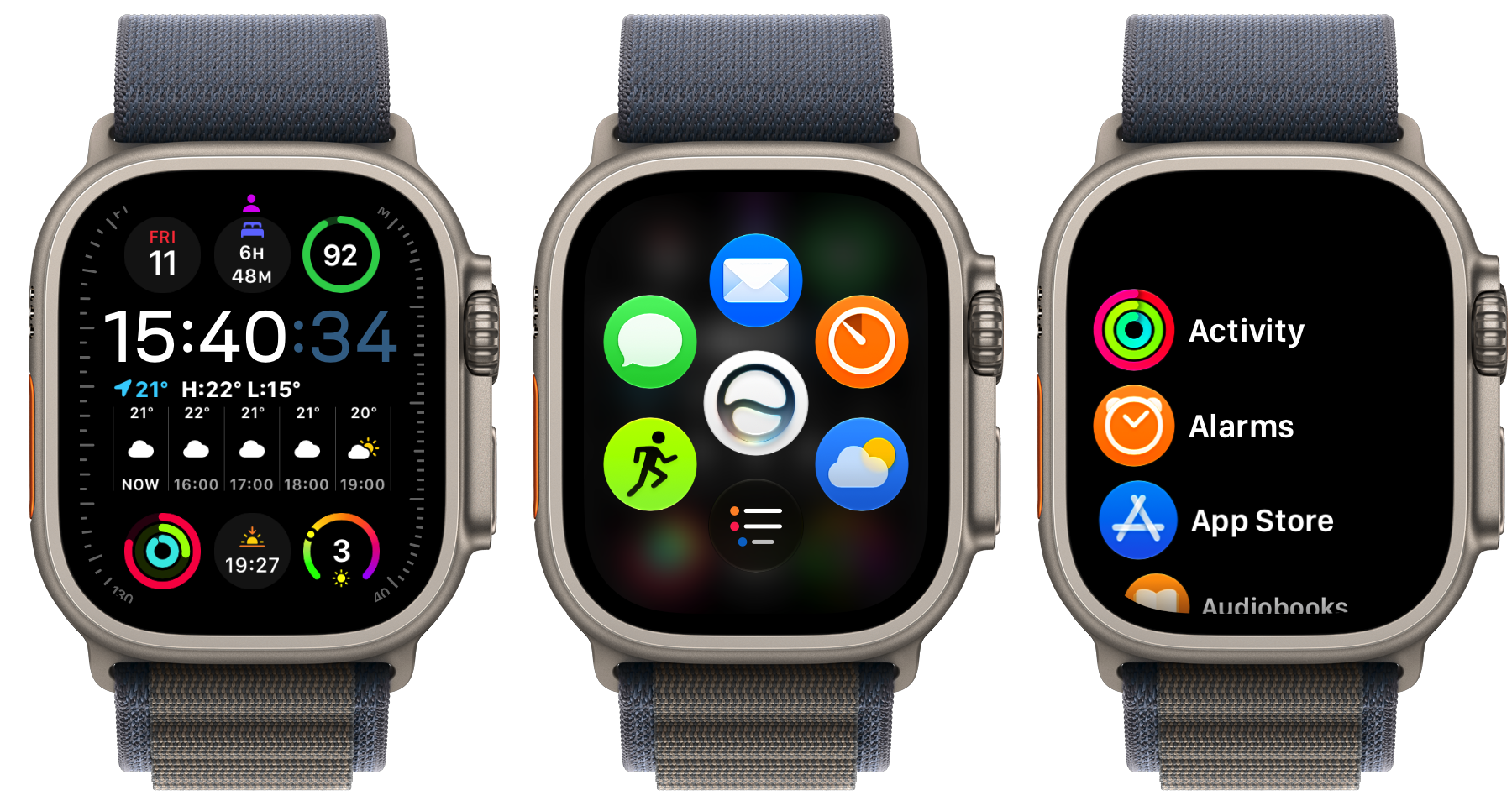
Here's one for the upcoming watchOS 27.
Did you know, that with the new OS, when you tap the digital crown, you're now taken to a constantly updating app carousel, which usually has the exact apps that you want. You can tap the All Apps button at the bottom of the screen to go to your app list.
Honestly, I hated it at first, but now can't imagine not having it!