This week, a sneak-peak at iOS 27, some more solid info about a possible MacBook Neo 2, and some iPhone 18 pricing news.
Our first real look at iOS 27
Every year, just before Global Accessibility Awareness Day, Apple previews a handful of accessibility features that are coming to its software later in the year. It's become a tradition since 2021, and for those of us who spend far too much time thinking about Apple's next moves, it's also become something else: our first official peek at what's coming in the next version of iOS.
This year's batch is heavily powered by Apple Intelligence, which is notable in itself given how little Apple Intelligence has delivered so far. But these features suggest Apple is starting to find genuinely useful applications for its AI, particularly for users who rely on assistive technology.
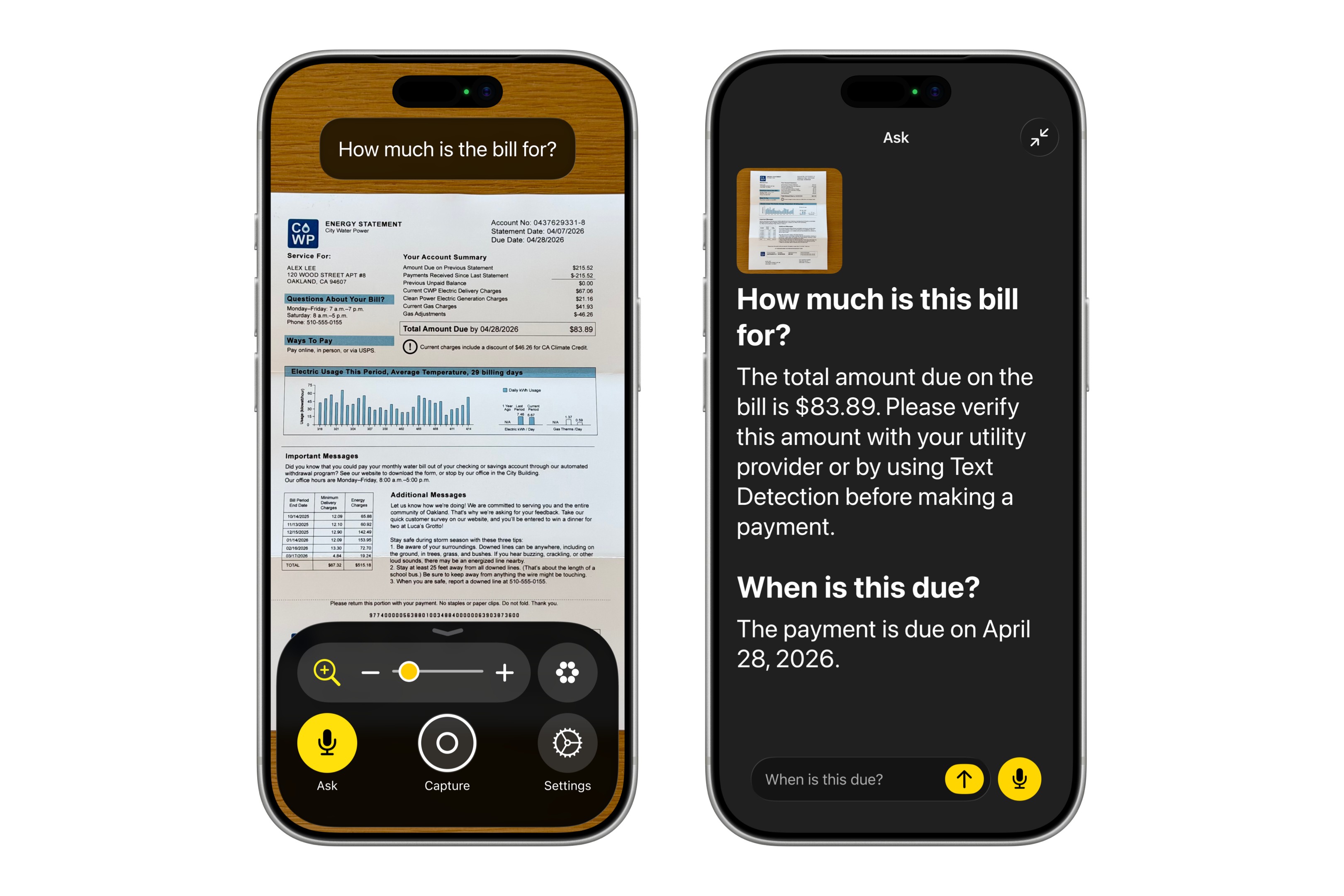
The standout is an upgrade to Voice Control, which lets you operate your entire iPhone with spoken commands. Currently, you need to remember the exact label of every button and control on screen to use it effectively, which can be frustrating when labels are vague or inconsistent. In iOS 27, Apple Intelligence will let you describe what you want to tap using natural language. Instead of saying "tap button three," you'll be able to say something like "tap the blue icon in the top right." MacRumors pointed out that this is a strong hint at just how much smarter Siri's on-screen awareness has become behind the scenes, and it suggests the broader Siri overhaul could be more capable than many people expect.
VoiceOver is getting a significant upgrade too. The Image Explorer will use Apple Intelligence to produce far more detailed descriptions of images across the system, from photos to scanned documents to receipts. You'll also be able to press the Action Button to ask a question about whatever is in your camera's viewfinder and get a detailed spoken response, with follow-up questions supported. Magnifier is getting similar treatment, with the ability to ask conversational questions about objects and text in the real world.
Other features include automatically generated subtitles for any video on your device (even ones without existing captions), a new Reading Mode that simplifies cluttered web pages and documents into clean, adjustable text, Braille Access improvements for reading and writing in contracted Braille, and on Vision Pro specifically, a new feature that lets power wheelchair users control their chair using the headset's eye-tracking system, launching with support for Tolt and LUCI drive systems in the US. That last one is niche by definition, but it's the kind of feature that genuinely changes someone's life.
None of these features have firm release dates, but they'll almost certainly arrive with iOS 27, iPadOS 27, and macOS 27 in September. And while the accessibility angle is the headline, what's really exciting here is the broader signal about iOS 27 itself. If Apple Intelligence can power natural language screen understanding for Voice Control, it can power it for Siri too. If it can generate detailed image descriptions on the fly, the photo editing tools we discussed a few weeks ago start to make more sense. These aren't just accessibility features. They're a glimpse at the engine that's going to run underneath everything Apple announces at WWDC on 8 June.
We're now less than three weeks away. And for the first time in a while, these previews have me genuinely curious about what Apple has been building.
You watch the videos? But how much do you remember?
If you're anything like most of my audience, you've probably watched dozens of iPhone tips videos over the years. Maybe even hundreds. You've bookmarked a few, saved some to Watch Later, maybe even scribbled a note or two. But when you actually need that tip, when you're standing there trying to remember how to do that thing you definitely saw in a video once, it's gone. You can't remember which video it was in, what it was called, or whether it was even on my channel or someone else's.
That's not a you problem. That's a content problem. YouTube is brilliant for discovery, but it's terrible for reference. Tips get buried in ten-minute videos, mixed in with ads and sponsor reads, and once you've scrolled past them, they're effectively lost. You'd have to rewatch the entire video just to find the one thing you needed.
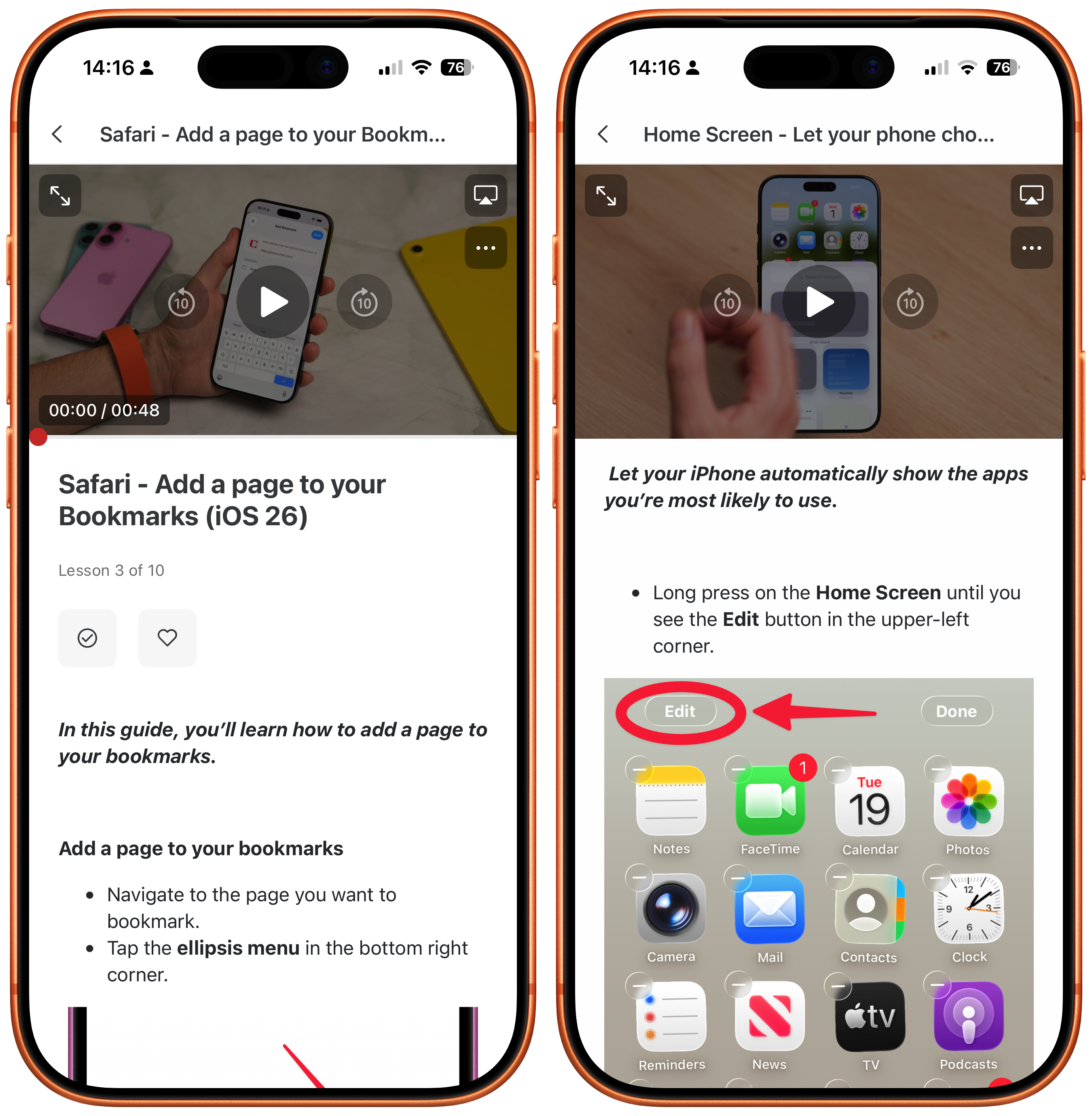
iPhone Essentials Plus was built to solve exactly this. It's not another set of videos to watch and forget. It's a structured, searchable library of over 250 lessons (and growing), each one focused on a single topic, with a video walkthrough, a written step-by-step guide, and a downloadable PDF you can keep. The tips you've half-remembered from a YouTube video, organised and accessible whenever you need it.
The course is updated regularly as Apple releases new features, so it stays current with your phone. I've also recently added ad-free, sponsor-free versions of my YouTube videos as bonus content, plus a brand new standalone course called iPhone Battery Made Easy is now included at no extra cost.
It's a one-time purchase, no subscription, with lifetime access. If you've ever thought "I know I saw a tip for this somewhere," this is the answer.
Purchase Links;
- iPhone Battery Made Easy
- iPhone Essentials Plus
- Mac Essentials Plus
- iPhone & Mac Essentials Plus Discount Bundle
A MacBook Neo sequel already?!
The MacBook Neo has barely been on sale for two months and there are already rumours about what comes next. Reports this week suggest Apple is working on a refreshed model, potentially called the MacBook Neo S or Neo SE, that could arrive as soon as late 2026.
The reason? As we discussed a few weeks ago, the original Neo was built using leftover A18 Pro chips that didn't quite make the grade for the iPhone 16 Pro. Apple stockpiled those "binned" chips and used them to keep the Neo's price down to $599/£599. Clever stuff. The problem is that the Neo has been so popular that Apple is burning through that stockpile far faster than planned, and ordering fresh A18 Pro chips from TSMC eats into the margins that made the whole thing work in the first place.

The logical fix is to move the Neo to the A19 Pro chip once iPhone 18 Pro production is underway later this year, creating a fresh supply of binned chips from that cycle. Six Colors' Jason Snell made a compelling argument a few weeks ago that the Neo was almost certainly designed with exactly this in mind: a reusable chassis built to last four or five years with different chips sliding in as they become available. No major redesign needed, just a chip swap and go.
There's also talk that Apple might use the transition to bump the base RAM from 8GB to 12GB and potentially improve SSD speeds, which would address two of the most common criticisms of the current model. Whether Apple calls it the Neo S, the Neo SE, or just quietly refreshes the existing Neo without changing the name is anyone's guess. Apple has done all three approaches in the past with different products.
The bigger picture here is that the Neo has clearly become a permanent part of Apple's Mac lineup, not a one-off experiment. When a $599/£599 laptop sells 10 million units in its first few months and is still backordered, you don't let it fade away. You figure out how to keep making it. And if that means designing a pipeline where each year's iPhone chips become next year's Neo chips, that's a genuinely smart long-term strategy that keeps the price low and the supply essentially self-renewing.
Some good news for iPhone 18
Here's a bit of good news if you're planning to upgrade this September. Despite the global RAM shortage that's been causing havoc across Apple's product lineup, at least one analyst believes Apple intends to keep iPhone 18 Pro pricing exactly where it is.
That might not sound like a big deal until you consider what's happening behind the scenes. DRAM prices have seen their largest quarterly increases on record this year, driven almost entirely by insatiable demand from AI data centres hoovering up memory supply. We've already seen the knock-on effects across Apple's Mac lineup, with Mac mini and Mac Studio configurations disappearing from the website, the 512GB RAM option on the Mac Studio being removed entirely, and prices on remaining upgrades going up by $400/£400. Android manufacturers have been less shy about passing those costs on, with several reportedly raising smartphone prices to offset higher component costs.
Apple, it seems, is planning to eat it. GF Securities analyst Jeff Pu said this week that he expects Apple to use an "aggressive pricing strategy" for the iPhone 18 Pro and Pro Max, keeping starting prices flat compared to the current iPhone 17 Pro lineup. That means the iPhone 18 Pro is expected to hold at $1,099/£1,099 and the Pro Max at $1,199/£1,199, both with 256GB of storage. Given that September is shaping up to be an unusually premium-heavy launch, with the iPhone 18 Pro, Pro Max, and the foldable iPhone Ultra potentially all arriving together and no cheaper models until spring 2027, keeping the Pro pricing stable feels like a smart move. The last thing Apple needs is a price hike on top of removing the affordable options entirely.
It's worth noting that this is one analyst's prediction, not a confirmed Apple decision, and things could change between now and September. There's also speculation that while the base prices may hold, higher storage tiers could see increases to help offset the rising memory costs. But if the entry prices do stay flat, it's a consumer-friendly call at a time when almost everything else in tech is getting more expensive.
Tip of the Week
Did you know when you're recording an audio message in the Messages app, if you want to pause and take a moment to think, you can press the stop button but then resume recording?
You would simply tap the little time button just to the right of the send button to continue recording. You can do this as many times as you like.