This week, nobody can agree on the iPhone Ultra, Apple makes a major financial play, whilst debating another...
iPhone Ultra: Ready or Not?
The iPhone Ultra has been in the news almost every day this week, and the remarkable thing is that every new report seems to directly contradict the one before it. Depending on which analyst, leaker, or supply chain source you choose to believe, Apple's first foldable is either sailing smoothly towards a September launch, facing potential delays until Q4, or might not ship in meaningful quantities until early next year. For a product that technically still doesn't exist, there's an awful lot of arguing about it.
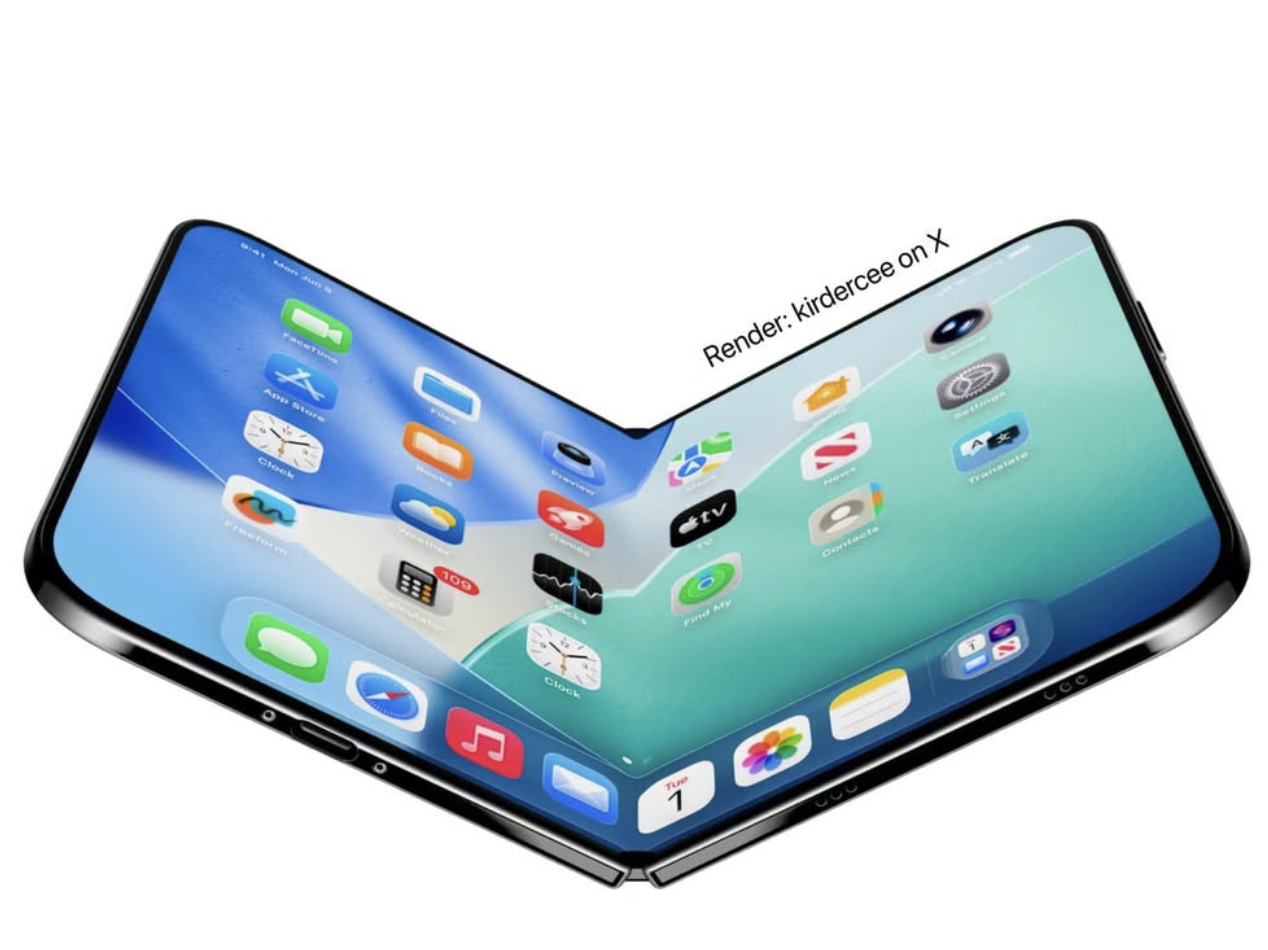
Here's how the week played out. Last week, Nikkei Asia reported that Apple has told suppliers to prepare for approximately 10 million foldable iPhones this year, up from a previous forecast of 7 to 8 million. That's a significant increase and was widely read as a sign of growing confidence. Apple has reportedly booked parts for roughly 80 million smartphones for the second half of 2026, with total iPhone production expected to exceed 220 million units this year.
Then, over the weekend, supply chain analyst Ming-Chi Kuo poured cold water on the whole thing. Kuo projects that Apple will realistically ship only 3 to 5 million foldable iPhones in 2026, well below the 10 million figure. He also clarified that the widely circulated claim of 15 to 20 million units almost certainly represents cumulative demand over the product's entire two to three year lifecycle, not a single year. Samsung Display, the exclusive supplier of the foldable OLED panels, has annual capacity for 7 to 8 million panels, but since production in 2026 may only span a few months, actual output will likely fall well short of that. Kuo's assessment was that the iPhone Ultra would be announced in September but might not go on sale until Q4, with smooth shipments potentially not arriving until 2027.
And then, earlier this week, yet another set of reports landed saying the exact opposite. Chinese financial outlet Cailian Press, along with East Money and Korea's The Bell, all independently confirmed that the iPhone Ultra has entered mass production, that Foxconn has launched large-scale hiring to secure assembly labour, and that a September delivery window is still on track. Supply chain sources told Cailian Press they had not heard of any delay. Chinese leaker Fixed Focus Digital was even more direct, calling delay rumours "false" and a 2027 slip "far-fetched."
So who's right? Honestly, I have no idea. And I don't think anyone else does either.
There's a certain irony to all of this. Apple has had its iPhone 18 Pro leaked in drop-test videos stolen from a manufacturing partner. It's had the entire iOS 27 interface published as renders by Bloomberg weeks before WWDC. The foldable's design, specs, and even its likely name have been discussed in forensic detail for months. And yet the one thing Apple seems to have genuinely kept under wraps is whether or not it can actually make enough of them. The leaker community can tell you the exact thickness of the hinge mechanism, but nobody can agree on how many units will ship in September. It would be funny if it wasn't so confusing.
What I will say is this. Even if the iPhone Ultra launches on time and in decent quantities, there's a real question about whether 10 million units, or even 3 to 5 million, is realistic demand for a first-generation foldable starting at $2,000 to $2,500. We've been here before. The iPhone Air was a major new product line, a genuine rethinking of what a thin iPhone could be, and nobody bought it. It captured just 6% of US iPhone sales in its launch quarter, and the second generation has been delayed to spring 2027 as a result.
Now, I do think the Ultra is different. The Air was a thinner version of something you already had. The Ultra is a genuinely new form factor, a whole new way of using an iPhone, and that kind of novelty tends to generate excitement in a way that "slightly thinner" simply doesn't. But it could also end up in Vision Pro territory, where the price rules out a huge chunk of the potential audience before they've even tried it. And unlike a MacBook or an iPad, where you broadly know what you're getting, the Ultra is a product where you won't know if you like the form factor until you've lived with it. That short, stout folded shape. The wider-than-tall unfolded display. The crease down the middle. Touch ID instead of Face ID. If you spend $2,500 and discover after a week that you just don't get on with it, you're stuck. That's a lot of money to gamble on a form factor you've never used.
It's definitely one of the most interesting product launches Apple has attempted in years. Whether it's a breakthrough or a very expensive experiment, we should know in a couple of months. But right now, the only thing anyone can agree on is that nobody can agree on anything.
You watch the videos? But how much do you remember?
If you're anything like most of my audience, you've probably watched dozens of iPhone tips videos over the years. Maybe even hundreds. You've bookmarked a few, saved some to Watch Later, maybe even scribbled a note or two. But when you actually need that tip, when you're standing there trying to remember how to do that thing you definitely saw in a video once, it's gone. You can't remember which video it was in, what it was called, or whether it was even on my channel or someone else's.
That's not a you problem. That's a content problem. YouTube is brilliant for discovery, but it's terrible for reference. Tips get buried in ten-minute videos, mixed in with ads and sponsor reads, and once you've scrolled past them, they're effectively lost. You'd have to rewatch the entire video just to find the one thing you needed.
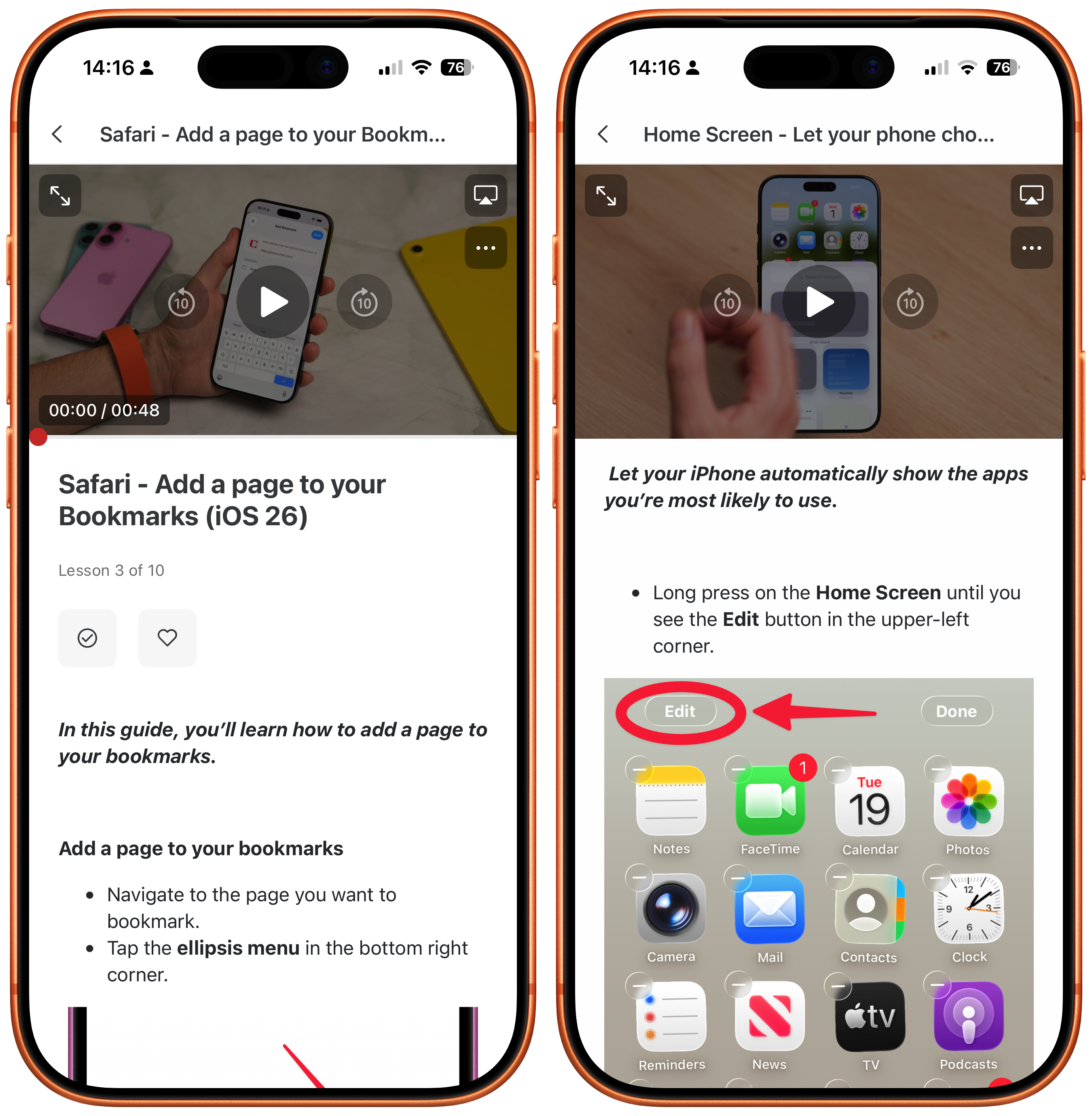
iPhone Essentials Plus was built to solve exactly this. It's not another set of videos to watch and forget. It's a structured, searchable library of over 250 lessons (and growing), each one focused on a single topic, with a video walkthrough, a written step-by-step guide, and a downloadable PDF you can keep. The tips you've half-remembered from a YouTube video, organised and accessible whenever you need it.
The course is updated regularly as Apple releases new features, so it stays current with your phone. I've also recently added ad-free, sponsor-free versions of my YouTube videos as bonus content, plus a brand new standalone course called iPhone Battery Made Easy is now included at no extra cost.
It's a one-time purchase, no subscription, with lifetime access. If you've ever thought "I know I saw a tip for this somewhere," this is the answer.
Purchase Links;
- iPhone Battery Made Easy
- iPhone Essentials Plus
- Mac Essentials Plus
- iPhone & Mac Essentials Plus Discount Bundle
Apple Poised to Snap Up AI Startup
This is the kind of story that sounds like it should be science fiction, but apparently isn't. The Information reported this week that Apple is in talks with PrismML, a tiny startup spun out of Caltech, about potentially acquiring or licensing its technology. The reason? PrismML has done something that Apple's own engineers reportedly couldn't: compress a massive AI model small enough to run entirely on an iPhone, without turning it into mush.
Here's why this matters. At WWDC last month, Apple unveiled its new on-device AI model. It has 20 billion parameters, which sounds impressive until you learn that it uses a "sparse architecture," meaning only 1 to 4 billion of those parameters are actually active at any given time. The rest are essentially asleep. It's like having a 20-storey building but only being allowed to use two floors at once.
PrismML took Alibaba's open-source Qwen 3.6 model, which has 27 billion parameters and weighs in at a hefty 54 gigabytes, and compressed it down to under 4 gigabytes. That's a compression ratio of over 90%. But here's the genuinely remarkable part: all 27 billion parameters remain active simultaneously, with no measurable loss in performance. They ran it locally on an iPhone 17 Pro. No cloud. No server. Just the phone in your hand running an AI model that would normally require a data centre.
To put that in context, sources told The Information that Apple encountered "severe performance degradation" last year when it tried to compress its own internal AI models to fit on iPhones. Apple, with all its resources, its custom silicon, and its army of engineers, couldn't crack it. A startup with a $16.25 million seed round and a maths professor from Caltech apparently has.
That seed round, incidentally, was led by Khosla Ventures, the same firm that provided OpenAI's initial venture capital funding. Caltech holds the patents on the underlying compression technology and has granted PrismML an exclusive licence. The startup plans to release its open-source model next Tuesday.
If Apple does acquire PrismML, it would fit perfectly into the company's long-standing philosophy of keeping as much processing on-device as possible. Privacy, speed, and not relying on an internet connection are the three pillars of Apple's approach to AI, and all three are served by running models locally rather than in the cloud. While Meta, Microsoft, and Amazon are spending hundreds of billions building out AI data centres, Apple's play has always been to make the data centre irrelevant for everyday tasks. PrismML's technology could be the missing piece that makes that vision actually work.
It also ties directly into the memory shortage we've been covering for months. Running AI in the cloud is expensive, and it's getting more expensive every quarter as memory prices surge. If Apple can shift more AI processing onto the device itself, it reduces its dependence on cloud infrastructure and, by extension, on the memory chips that are currently in such short supply. It's a strategy that's good for privacy, good for performance, and potentially good for Apple's bottom line.
Neither Apple nor PrismML has commented publicly. But if this deal goes through, the startup that compressed a 54-gigabyte AI model into something that fits on your phone might end up being one of the most consequential acquisitions Apple has made in years. Sometimes the biggest moves come from the smallest companies.
Apple, Broadcom Seal Billion-Dollar Chip Deal
Apple announced earlier this week that it has signed a deal worth more than $30 billion with Broadcom to produce custom chips at Broadcom's factory in Fort Collins, Colorado, through 2031. Over 15 billion chips will be manufactured under the agreement, supporting hundreds of American jobs. It's the single largest commitment Apple has made under its American Manufacturing Program, and on the surface, it's a straightforward story about securing supply.
But scratch beneath the surface and this deal is doing a lot more work than that.
The chips in question are FBAR filters, specialised radio-frequency components that manage wireless signal traffic inside every iPhone, iPad, and Mac. They handle your 5G, Wi-Fi, Bluetooth, and GPS connections. They're important, but they're not the chips causing Apple's current headaches. The memory chips that have driven price increases across the entire Mac and iPad lineup come from Samsung, SK Hynix, and Micron, and increasingly, from the Chinese suppliers Apple is actively trying to do business with. The Broadcom deal doesn't solve the memory shortage. It solves a different problem entirely.
What it does is diversify Apple's manufacturing base. For years, Apple has been almost entirely dependent on Asian manufacturing for its components and assembly. That's worked brilliantly when global trade is stable, but it becomes a vulnerability when it isn't. Tariffs, export restrictions, geopolitical tensions, and pandemic-era supply chain disruptions have all exposed how fragile that dependency can be. By locking in $30 billion worth of domestic chip production through 2031, Apple is building a buffer against uncertainty, regardless of what the political or trade landscape looks like in two, three, or five years' time.
It's also part of a broader pattern. Apple's $600 billion American Manufacturing Program, announced last year, has seen the company steadily increasing its US-based production commitments. The Broadcom deal is the largest single piece of that puzzle so far. At the same time, Apple is lobbying for clearance to purchase memory chips from Chinese manufacturers to ease the current shortage. On the face of it, those two strategies seem contradictory. Invest in American manufacturing while simultaneously trying to buy from China? But from Apple's perspective, it's not contradictory at all. It's risk management. The more sources you have, the less dependent you are on any single one. The more places your chips come from, the harder it is for any one disruption to bring your supply chain to its knees.
For Tim Cook, who transitions to executive chairman in September, this is legacy work. The man who built his reputation on supply chain mastery is spending his final months as CEO ensuring that Apple's supply chain can survive whatever the next decade throws at it. Whether that means making chips in Colorado, sourcing memory from China, or both at the same time, the strategy is the same: never be dependent on a single source, a single country, or a single deal.
$30 billion is a lot of money. But for a company that sells over 200 million iPhones a year, it's the cost of making sure those iPhones keep getting made.
Tip of the Week
Did you know you can break down larger reminders into smaller, manageable steps using subtasks?
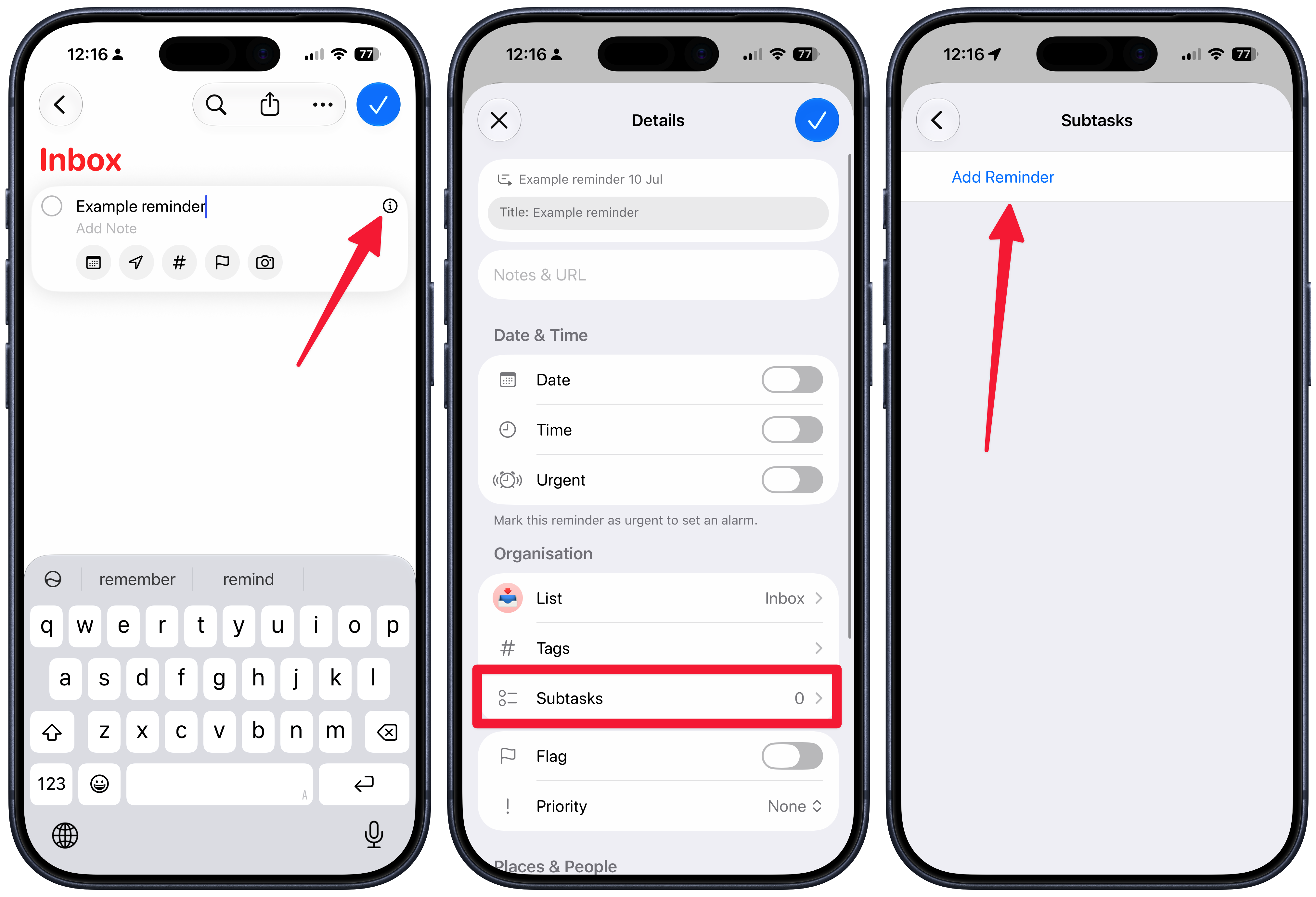
To do this, tap on an existing reminder. Tap the 'i' (Info) button on the right. Scroll down and tap 'Subtasks'. Tap 'Add Reminder' to add subtasks. Press the 'Back' button in the top left. Press the blue tick to save.