This week, OpenAI and Apple might be heading for the divorce court, Google showed off some incredible AI tools, and iOS 26.5 is here
OpenAI and Apple's 2-year marriage is already on the rocks
Bloomberg dropped a pretty significant story this week: the two-year-old partnership between Apple and OpenAI has reportedly deteriorated to the point where OpenAI's lawyers are actively working with an outside legal firm on potential breach of contract action. No lawsuit has been filed yet, and OpenAI is said to prefer resolving things outside of court, but the fact that lawyers are involved at all tells you how badly this has gone.
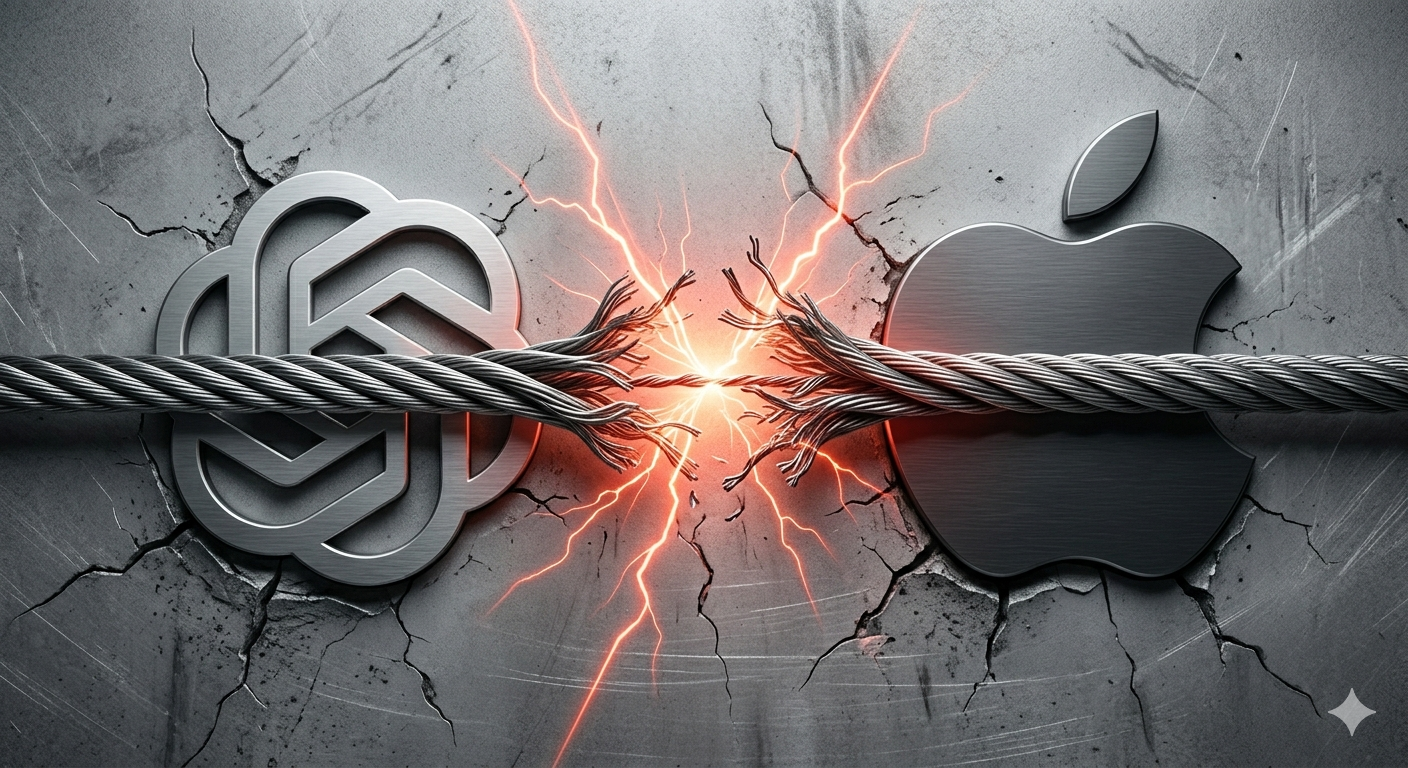
The details make for grim reading. When OpenAI signed the deal back in 2024, the expectation was that ChatGPT would be deeply integrated across Apple's apps, given prime placement within Siri, and promoted in a way that would drive a wave of new paying subscribers. OpenAI believed this could generate billions of dollars in annual subscription revenue. That hasn't come close to happening.
One unnamed OpenAI executive quoted by Bloomberg didn't hold back. "We have done everything from a product perspective," they said. "They have not, and worse, they haven't even made an honest effort." They went on to describe the deal as a "failure," claiming that Apple was unwilling to share specifics about how the integration would actually work before the deal was signed. "They basically said, 'OpenAI needs to take a leap of faith and trust us.' It didn't work out well."
Now, it's difficult to have a huge amount of sympathy here. OpenAI is not a small startup being pushed around by a tech giant. It's one of the most well-funded companies in the world, backed by Microsoft to the tune of billions, and it entered this partnership willingly. But the picture that's emerging is one where Apple's culture of secrecy essentially kept OpenAI in the dark about what they were actually signing up for, and what was delivered fell well short of what was discussed.
If this were a small developer or app company getting this treatment, it would be a familiar story. Apple has a long and well-documented history of being a difficult partner. From Google to Adobe to Epic, companies that build on Apple's platform often find themselves at the mercy of decisions made entirely in Cupertino, with little warning and even less negotiation. The difference here is that OpenAI has the resources and the profile to push back, and it reportedly intends to.
From Apple's side, there are grievances too. Bloomberg reports that Apple has been frustrated by OpenAI's push into hardware, an effort being led by former Apple design chief Jony Ive and staffed in part by engineers poached from Apple's own teams. Apple executives have reportedly been "fuming for more than a year" over OpenAI's recruiting tactics. There are also said to be concerns about OpenAI's privacy standards, which is a predictable sticking point for a company that has built its entire brand around protecting user data.
Speaking purely from my own experience, I can say that the current ChatGPT integration in iOS is poor. To get a ChatGPT response through Siri, you have to specifically say the words "ChatGPT" in your request, and even then the response is displayed in a stripped-back format that's nowhere near as useful as just opening the ChatGPT app. I never use it. I genuinely don't know anyone who does. If OpenAI's complaint is that Apple buried the integration and didn't promote it properly, that tracks with what actually using it feels like.
The timing of all this is particularly interesting. Apple is expected to announce new AI integrations at WWDC on 8 June, with iOS 27 reportedly opening up Siri to multiple third-party AI models including Google's Gemini and Anthropic's Claude. OpenAI says this isn't driving the legal action, since the original deal was never meant to be exclusive. But it does mean that whatever prime placement OpenAI hoped for is about to get even more diluted. The revamped Siri is expected to be powered primarily by Google's Gemini, with a new "Extensions" feature allowing users to choose which AI model they want for different tasks.
Where this goes next is anyone's guess. OpenAI could send a formal breach of contract notice, which would be a shot across the bow without necessarily escalating to a full lawsuit. Or the two companies could quietly renegotiate behind closed doors before WWDC. Either way, it's a messy situation, and one that raises an awkward question: if Apple can't maintain a productive relationship with the biggest AI company on the planet, what does that say about its ability to build the AI-powered future it keeps promising?
You watch the videos? But how much do you remember?
If you're anything like most of my audience, you've probably watched dozens of iPhone tips videos over the years. Maybe even hundreds. You've bookmarked a few, saved some to Watch Later, maybe even scribbled a note or two. But when you actually need that tip, when you're standing there trying to remember how to do that thing you definitely saw in a video once, it's gone. You can't remember which video it was in, what it was called, or whether it was even on my channel or someone else's.
That's not a you problem. That's a content problem. YouTube is brilliant for discovery, but it's terrible for reference. Tips get buried in ten-minute videos, mixed in with ads and sponsor reads, and once you've scrolled past them, they're effectively lost. You'd have to rewatch the entire video just to find the one thing you needed.
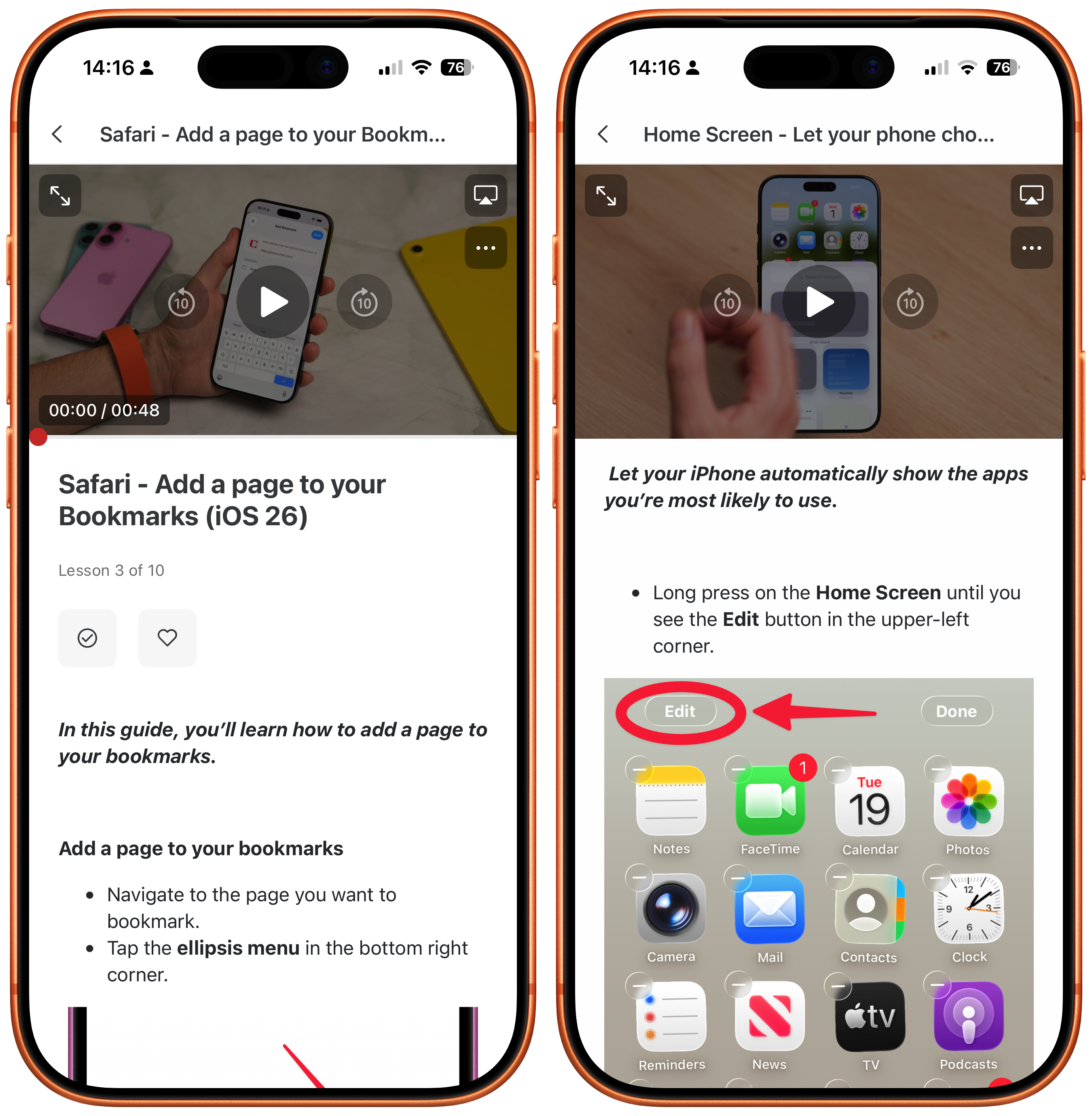
iPhone Essentials Plus was built to solve exactly this. It's not another set of videos to watch and forget. It's a structured, searchable library of over 250 lessons (and growing), each one focused on a single topic, with a video walkthrough, a written step-by-step guide, and a downloadable PDF you can keep. The tips you've half-remembered from a YouTube video, organised and accessible whenever you need it.
The course is updated regularly as Apple releases new features, so it stays current with your phone. I've also recently added ad-free, sponsor-free versions of my YouTube videos as bonus content, plus a brand new standalone course called iPhone Battery Made Easy is now included at no extra cost.
It's a one-time purchase, no subscription, with lifetime access. If you've ever thought "I know I saw a tip for this somewhere," this is the answer.
Purchase Links;
- iPhone Battery Made Easy
- iPhone Essentials Plus
- Mac Essentials Plus
- iPhone & Mac Essentials Plus Discount Bundle
Google showed us a future I don't think we need...
Google held its Android Show this week ahead of the full I/O keynote next week, and the sheer volume of AI features it announced was staggering. I want to be clear: this is not coming from the perspective of an Apple fanboy who dismisses everything that isn't made in Cupertino. Some of what Google showed is technologically impressive and, in many areas, genuinely years ahead of where Apple is right now.
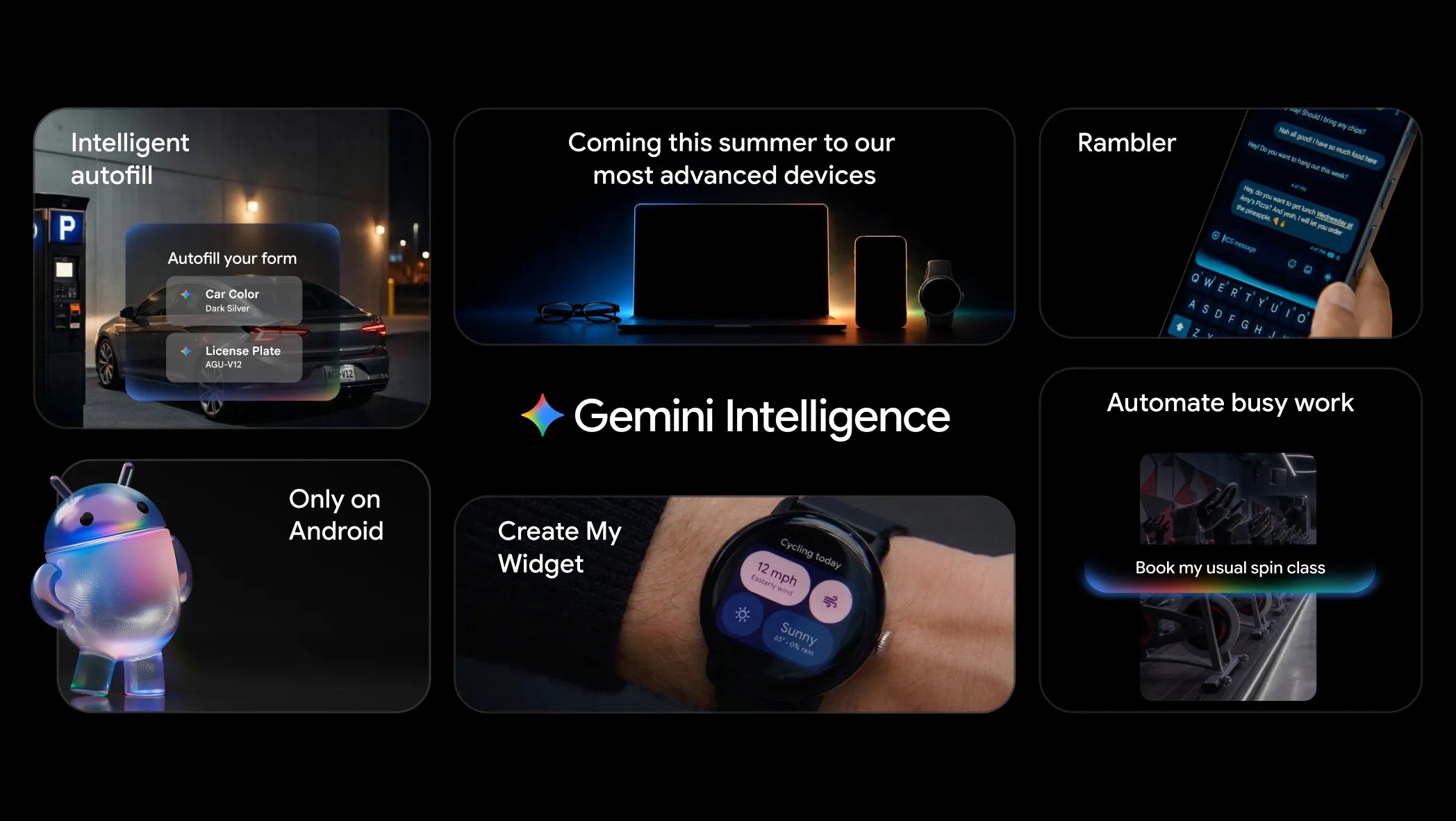
The headline announcement was Gemini Intelligence, Google's push to turn Android from an operating system into what it's calling an "intelligence system." The idea is that Gemini will run proactively across your phone, understanding context from your messages, emails, calendar, and surroundings to anticipate what you need before you ask. Chrome will auto-browse on your behalf. Gboard has a new feature called Rambler that listens to your messy, stream-of-consciousness dictation and cleans it up into coherent text. You can describe a widget in plain English and the AI will build it for you on the spot. Android Auto is getting a full visual overhaul with Dolby Atmos, video app support, and the ability to use your messages and calendar to help compose replies while you're driving. And Google announced Googlebook, a new category of premium Android-powered laptops built with Gemini at the core, due this autumn from Acer, ASUS, and Lenovo.
Like I said, a lot of this is impressive. Rambler is a clever idea. The contextual awareness stuff, where your phone predicts what you need based on what you're doing, is genuinely advanced. And the fact that Google is shipping all of this now, while Apple is still promising a Siri overhaul that's two years late, is not a great look for Cupertino.
But here's where I always find myself landing with Google and, to a similar extent, Samsung. So much of what they build feels like it's solving problems that nobody actually has. Do I need my phone to auto-browse the web for me? Do I need AI to generate custom widgets from a text description? Do I need my car's infotainment system to read my emails and draft replies while I'm on the motorway? Maybe some people do, but I'd wager that for the vast majority of smartphone users, these features land somewhere between "that's cool, I suppose" and "I'm never going to use that."
There's a pattern with Google and Samsung where the demos are always spectacular. The keynote clips look amazing. The possibilities seem endless. And then you get the phone in your hand and you realise that you're still just texting people, taking photos, checking the weather, and scrolling through the same three apps you always have. The AI features sit there in the settings menu, untouched, gathering digital dust.
And this is where I think Apple still has a genuine opportunity, even though it's behind right now. Apple's strength has never been doing things first. It's been doing things in a way that ordinary people actually use. If Apple can take the revamped Siri, the new photo editing tools, and whatever else it announces at WWDC next month, and make them feel invisible, quiet, just part of how the phone works, that's worth more than a hundred flashy demos. The best AI features are the ones you don't even notice are AI. They're the ones that just make your phone slightly less annoying, slightly more helpful, and slightly better at getting out of your way.
Google showed off the future this week. It looked spectacular. But I couldn't help watching it and thinking: how much of this will anyone actually use six months from now? Apple doesn't need to match Google feature for feature. It needs to pick the five or six things that genuinely matter to real people and nail them. If it does that at WWDC, the flashy demos won't matter. If it doesn't, Google's lead is only going to grow.
iOS 26.5 is here, new Siri is not
Apple released iOS 26.5 this week, and I've made a full video walking through everything that's new, which you'll find linked below. But here's a quick summary of what you're getting.
|
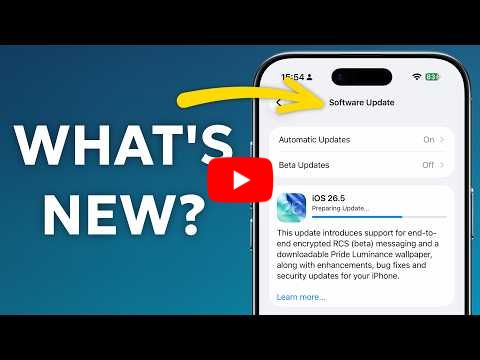
The headline feature is end-to-end encrypted RCS messaging, which is now on by default. In plain English, this means that texts between your iPhone and Android devices are now encrypted in the same way iMessages between two iPhones have always been. It's rolling out gradually depending on carrier support, but it's a meaningful privacy upgrade for anyone who regularly texts Android users. Beyond that, Apple Maps has a new Suggested Places feature that recommends nearby spots based on your recent searches and what's trending in the area. There's a new Pride Luminance wallpaper with a dozen customisable colour options, more precise snooze times in Reminders, and over 50 security patches under the hood.
It's also worth noting that iOS 26.5 lays the groundwork for ads in Apple Maps. The code now includes disclosure text confirming that Maps may show ads based on your approximate location and search terms. The ads aren't live yet, but the infrastructure is there, and Apple has confirmed they'll go live this summer in the US and Canada. We covered this in more detail a few weeks ago, but if you missed it, this is the update that makes it real. Your Maps app now has the plumbing for sponsored search results, even if the tap hasn't been turned on just yet.
As for the elephant in the room: still no new Siri. The hope had always been that we'd see Apple's revamped, more conversational Siri land in iOS 26.4 at the latest. That didn't happen. iOS 26.5 doesn't have it either, but that's to be expected (odd number releases rarely have exciting new features). And even though there may be an iOS 26.6 before iOS 27 arrives, I think we can now say with 99% certainty that any meaningful Siri overhaul is being held for WWDC on 8 June and won't be on anyone's phone until September at the earliest.
The good news is that we're only a few weeks away from finding out what Apple actually has in store. WWDC is less than a month out, and if the reporting is accurate, iOS 27 will bring a redesigned Siri app, conversation history, personal context, and the ability to choose between AI models like Gemini, Claude, and ChatGPT. After two years of waiting, June 8th can't come soon enough.
Tip of the week
Did you know you can adjust the playback settings of individual podcasts, and the Podcast App will remember them? To do this, tap the ellipsis button on a podcast show, then choose Settings. Scroll down to the Speed and Audio Adjustments, choose Custom for this show, and make your changes.