This week, my Top 5 Predictions for next week's WWDC.
3 days to go...
WWDC is on Monday. Three days away. And if you're wondering why I sound a little bit excited, it's because this is genuinely my favourite time of the year. More than the iPhone launch, more than any Mac event, more than whatever Apple decides to do in October. WWDC is the one that matters most to me, because it sets the direction for everything Apple is going to do for the next 12 months, and by extension, it sets the direction for everything I'm going to be talking about on the channel and in this newsletter for the same period. The keynote kicks off at 10:00 AM PDT, 1:00 PM EDT, and 6:00 PM BST on Monday. It's also Tim Cook's final one as CEO before John Ternus takes over in September, which adds an extra layer of significance to an already high-stakes event.
So, with the keynote just around the corner, here are my five predictions for what we're going to see on Monday, and what we're not.
1) Around 50% of the keynote will be about the new Siri
This is the big one, and it's the one Apple absolutely cannot afford to get wrong. If you cast your mind back to WWDC 2024, Apple dedicated roughly 30 to 40% of the keynote to a revamped version of Siri that was supposed to be more conversational, more context-aware, and genuinely useful in a way the current version simply isn't. Two years later, none of that has materialised. Not a single one of the headline Siri features demonstrated on that stage has shipped to a single customer's phone.
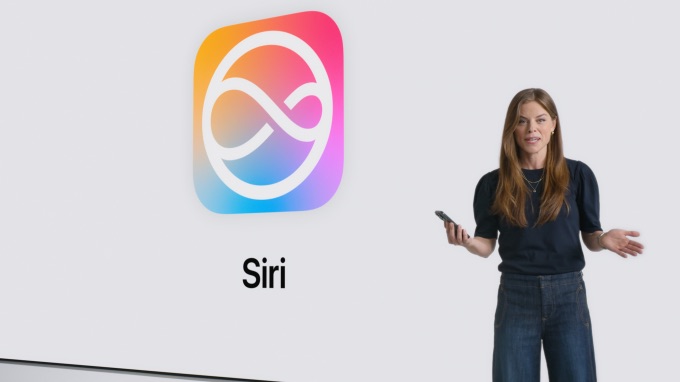
It's actually worse than that. Reporting from The Information, citing former Apple employees, revealed that when Apple demonstrated the new Siri at WWDC 2024, the only working element on their test devices was the pulsing, colourful ribbon animation that appeared around the edges of the screen. The actual AI functionality behind it? It allegedly didn't exist. Multiple sources confirmed that none of the revamped Siri features were in a functional state when Apple showed them to the world. Apple then ran advertising campaigns promoting those features alongside the iPhone 16 launch in September 2024, only pulling the ads months later when it became clear the features weren't coming. That's not a delay. That's selling people a product based on capabilities that weren't real.
The consequences have been tangible. Apple agreed to pay $250 million to settle a class action lawsuit accusing it of false advertising and misleading consumers about Apple Intelligence's capabilities. Eligible iPhone owners could receive up to $95 each. The preliminary approval hearing is scheduled for later this month. Meanwhile, the features were delayed from iOS 18 to iOS 26.4 to iOS 26.5 and now, finally, to iOS 27. The AI chief who oversaw the project, John Giannandrea, has left the company. The Siri team has been reorganised under Craig Federighi, sent to AI coding bootcamp, and Apple has signed a deal reportedly worth $1 billion annually to use a custom 1.2 trillion parameter version of Google's Gemini model to power the new assistant.
All of which is to say: the stakes on Monday could not be higher. Apple doesn't just need to show a better Siri. It needs to prove that the last two years of broken promises are over.
I think it will be there. I think it will be impressive. Bloomberg's Mark Gurman has already described the overhauled Siri as the "centrepiece" of iOS 27, and the renders published last week showed a dedicated Siri app with a dark interface, conversation history, a paperclip icon for attaching files and images, and deep integration with the Dynamic Island that allows Siri to understand and act on whatever is on your screen. The standalone app is reportedly designed to compete directly with ChatGPT, Claude, and Gemini as a general-purpose AI assistant.
But here's where I'll hedge. I don't think Apple is anywhere near ready to ship this to the general public. I think it will arrive in beta form, and I wouldn't be surprised if it's not even included in the initial developer betas that go live next week. There's a real possibility that the new Siri doesn't appear in any usable form until the public release in September, or even later. Apple needs to give itself room for jankiness, and a staggered rollout through late developer and public betas would allow exactly that. After the disaster of promising features it couldn't deliver, Apple will want to be absolutely certain this works before putting it in people's hands.
One more thing on Siri. I predict Apple will do everything it can to avoid saying the words "Gemini," "Claude," or "ChatGPT" on stage. Instead, I think they'll frame it as Apple Intelligence powered by your favourite AI tools. The architecture allows you to leverage the power of whichever model you prefer through a new "Extensions" feature, rather than Apple having to stand up in front of the world and admit that the brains behind its new assistant were built by someone else. It's a subtle but important distinction, and it's exactly the kind of reframing Apple excels at. Expect phrases like "powered by the models you love" and "your choice of AI" rather than any specific name getting prominent billing.
You watch the videos... but how much do you actually remember?
If you’re anything like most people who watch my YouTube videos, or read The Daily Swipe, you’ve probably watched loads of iPhone tips videos over the years, bookmarked a few, saved some to Watch Later… and then completely forgotten where that useful tip was when you actually needed it.
That’s exactly why I created iPhone Essentials Plus.
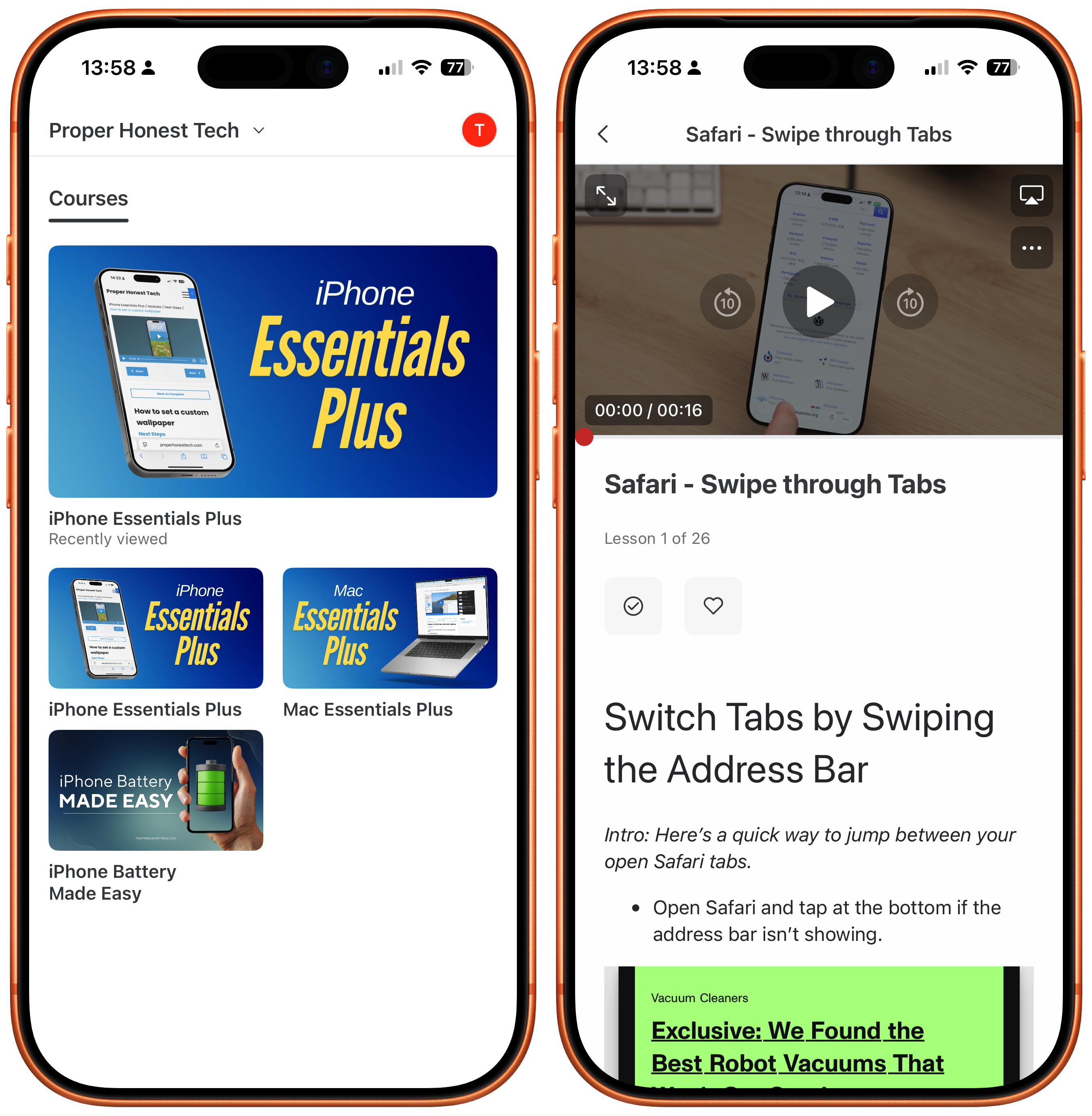
It’s a searchable, step-by-step iPhone guide designed to help you feel more confident using the phone you already own, without having to remember which random YouTube video something appeared in.
Every lesson includes a short video, a simple guide with screenshots, and a downloadable PDF, so whether you prefer watching, reading, or quickly looking something up, you’re covered.
It’s a one-time purchase with lifetime access, no subscription, and all future updates included.
If you’ve ever thought:
“I know Tom showed me how to do this somewhere…”
this was built for exactly that.
Purchase Links;
- iPhone Battery Made Easy
- iPhone Essentials Plus
- Mac Essentials Plus
- iPhone & Mac Essentials Plus Discount Bundle
2) There will be no new Hardware
I'd love to be wrong about this one, but I don't think we're getting any hardware announcements on Monday. There's been plenty of speculation this year. At various points, the Mac Studio with M5 Ultra, the Mac mini with M5, the new Apple TV, the HomePod smart home hub, and even the long-rumoured HomePod with a screen have all been floated as potential WWDC announcements. I don't think any of them are coming.
There are a few reasons. First, Apple rarely announces hardware at WWDC. The last major exception was the Vision Pro in 2023, and before that you'd have to go back to the Mac Pro in 2019 or the HomePod in 2017. Apple doesn't make a habit of it, and this year Macworld's analysts have explicitly said they expect a software-only show. The event tagline, "Coming Bright Up," is widely interpreted as a reference to the new Siri rather than any hardware reveal.
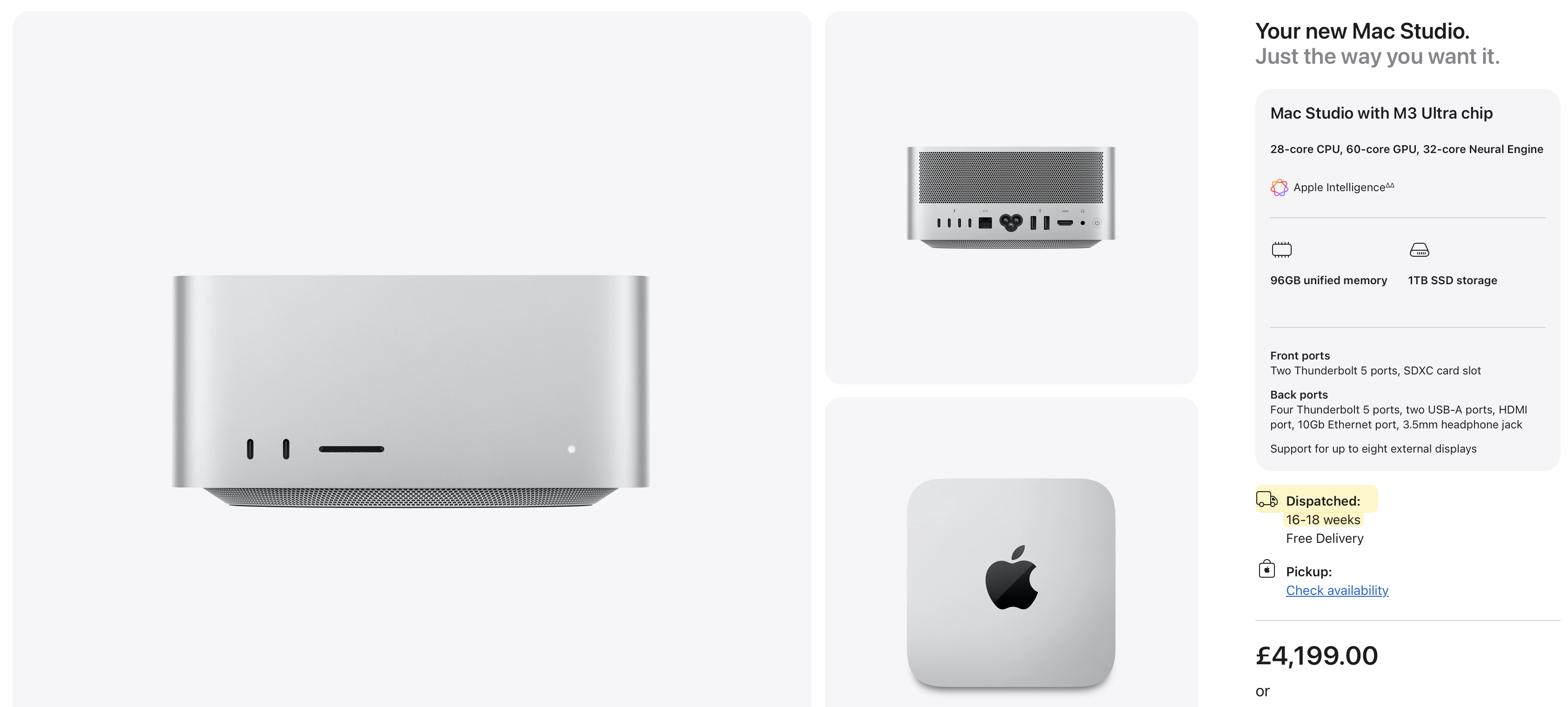
Second, the supply chain is still a mess. As we've covered extensively in this newsletter, the global RAM shortage has been wreaking havoc on Apple's Mac lineup. The Mac mini's $599/£599 base model has been quietly removed from Apple's website. Multiple higher-spec configurations with 32GB and 64GB of RAM are listed as "currently unavailable," with no option to even place an order. The Mac Studio is in a similar state, with the 512GB RAM option removed entirely and remaining configurations backordered by months. Tim Cook addressed this directly during Apple's Q2 earnings call, saying both products "may take several months to reach supply-demand balance." Announcing new Macs that it can't manufacture in meaningful quantities would be a strange move, especially when it can't even fulfil orders for the current ones.
Third, we never get iPhones at WWDC, and I just don't see any of the Home products arriving until the new Siri is properly out there and in the wild. The entire value proposition of a smart home hub, a new Apple TV, or the rumoured Apple security camera revolves around a smarter, more capable assistant. Bloomberg has confirmed that the new Apple TV 4K, HomePod mini, and full-sized HomePod have all been finished and waiting since last year, held back specifically for the new Siri. Launching that hardware before the software is ready and proven would be repeating the exact mistake Apple made with the Vision Pro.
My expectation is iPhones in September, a dedicated Mac event in October to get the Mac Studio, Mac mini, and potentially the iMac out before the end of the year, and the Home products arriving once the new Siri has had time to settle in the real world. WWDC will be software only.
3) Outside of AI, software will be underwhelming
I hope I'm wrong about this, but everything we've heard suggests that iOS 27, macOS 27, and the rest of the lineup are going to be "Snow Leopard" releases. If you're not familiar with the reference, Snow Leopard was the version of Mac OS X back in 2009 that Apple explicitly marketed as having "zero new features," focusing instead entirely on performance improvements, bug fixes, and under-the-hood stability. It's become shorthand in the Apple community for a year where the company takes its foot off the gas on new features and concentrates on making what's already there work better.
Multiple sources, including Bloomberg, have described iOS 27 in exactly these terms. Gurman reported earlier this year that the update would focus on "refinement rather than revolution," with stability and optimisation taking priority over visual changes. The Liquid Glass redesign that arrived with iOS 26 last year was ambitious but introduced plenty of bugs and readability complaints, particularly around transparency effects and text legibility. macOS 27 is reportedly getting a "slight redesign" to address some of those issues, but nothing on the scale of last year's overhaul.
For consumers, this is genuinely good news. A year of polish and reliability is exactly what the platform needs after such a major visual revamp. If your phone is faster, more stable, and the battery lasts a bit longer because Apple spent a year optimising rather than adding, that's a win. For content creators like me who rely on Apple releasing new things we can talk about, it's slightly less exciting. But that's the deal.
What this means for the keynote is that the platform-specific segments, the bit where they walk through "here's what's new in Photos, here's what's new in Messages, here's what's new in Safari," may be noticeably shorter than usual. Apple will almost certainly dedicate more time to AI and Siri than to traditional feature announcements. If you're expecting the usual parade of 15 to 20 new consumer-facing features per platform, you might want to temper those expectations. This is going to be the Siri show, with everything else playing a supporting role.
4) VisionOS 27 will barely get a mention
This is the prediction I most hope is wrong, because I own a Vision Pro headset (two in fact) and I'd love to see Apple show some commitment to the platform. But I genuinely don't think it's going to happen.
Everything we've seen over the past few months points to Apple quietly stepping away from the Vision Pro. The dedicated Vision Products Group has been broken up, with the software team redistributed to Siri development and the hardware team shifted to the smart glasses project. A report from 9to5Mac this week confirmed that incoming CEO John Ternus has actively scaled back Apple's Vision products roadmap since being named as Cook's successor. The Vision Air, a lighter and cheaper headset that was supposed to broaden the appeal, has reportedly been scrapped. And Bloomberg's Mark Gurman now says a Vision Pro 2 isn't expected until 2028 at the earliest, if it comes at all.
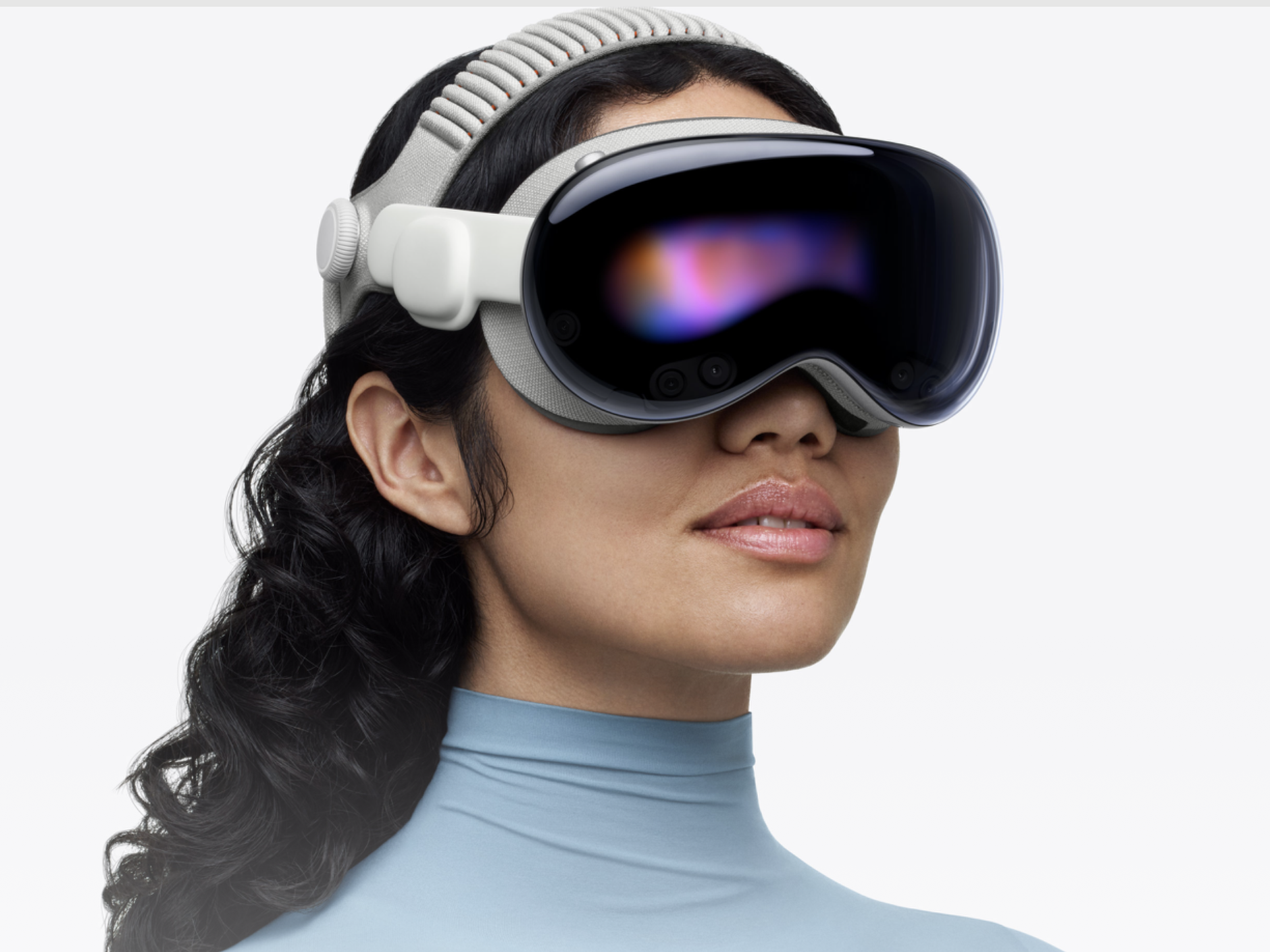
The sales tell the story. Approximately 600,000 units sold worldwide in two years. The return rate, according to MacRumors, has been "unusually high," far exceeding any other modern Apple product. AppleInsider recently published a review of visionOS 26 with a headline that included the word "apathy," and noted that developers are increasingly abandoning the platform because building native Vision Pro apps will never be financially viable when the install base is this small.
Now, some outlets are more optimistic. AppleInsider also noted that Apple still has over 200 active job listings related to Vision Pro, and argued that the product isn't dead, just entering a long holding pattern. Apple's marketing chief Greg Joswiak said in April that the Vision Pro is "a peek into the future" while acknowledging it's hard to say when spatial computing will truly take over. And visionOS 27 will technically get announced at WWDC, because Apple always updates all of its platforms simultaneously.
But there's a difference between getting an update and getting meaningful stage time. I wouldn't be surprised if visionOS 27 gets a single slide and a 30-second mention during the keynote, lumped in with tvOS and homeOS in the "and these platforms are getting updates too" segment that always flies past at the end. It wouldn't even surprise me if, in the months following WWDC, Apple quietly scales back in-store demos and lets the Vision Pro fade into the background as a product you can still order but that nobody is actively selling.
It feels insulting, honestly, to have invested in the Vision Pro and watch Apple lose interest. I've spent the silly money, and I genuinely wanted them to succeed. But the numbers don't lie. The consumer base isn't there, the team has moved on, and Apple's wearable future is now clearly smart glasses, not headsets. The Vision Pro isn't being killed with an announcement. It's being killed with silence. Apple can face the backlash of frustrating a few hundred thousand owners if it means redirecting resources towards products that will sell in the tens of millions. And that, ultimately, is the calculation I think they've made.
5) Look for iPhone Ultra clues
We know the iPhone Ultra, Apple's first foldable, isn't being announced at WWDC. That's a September story. But I think Monday's keynote will contain clues about it that are hiding in plain sight.
Specifically, I'll be watching for anything related to multitasking on iOS. Apple has never offered split-screen or side-by-side app support on the iPhone. It's been an iPad-only feature since iOS 9 introduced Slide Over and Split View back in 2015. For eleven years, the iPhone has been a strictly one-app-at-a-time device, while Android phones and foldables from Samsung, OnePlus, and Huawei have offered split-screen multitasking for years.
That's about to change. Multiple reports this week, from PhoneArena, Trusted Reviews, Cult of Mac, and Tom's Guide, have all confirmed that Apple is developing iPad-style multitasking for iOS 27. A Weibo leaker called Fixed Focus Digital posted that Apple is working on a feature similar to Huawei's "Parallel View," which automatically adapts smartphone apps to wider displays. Bloomberg's Mark Gurman previously reported that Apple was building an iPad-like multitasking experience specifically for its foldable device, with supported apps featuring side-by-side layouts and navigation panels similar to those already found on iPadOS.
The foldable iPhone is expected to have a 7.8-inch inner display with a 4:3 aspect ratio, which is closer to an iPad mini than any existing iPhone. That screen simply wouldn't work with the current single-app iOS experience. When folded, the device would run a compact, traditional iPhone interface on its roughly 5.5-inch outer display. When unfolded, it would switch to a wider, more expansive layout with side-by-side apps, left-hand navigation sidebars, and an experience that's closer to iPadOS without actually being iPadOS. Reports confirm the foldable will run iOS, not iPadOS, and will not support iPad apps, which means Apple needs to build all of this multitasking capability directly into iOS 27 itself.
So if you're watching the keynote on Monday and you see Apple demo anything involving multiple apps open simultaneously, improved landscape support, or the ability to customise how your home screen and apps adapt to different screen sizes and orientations, pay close attention. That's not just a nice productivity upgrade for the iPhone 18 Pro. That's Apple laying the groundwork for a device it hasn't shown you yet. Cult of Mac noted this week that since the foldable remains unannounced, the multitasking features "might not get much time at the WWDC keynote," but the code and the capabilities will be there for developers to find in the betas. And once they do, the foldable story will start to come into much sharper focus.
iOS 27 is the version that needs to pave the way for the foldable, and Monday will be our first chance to see how Apple plans to make that transition. Keep your eyes open. The clues will be there.
Roll on Monday.
Tip of the week
Did you know, in the Photos app, you can filter your main feed (or any album) to only show you videos?
To do this, simply look for the Filter button in the upper right of any part of the Photos App. Tap this, then choose Filter, then tap Videos, and you'll only be viewing your videos. Repeat the steps to remove the filter.