This week, there's really only one story worth talking about: the changing of the guard at Apple.
So long Tim...
It was the news that dominated everything this week. On Monday, Tim Cook announced that he'll step down as Apple's CEO on 1 September, moving into the role of executive chairman. After 15 years running the company and 28 years there in total, Cook is handing the day-to-day to hardware engineering chief John Ternus. It wasn't entirely unexpected, there was a widely reported leak late last year that pointed in exactly this direction, but the confirmation still landed with real weight. This is Apple's first CEO change in 15 years, and only its second this century.
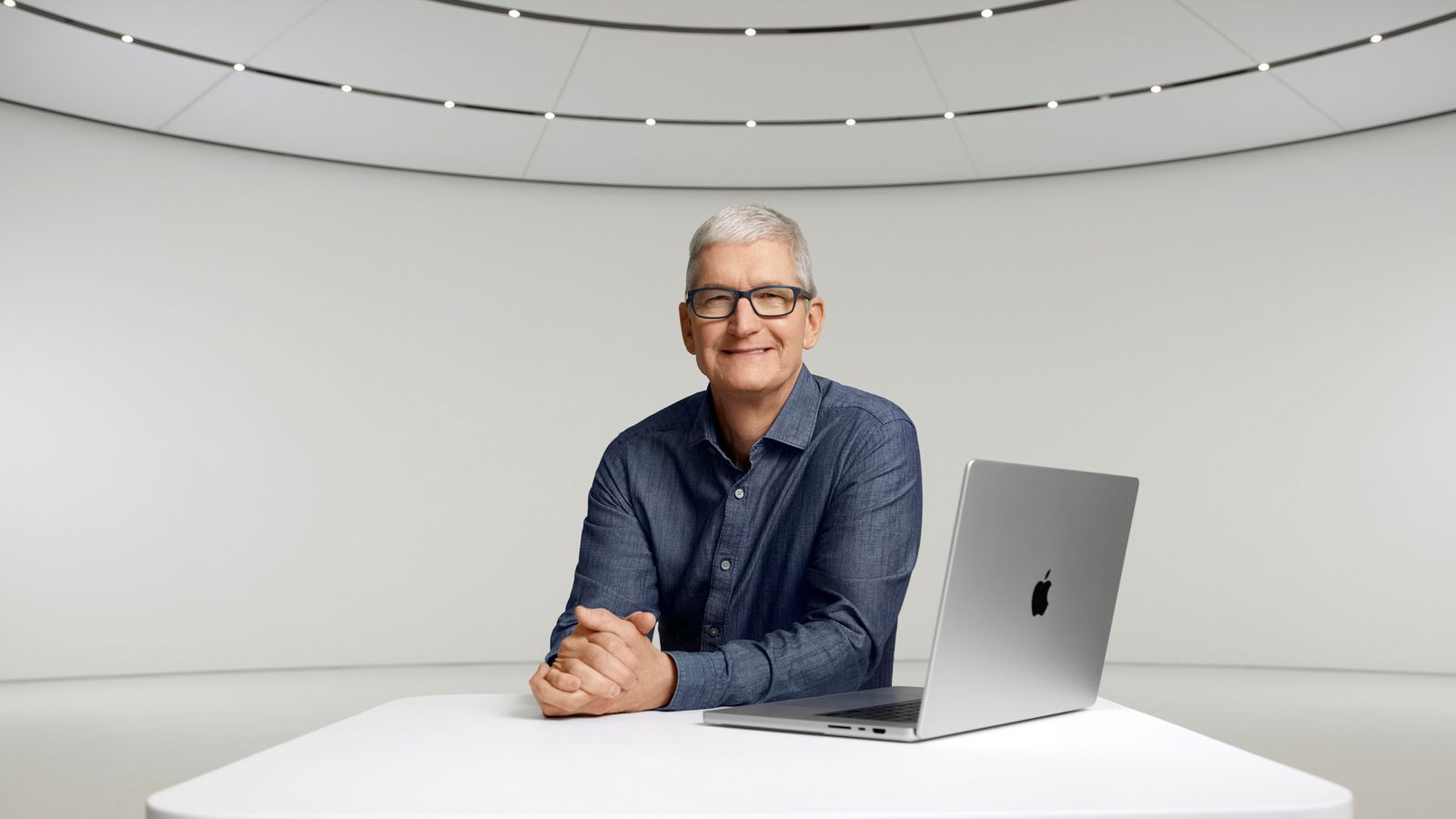
So what has the Tim Cook era actually looked like? The simplest summary is in the numbers. When Cook took over from Steve Jobs in August 2011, Apple was worth around $350 billion with annual revenue of $108 billion. Today, it's a $4 trillion company pulling in over $416 billion a year. That's a more than 1,000% increase in market cap. By any financial measure, Cook's run has been exceptional.
He was never supposed to be the visionary, though. Cook was the operations guy, the supply chain expert who Jobs recruited from Compaq in 1998 to fix Apple's manufacturing mess. He famously described inventory as "fundamentally evil" and compared Apple to a dairy where products needed to be sold while they were fresh. He closed warehouses, consolidated suppliers, and turned Apple's supply chain into one of its greatest competitive advantages. When Jobs resigned in August 2011, just six weeks before his death, Cook was the obvious and only choice to step up.
What followed was a CEO tenure defined by expansion and execution rather than revolution. Cook launched the Apple Watch in 2015, which has become the world's best-selling wearable and a genuine health device that has, by many accounts, literally saved lives. He oversaw AirPods in 2016, which created an entirely new product category. He built Apple's services business from almost nothing into a $100 billion annual revenue stream. He led the transition from Intel to Apple silicon, arguably the most important technical decision Apple has made since the original Macintosh. And he navigated the company through a global pandemic, two Trump presidencies, and an increasingly hostile regulatory environment across the US, EU, and China.
He was also the first openly gay CEO of a Fortune 500 company, coming out publicly in 2014 in a way that was characteristically understated. He's been vocal on privacy, environmental responsibility, and social issues in ways that Jobs never was.
But it hasn't all been smooth. The most obvious misfire is Apple Vision Pro, the $3,500 headset that Cook personally championed and that has sold fewer than half a million units. Apple Maps launched in 2012 in such a poor state that it led to a public apology from Cook himself. The butterfly keyboard saga plagued MacBooks for years. And then there's artificial intelligence. Apple promised a smarter Siri powered by Apple Intelligence back at WWDC 2024, and two years later, it still hasn't arrived. The AI chief departed, the Siri team has been reorganised, and Apple has had to partner with Google to power features it couldn't build on its own. For a company that prides itself on owning the full stack, that stings.
There's also a fair argument that Cook was an optimiser rather than an inventor. The Apple Watch, AirPods, and Apple Pay were all significant, but none had the world-changing impact of the Mac, the iPod, or the iPhone. Cook took what Jobs built and made it bigger, more profitable, and more global. Whether he wrote a genuinely new chapter or simply extended the existing one is something people will argue about for years.
But here's the reality. Following Steve Jobs was supposed to be impossible, and Cook didn't just manage it, he made it look comfortable. He took a company that many believed couldn't exist without its founder and turned it into, at one point, the most valuable business on the planet. He's not going far, either. As executive chairman, he'll still be at Apple, still engaging with policymakers, still involved. This isn't a departure. It's a step to the side, and it leaves his successor with a company in genuinely strong shape: a packed product pipeline, record revenues, and 2.5 billion active devices worldwide.
Not a bad 15 years' work.
Your iPhone can do SO MUCH more
If you've ever found yourself Googling how to do something on your iPhone that feels like it should be obvious, you're not alone. Most people only scratch the surface of what their phone is capable of, and it's not because they're doing anything wrong. It's because nobody ever showed them. Apple doesn't include a manual, and the tips you find online are often outdated, overly technical, or buried in a ten-minute video when you just need a straight answer.
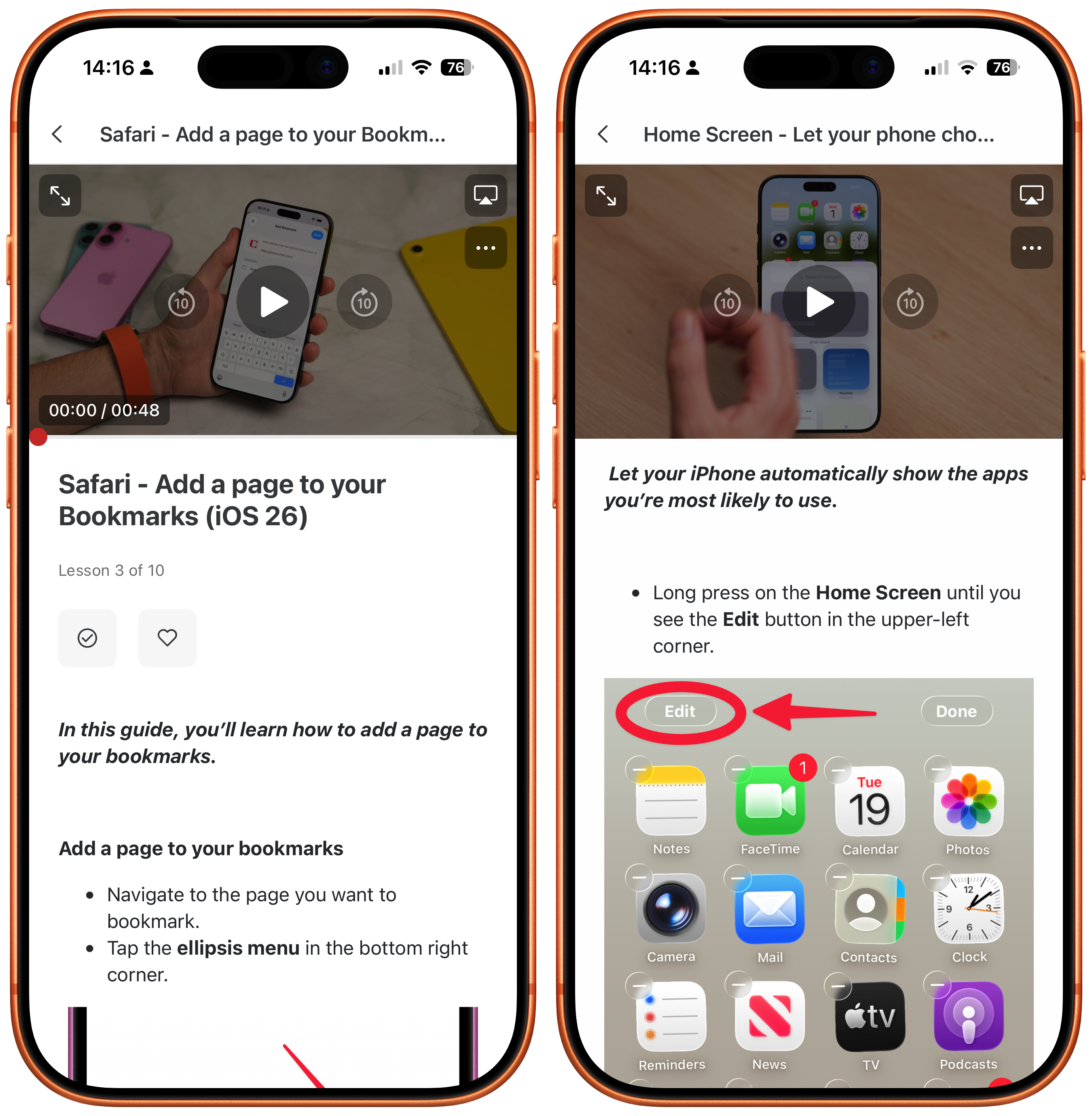
That's exactly why I built iPhone Essentials Plus. It's a library of over 250 lessons covering everything your iPhone can do, explained in plain English with video walkthroughs, step-by-step written guides, and downloadable PDFs you can keep. Whether it's getting more out of the camera, understanding your privacy settings, organising your home screen, or just feeling more confident with the basics, it's all in there.
You get lifetime access, and the course is updated regularly as Apple releases new features, so it grows with your phone. I've also recently added ad-free, sponsor-free versions of my YouTube videos as bonus content, plus a brand new standalone course called iPhone Battery Made Easy is now included at no extra cost.
If you've been reading this newsletter for a while and haven't taken the leap yet, this might be the nudge you need. It's a one-time purchase, no subscription, and it's designed for real people who just want to use their iPhone properly, not tech enthusiasts who already know it all.
Purchase Links;
- iPhone Battery Made Easy
- iPhone Essentials Plus
- Mac Essentials Plus
- iPhone & Mac Essentials Plus Discount Bundle
Apple's New CEO
If you've watched an Apple keynote in the last few years, you've almost certainly seen John Ternus, even if you didn't know his name. He's the tall, relaxed-looking bloke who tends to appear on stage whenever there's new Mac or hardware to show off. He introduced the redesigned Mac Pro in 2019, presented multiple MacBook Pro updates, and has been a regular presence at Apple events since joining the executive team in 2021. Come 1st September, he'll be running the whole company.
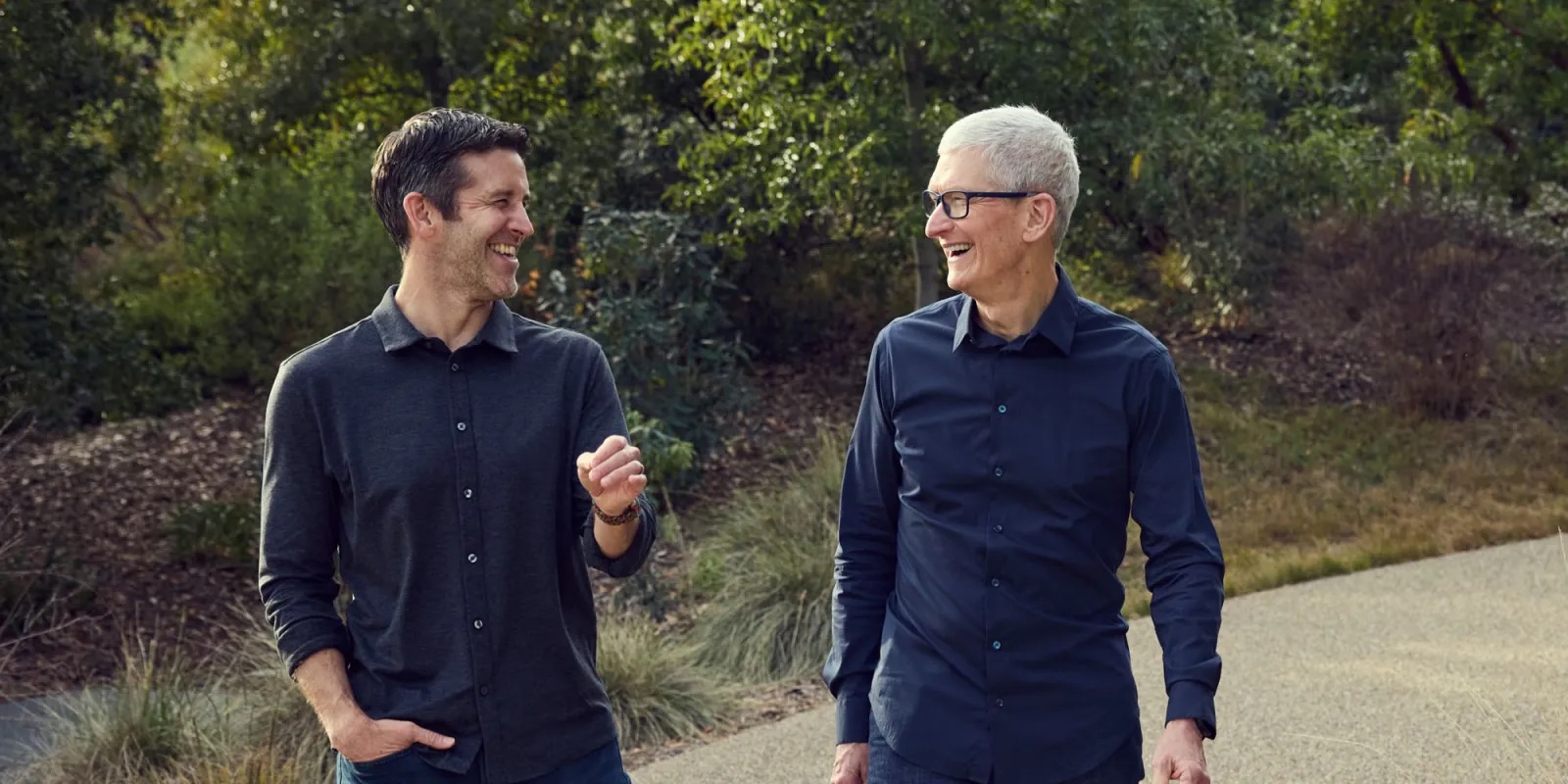
Ternus is 51, almost exactly the same age Cook was when he took the top job. Apple's board clearly likes the idea of a CEO who can lead the company for a decade or more, and Ternus's age gives him that runway. He's been at Apple for 25 years, meaning he's spent nearly half his life there. He joined the product design team in 2001, his second ever job out of college. His first was a stint as a mechanical engineer at a small virtual reality headset company called Virtual Research Systems. There's a certain poetry in the fact that Apple's next CEO started his career building VR headsets and will inherit a company that's still trying to work out what to do with one.
At Apple, Ternus started on the Cinema Display before working his way through the hardware engineering ranks. By 2013 he was a vice president, overseeing the development of AirPods, Mac, and iPad. In 2020, he took charge of iPhone hardware engineering as well, and when Dan Riccio stepped aside in 2021 to focus on the Vision Pro project, Ternus was promoted to senior vice president of hardware engineering, putting him in charge of every physical product Apple makes. iPhones, iPads, Macs, Apple Watches, AirPods, Vision Pro. If you've bought something from Apple in the last few years, Ternus's team built it.
But perhaps the most interesting thing about this appointment isn't Ternus's CV. It's his decision-making style, and how different it reportedly is from Cook's.
A Bloomberg report this week offered a fascinating insight. Cook has been described by colleagues as a deliberative, consensus-driven leader. Present him with option A and option B, and rather than choosing, he'll ask a series of probing questions, consult widely, and make a decision based on what the group thinks. It's careful, it's measured, and it's helped Apple avoid some costly mistakes. But it's also slow. And in an industry that's moving at breakneck speed, particularly around AI, slow has become a real problem.
Ternus, by contrast, is described as someone who will actually pick. Give him two options and he'll make a call. It might be right, it might be wrong, but it's a decision, and the team can move forward. One person who has worked closely with both reportedly put it bluntly: "Ternus will make decisions."
That difference might sound subtle, but it could have enormous implications for how Apple operates. For the past few years, Apple has been steering like a supertanker. Enormous, powerful, and virtually unstoppable once it gets going, but if it needs to change course, that decision has to be made miles in advance. The problem is that the companies running rings around it on AI, OpenAI, Google, Meta, and a wave of fast-moving startups, are operating more like rally cars, reacting to every bend in real time, changing direction in seconds, and shipping products while Apple is still planning its turn.
There's a version of the argument that says Apple's patience will pay off. Let everyone else rush to market with half-baked AI tools, wait for the dust to settle, and then come in with something polished and deeply integrated. That's the classic Apple playbook, and it's worked before. But there's also a version that says the world isn't waiting any more. Gemini is already running natively on Mac. ChatGPT is everywhere. The Siri overhaul is two years late. At some point, being fashionably late starts to look like being left behind.
If Ternus is genuinely the more decisive leader that colleagues describe, that could be exactly what Apple needs right now. Not someone who tears the whole thing up, but someone who can take this supertanker and make it steer a bit more like a rally car. Cook's caution served Apple brilliantly when the company was consolidating its position as the world's most valuable business. But the next chapter, the foldable iPhone, smart glasses, AI, a revamped Siri, the smart home push, requires a leader who's willing to make calls and live with them.
In his statement on Monday, Ternus said he was "humbled to step into this role" and promised to lead with the values that have defined Apple for 50 years. Cook described him as having "the mind of an engineer, the soul of an innovator, and the heart to lead with integrity." Big words. The next 12 months will show us whether he can back them up. But if Apple really does need someone who can change course without needing five miles of open water to do it, a decisive engineer who's spent 25 years building the products might be exactly the right person for the job.
One more thing...
One more leadership change worth flagging from Monday's announcements. With Ternus moving up to CEO, someone needed to take over his hardware engineering responsibilities. That person is Johny Srouji, who has been immediately promoted to the newly created role of Chief Hardware Officer.
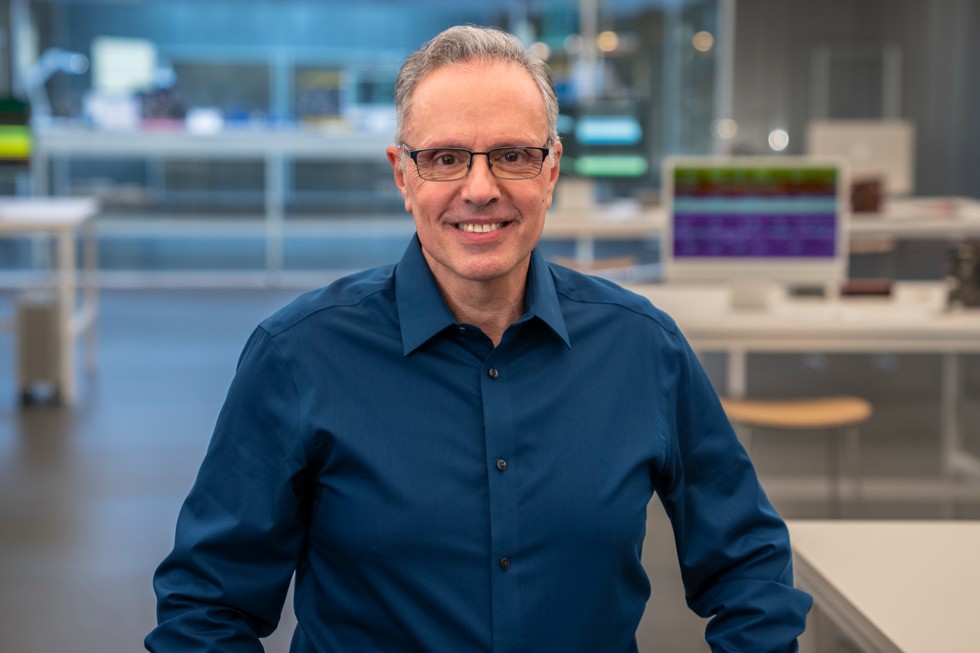
If Ternus has been the face of Apple hardware on stage, Srouji has been the brain behind it in the lab. He joined Apple in 2008 to lead the development of the A4, Apple's first custom chip, and has since overseen every piece of silicon Apple has designed, from the A-series chips in your iPhone to the M-series chips that transformed the Mac. The transition from Intel to Apple silicon is widely regarded as one of the most important technical achievements in Apple's recent history, and Srouji is the person who made it happen. Before Apple, he held senior roles at both Intel and IBM, so the man knows his way around a processor.
In his new role, Srouji combines two previously separate divisions, hardware engineering and hardware technologies, into a single organisation. He's already restructured the team into five areas: hardware engineering, silicon, advanced technologies, platform architecture, and project management. It's a significant expansion of his responsibilities, and it signals that Apple wants one person with a clear, unified view of everything that goes into building its products, from the chips inside them to the finished devices in your hand.
For anyone wondering whether Apple's hardware quality might wobble during the leadership transition, Srouji's promotion should settle those nerves. His track record of shipping world-class silicon on time and at scale is essentially unmatched, and having him oversee the full hardware picture feels like a smart, confident move. The products are in very capable hands.
Tip of the week
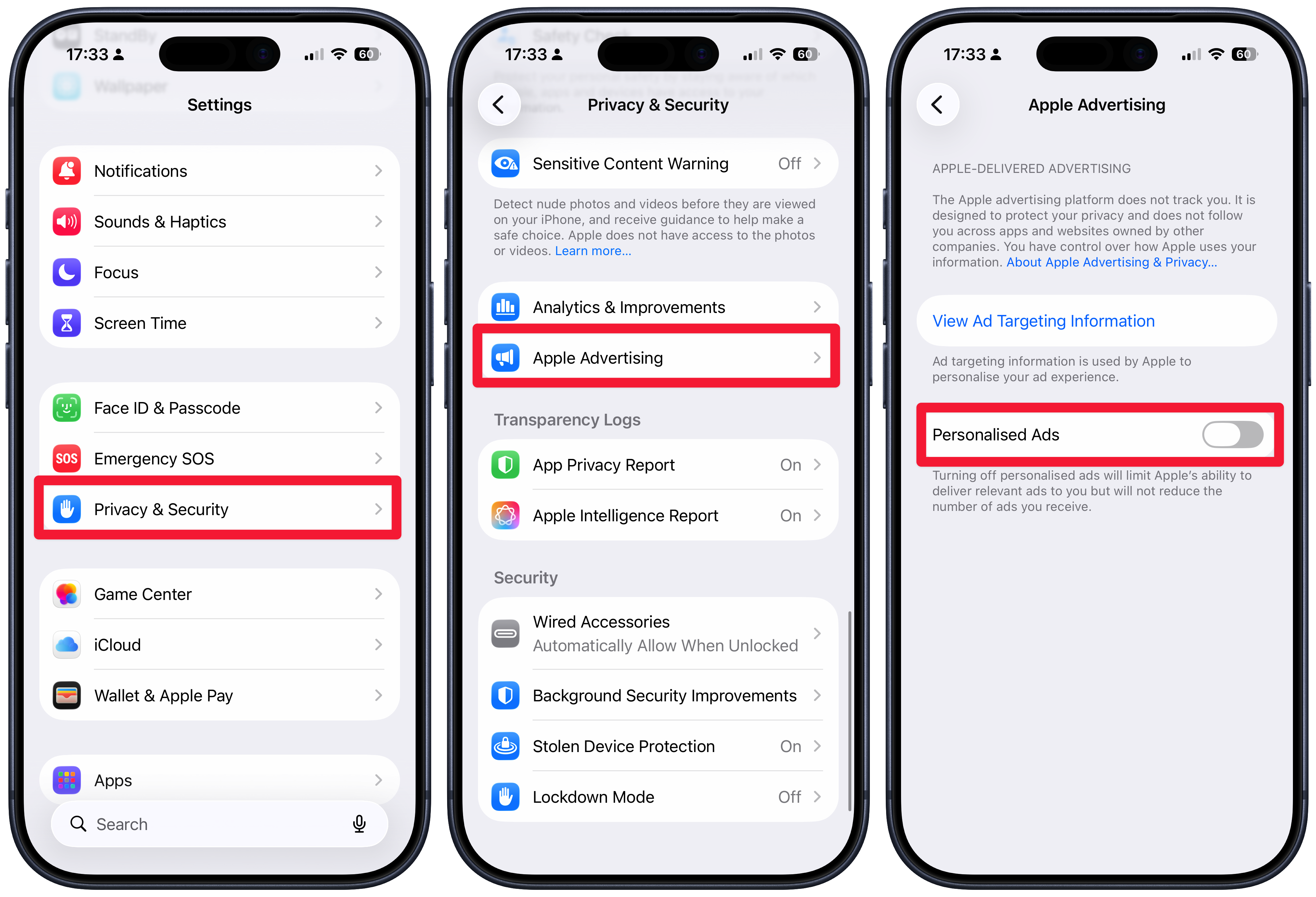
Did you know, your iPhone quietly tracks your usage in the background and then uses that information to feed you personalised ads. Apple does claim that this information is anonymized, but you may still want to switch this feature off.
To do that - Go into settings, then choose privacy and security. Scroll to the bottom of this page and choose Apple advertising, then turn off personalised ads.
You'll still receive ads on your iPhone in places like the App Store and even the Maps app moving forward, but they will be more generalist.