This week, we probably know what the iPhone Fold is going to look like, an unusal excuse for Vision Pro sales, and the iPhone goes to space.
The iPhone Ultra is looking... weird...
It's been a huge week for iPhone Fold rumours, or should I say iPhone Ultra rumours, because according to the latest leaks, that might well be the name Apple goes with. Weibo leaker Digital Chat Station claimed this week that Apple's first foldable could launch as the "iPhone Ultra" rather than the iPhone Fold, echoing the naming Apple already uses for the Apple Watch Ultra, CarPlay Ultra, and its top-tier chips. It's not the only possibility, and names tend to be the very last thing to leak before a launch, but given Apple's recent push towards an "Ultra" tier across several product lines, it's a plausible one.
Before I get into the rest of what's been leaked, it's worth setting some expectations. Insiders including Mark Gurman have described this as potentially the biggest change to the iPhone since the original back in 2007, and Apple has a long history of surprising us with products that look strange in leaks and then turn out to be excellent in practice. Leaked dummy units rarely tell the full story, and there's every chance that what Apple actually unveils in September could be genuinely impressive. I'm going to share my honest reaction to what's been leaked this week, but keep in mind that final judgement really does need to wait until we see the real thing.

With that said, the real story is the first proper look we've supposedly had at the device itself. Well-known leaker Sonny Dickson shared photos of dummy units showing what's claimed to be the iPhone Ultra alongside the iPhone 18 Pro and iPhone 18 Pro Max, giving us our first real sense of the potential size and shape of this thing. And I have to be honest with you, I'm not sure what to make of it.
The form factor is, to put it politely, unusual. If the leaks are accurate, when folded, it's short and stout, more passport-shaped than phone-shaped, with a small outer display. When you open it up, rather than getting a tall, tablet-like display as you might expect from something like the Samsung Galaxy Z Fold, you'd get a wider, shorter screen that looks roughly like you're holding an iPad mini sideways. The inner display is rumoured to be around 7.8 inches with a 4:3 aspect ratio, which is closer to an iPad mini than to any phone that's come before it. There are also said to be two rear cameras rather than three, the volume buttons appear to have been moved to the top edge of the device, and reports suggest there's no MagSafe support, which would feel like a disappointing omission on a device that's rumoured to start at over $2,000.
Looking at these leaks, assuming they're anywhere close to accurate, I'm genuinely struggling to work out who this phone would be for. Foldables, despite years of hype, have remained a niche product. Samsung has been making them for seven years now and they still represent a tiny fraction of the overall smartphone market. The iPhone Ultra, if it does launch at around $2,300 to $3,000 depending on storage as some leakers are claiming, would be one of the most expensive consumer phones ever made. Add to that the unusual aspect ratio, the reduced camera count, the lack of MagSafe, and a form factor that doesn't obviously fit any existing use case, and you've potentially got a product that feels more like an experiment than a mainstream flagship.
That said, this is exactly the kind of product where Apple's track record works in its favour. The original iPhone was dismissed by plenty of people in 2007. The iPad was mocked when it launched. And if the insiders are right that this represents the biggest iPhone shift in nearly two decades, there's every possibility Apple has something genuinely category-defining up its sleeve that we simply can't see from dummy photos alone. But it's equally true that Apple has had its share of misfires. The iPhone Air, which launched just last autumn, has reportedly sold poorly and been delayed out of the 2026 lineup as a result, with Mark Gurman now reporting that the iPhone Air 2 won't arrive until spring 2027. If a thinner, more elegant iPhone couldn't find a big enough audience, it's worth asking whether a chunky, expensive foldable with compromised specs would fare any better.
There's another interesting wrinkle here too, which is what all this could mean for the rest of the iPhone lineup. If the latest reporting holds, September 2026 is shaping up to be an unusually premium-heavy event. Apple is rumoured to launch the iPhone 18 Pro, the iPhone 18 Pro Max, and the iPhone Ultra together, with no standard iPhone 18 at all. Gurman is now reporting that the regular iPhone 18, the iPhone 18e, and the second-generation iPhone Air will all be held back to spring 2027, likely announced in March or April. If that turns out to be accurate, it would be a significant shift. For the first time in iPhone history, if you wanted a new iPhone this autumn, your cheapest option would be the iPhone 18 Pro, which would probably start at around £999 in the UK. Everything else would be a four or five month wait.
It would be a risky strategy. September has always been the moment when Apple's biggest audience tunes in and upgrades, and shifting the more affordable models to spring means potentially missing that window entirely for anyone who isn't willing or able to spend a grand or more. On the other hand, it would give each phone more breathing room, it lines up with what Apple is already doing with the "e" models, and it would mean the iPhone Ultra gets its own spotlight rather than being lost in a crowd of cheaper launches. It also encourages more folks to spend big.
For now, all of this is still rumour and dummy photos, and Apple has a habit of surprising everyone at the last minute. The real device, if it arrives, could look different. The name could be something else entirely. The form factor might make more sense in practice than it does in leaked photos. Based on what we've seen this week, I'm not convinced this would be the breakthrough foldable that Apple needs it to be, and the more I stare at these leaks, the more I find myself asking: who would this actually be for? But I'm also keeping an open mind, because if there's one company that's earned the benefit of the doubt on a product this ambitious, it's probably Apple.
Your iPhone can do SO MUCH more
If you've ever found yourself Googling how to do something on your iPhone that feels like it should be obvious, you're not alone. Most people only scratch the surface of what their phone is capable of, and it's not because they're doing anything wrong. It's because nobody ever showed them. Apple doesn't include a manual, and the tips you find online are often outdated, overly technical, or buried in a ten-minute video when you just need a straight answer.
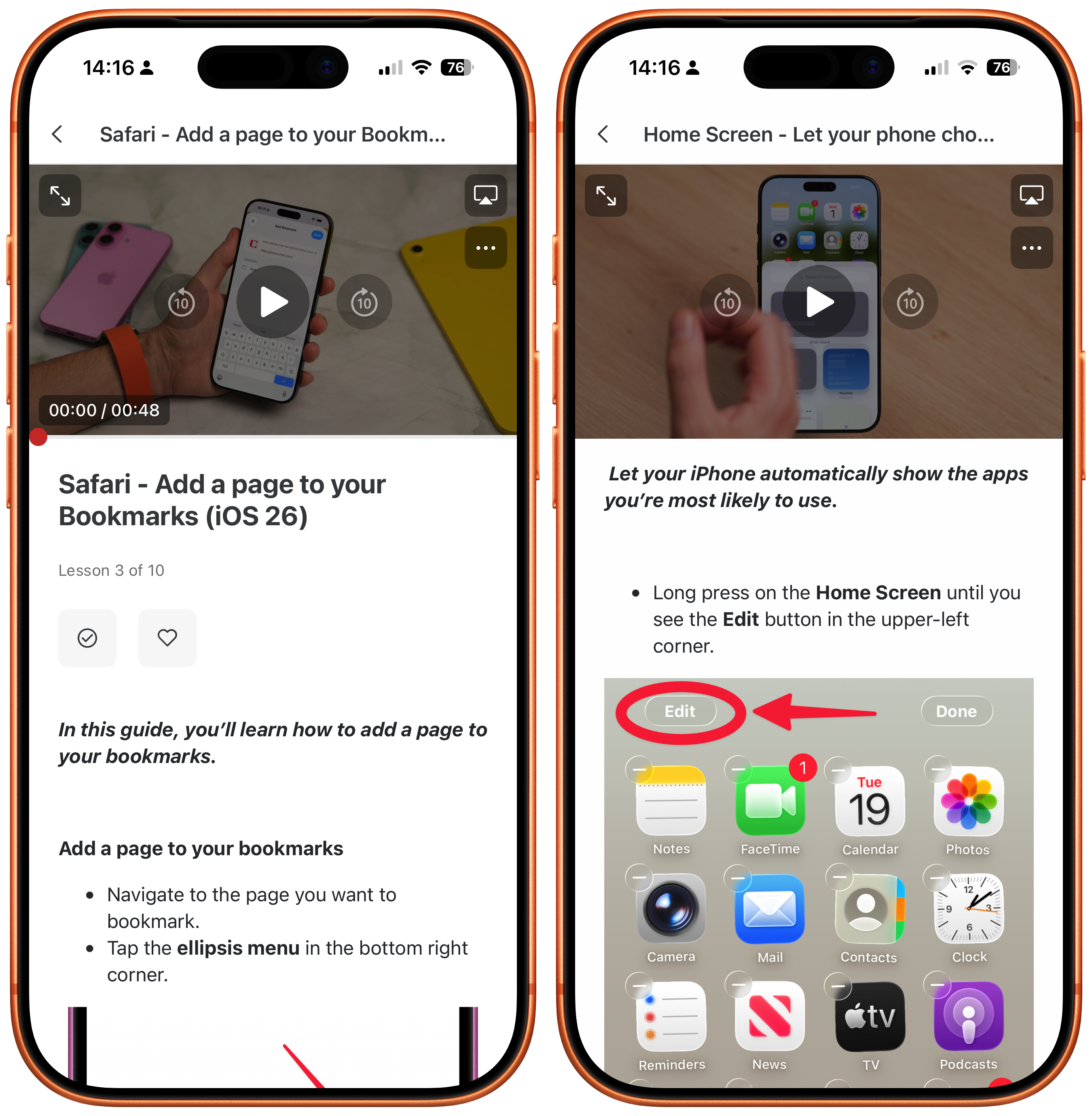
That's exactly why I built iPhone Essentials Plus. It's a library of over 250 lessons covering everything your iPhone can do, explained in plain English with video walkthroughs, step-by-step written guides, and downloadable PDFs you can keep. Whether it's getting more out of the camera, understanding your privacy settings, organising your home screen, or just feeling more confident with the basics, it's all in there.
You get lifetime access, and the course is updated regularly as Apple releases new features, so it grows with your phone. I've also recently added ad-free, sponsor-free versions of my YouTube videos as bonus content, plus a brand new standalone course called iPhone Battery Made Easy is now included at no extra cost.
If you've been reading this newsletter for a while and haven't taken the leap yet, this might be the nudge you need. It's a one-time purchase, no subscription, and it's designed for real people who just want to use their iPhone properly, not tech enthusiasts who already know it all.
Purchase Links;
- iPhone Battery Made Easy
- iPhone Essentials Plus
- Mac Essentials Plus
- iPhone & Mac Essentials Plus Discount Bundle
Vision Pro
A new book called Mutiny: The Rise and Revolt of the College-Educated Working Class has been getting a lot of attention this week. Written by New York Times labour reporter Noam Scheiber, it's a broader piece of reporting about the rise of unionisation among young, college-educated workers across America, from Starbucks cafés to video game studios to Hollywood writers' rooms. The central thread follows Chaya Barrett, an eight-year Apple Store employee who helped organise her coworkers at a store near Baltimore, which became the first unionised Apple Store in the US.
But tucked inside what's really a book about the American labour movement, there's an unexpected and fascinating chapter about the Apple Vision Pro, and specifically why it launched so poorly. Scheiber argues that years of staffing cuts, reduced training, and a shift towards aggressive sales metrics left Apple Store employees completely ill-equipped to sell one of the most complex products the company has ever made. And the details are genuinely eye-opening.
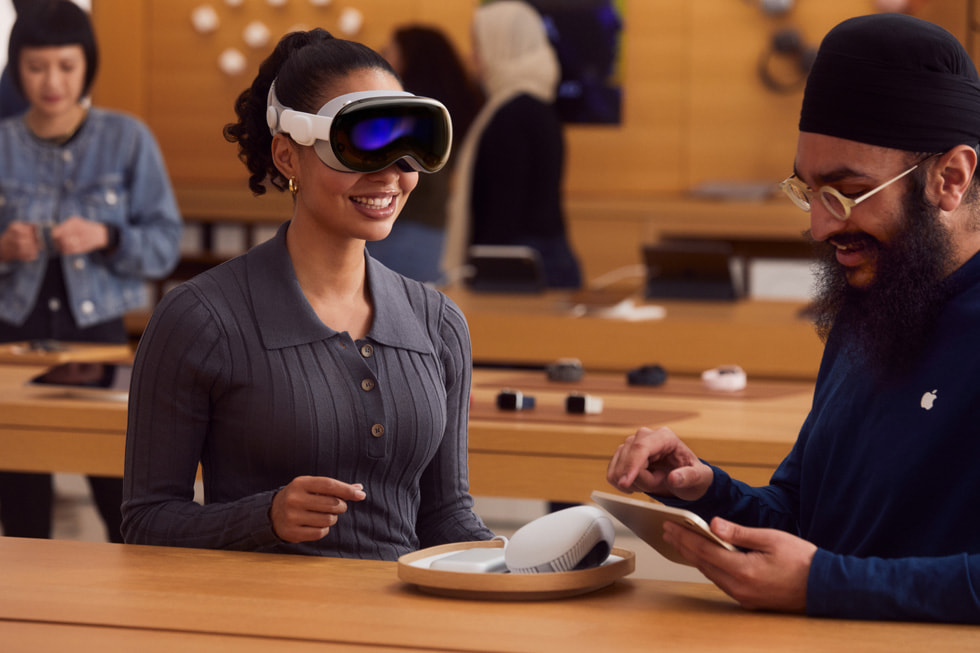
According to the book, Apple flew hundreds of retail employees to Cupertino in early 2024 for secretive Vision Pro training, complete with NDAs, phones locked away in Faraday bags, and strict silence between colleagues at different stages of the programme. The idea was to preserve the novelty of the experience and build excitement. But when those employees got back to their stores, they were expected to deliver four-hour workshops and complex demo scripts with, in some cases, as little as 20 minutes of rehearsal. One employee at the flagship Chicago store apparently described being "thrown from the nest" after just 30 minutes of practice. The demo process itself required staff to scan each customer's face, select from around 25 different light seals, and guide users through eye and hand-based controls before working through a script that ran to more than a dozen screens. It's no wonder the experience varied wildly from store to store, with some customers reportedly being given early demos without realising the content they were seeing was blurry due to small fitting errors nobody had caught.
Scheiber goes deeper, tracing Apple's retail decline back to the transition from Steve Jobs to Tim Cook. Under Jobs, the Apple Store workforce was permanent, well-paid, and treated as evangelists for the products. Under Cook, that model has been gradually unwound in favour of cost control, contractor staff, shorter self-guided training modules, and an increased focus on conventional retail metrics like device activations and AppleCare+ sign-ups. The "Creative" role, which used to mean one-on-one tutorials with customers, has been shrunk down to group sessions that some employees describe as barely disguised product marketing. Whereas store staff famously helped rescue the Apple Watch launch back in 2015 by surfacing the health and fitness angle through floor-level feedback, this time, according to the book, retail staff actually made a stumbling launch worse.
It's a fascinating read, and I don't doubt that any of it is true. But here's my honest take, and I don't think it's a particularly controversial one: the Vision Pro was always going to struggle, regardless of how well-trained the retail staff were. No amount of polished demos was going to overcome the fundamental issues with this product.
Start with the price. At $3,500 to begin with, rising to around $4,000 once you add common upgrades and accessories, the Vision Pro was never going to be a mass-market product. That's more than double the cost of a high-end iPhone and several times the cost of competing headsets from Meta. Even if every Apple Store employee had delivered a flawless, jaw-dropping demo, the number of people willing and able to drop four grand on a first-generation spatial computing experiment was always going to be tiny.
Then there's the comfort issue, which I think is genuinely underrated in these conversations. Let me give you a concrete example. I've been watching Something Very Bad Is Going To Happen, the new horror miniseries on Netflix from the Duffer Brothers of Stranger Things fame. It's an eight-episode slow burn about a couple in the week leading up to their wedding, as a creeping sense of dread takes over a remote family home. It's very good. I was five episodes in, fully invested, and I thought to myself, right, this is exactly the kind of immersive, atmospheric show that's made for the Vision Pro. Lights off, headset on, optimal viewing experience. So I fired it up, put the headset on, and settled in for episode six. By the end of that single episode, my nose was in actual pain. The pressure on the bridge of my nose was bad enough that I had to take the headset off, rub my face, and accept defeat. I watched the remaining three episodes on my television.
The headset weighs around 800g, and all of that weight rests on your face. For short demos in a store, it's fine. For actually watching a film or a series, which is one of the things Apple explicitly marketed the device for, it quickly becomes uncomfortable. I can't imagine anyone wearing one of these things for a three hour movie without wanting to rip it off halfway through.
And then there's the awkwardness of using it for anything practical. The apps are limited, the interface is novel but not necessarily better than what you can already do on your phone or Mac, and the whole experience of putting on a headset to do something you could do more easily with existing devices feels like a solution in search of a problem. Apple made a genuinely amazing piece of technology. Whether it's actually useful in daily life is a completely different question.
So while Scheiber's book makes a compelling case that Apple's retail strategy didn't help, I don't buy the idea that it was the main reason for the Vision Pro's disappointing numbers. The product had fundamental issues that no amount of training could have fixed. If anything, the Vision Pro's story is a reminder that even Apple, with all its resources and design talent, can sometimes launch a product that's just too expensive, too uncomfortable, and too limited to find a meaningful audience. The retail stuff is a contributing factor at most. The main reason the Vision Pro stumbled is that Apple built a product that very few people actually needed.
The iPhone goes to the moon
While we're on the subject of Apple getting publicity, here's a story that's been doing the rounds this week and is generating exactly the kind of headlines Apple loves. NASA's Artemis II mission, the first crewed flight to the Moon since 1972, launched last week with four astronauts on board, and they've taken the iPhone 17 Pro Max along for the ride.
This is actually a bigger deal than it sounds. NASA is famously cautious about what hardware it allows on board its spacecraft, and the approval process for new gear is notoriously slow. To put this in perspective, the newest standalone camera on the Artemis II mission is a Nikon DSLR from 2016, accompanied by some GoPro cameras that are roughly a decade old. So the fact that NASA has signed off on the iPhone 17 Pro Max for this mission is a genuine endorsement, and the first time an iPhone has ever been officially qualified for use in space.
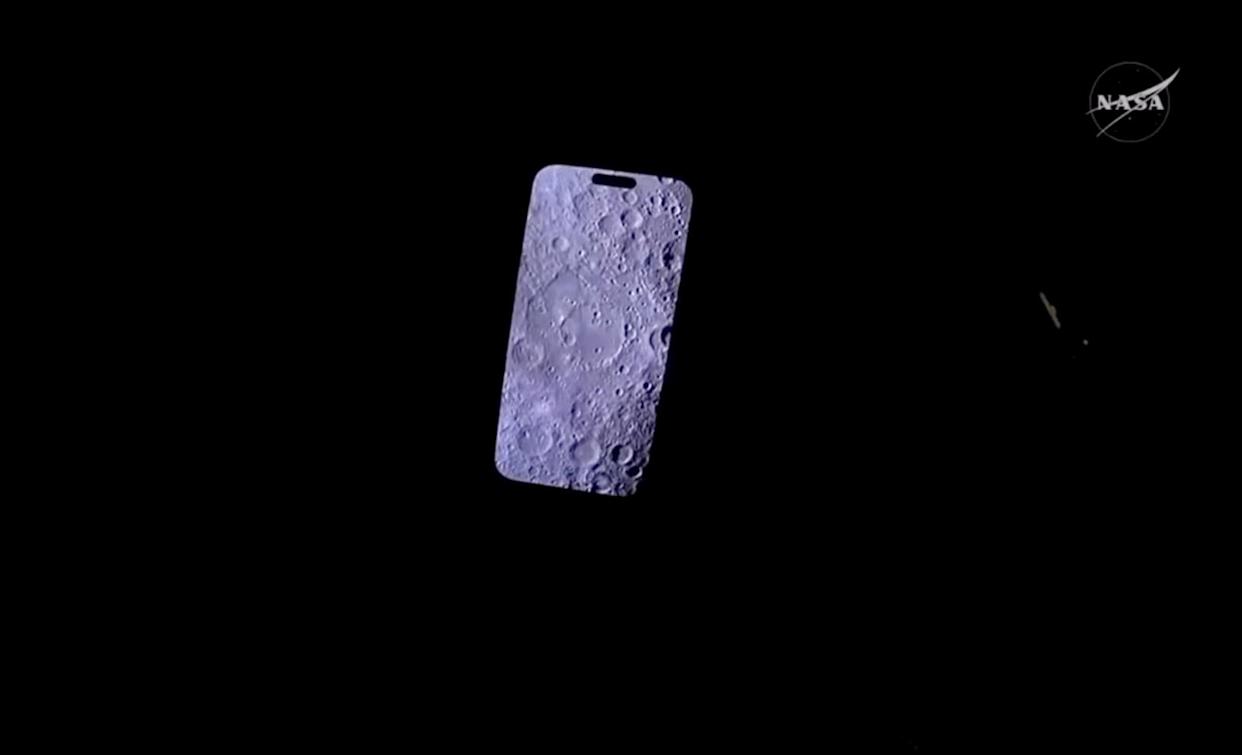
The phones aren't being used for anything mission-critical. They're not connected to the internet, they can't use Wi-Fi or Bluetooth, and they're essentially there to capture photos and video as the astronauts document their journey around the Moon. NASA has already shared a handful of stunning images shot on the iPhone, including selfies of mission specialist Christina Koch and Commander Reid Wiseman with Earth visible through the cabin window, and a remarkable shot of the lunar surface taken using the iPhone 17 Pro Max's 8x optical zoom.
You can absolutely bet that this is going to feature heavily in Apple's marketing in the months to come. "Shot on iPhone" has been one of Apple's longest-running campaigns, and you'd struggle to think of a more dramatic location to add to the list than literally outside Earth's orbit. Whether it actually sells more phones is debatable, but as a piece of brand storytelling, it's hard to beat. The iPhone has officially been to the Moon, and Apple hasn't had to lift a finger to make it happen.
Tip of the week
Did you know that downloaded music in Apple Music now includes lyrics that work offline? Previously, lyrics required an internet connection even if you had the track downloaded, which was a bit annoying. But as of iOS 26.2, lyrics are included with the download automatically. Just download music as normal in the Apple Music app, play the track, and tap the lyrics button to follow along, even without a signal.