This week, Apple Glass rumours, MacBook Neo is a smash, and the Siri Team have been sent to coding camp...

Apple Glass is coming. And it sounds... sensible.
One of the more interesting leaks this week came from Bloomberg's Mark Gurman, who shared new details about Apple's upcoming smart glasses. And after the Vision Pro's well-documented struggles, it's encouraging to see Apple taking a very different approach this time around.
So what are we actually talking about here? In simple terms, these are a pair of glasses that look like, well, glasses. Not a headset, not goggles, not something you strap to your face with a battery pack dangling down your side. Just a pair of frames with cameras, speakers, and microphones built in, designed to sit on your nose the same way any normal pair of glasses would. You'll be able to take photos and video, make and receive phone calls, listen to music, hear notifications read out by Siri, and interact with Apple Intelligence hands-free. The cameras will reportedly feed visual information to Siri, giving it real-time awareness of what you're looking at, which could make things like walking directions, real-time translation, or identifying objects genuinely useful in everyday life.
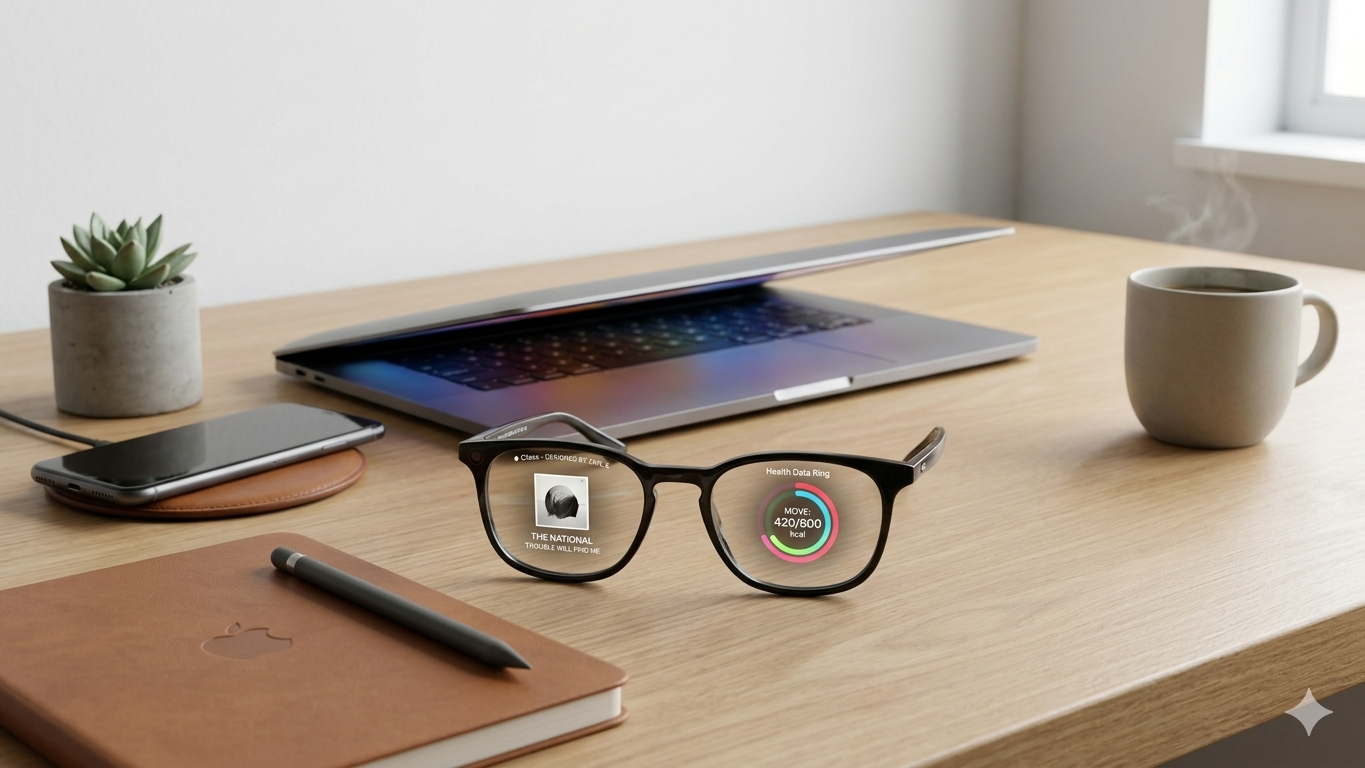
Crucially, these won't have a display built into the lenses. There's no augmented reality overlay, no floating apps in your field of vision, none of the ambitious mixed reality wizardry that defined the Vision Pro. That's both a strength and a limitation. On the positive side, it means the glasses should be dramatically lighter, more comfortable, and far cheaper than anything in the Vision Pro ballpark. You won't need a demo in an Apple Store to understand them, you won't need to scan your face for the right light seal, and you won't find yourself rubbing the bridge of your nose after 45 minutes of use. They should just work like glasses.
On the flip side, the lack of a display means you won't get any of the immersive stuff that made the Vision Pro impressive in short bursts. No cinema-sized virtual screen, no spatial photos hanging in your living room, no 3D dinosaurs walking across your desk. Everything these glasses do will be audio-first, delivered through your ears and controlled with your voice. If you were hoping for the sci-fi experience of digital information layered over the real world, that's apparently still years away. What Apple is building here is much more modest, and honestly, probably much more likely to succeed because of it.
Now, on to how they'll actually look. The project is codenamed N50 internally, and according to Gurman, Apple is currently testing four different frame styles: a large rectangular Wayfarer-type design, a slimmer rectangular version similar to the glasses Tim Cook wears (make of that what you will), and two oval or circular options in different sizes. Apple is also exploring colours including black, ocean blue, and light brown, with frames made from acetate, a premium material commonly used in higher-end eyewear. The goal is to create something instantly recognisable as an Apple product, but that doesn't make you look like you've wandered off the set of a sci-fi film.
If any of this sounds familiar, it's because Meta has been doing something similar with its Ray-Ban smart glasses for a few years now. And that's clearly the competitive benchmark Apple is working against. The Meta Ray-Bans currently sit at around $299/£299 and account for roughly 76% of the global smart glasses market. Gurman hasn't shared Apple's pricing, but if they're using premium materials across multiple frame styles and positioning these as a fashion-forward Apple product, you can bet they won't be cheap. The question is how far above Meta's price Apple decides to go, and whether the deeper iPhone and Siri integration is enough to justify it.
There's also the privacy issue, which isn't going away any time soon. A coalition of over 75 organisations recently called facial recognition in smart eyewear a line that shouldn't be crossed, and given Apple's whole identity is built around being the privacy-first tech company, that's a tightrope they'll need to walk very carefully.
Gurman expects Apple could unveil the glasses as early as late 2026, perhaps at a dedicated event, with the actual release following in 2027. He also hints that this is part of a broader push into AI wearables, with AirPods featuring built-in cameras and even a camera-equipped pendant reportedly in the pipeline too. If the idea of Apple making a necklace that watches things for you sounds a bit dystopian, well, you're not alone.
But here's the thing. This is textbook Apple. Let someone else go first, watch them fumble through the early versions, take notes, and then show up with something that looks better, works better, and locks you even deeper into the ecosystem. Apple will be betting it can do to smart glasses what it did to smartphones and smartwatches: arrive late and leave with the crown. Whether that bet pays off is another matter entirely, but on paper at least, this feels like a considerably smarter play than strapping an iPad to someone's face and hoping for the best.
The MacBook Neo is a Smash Hit. What comes next?
If you needed any confirmation that the MacBook Neo has been a success, here it is: Apple has reportedly doubled its shipping target from the original 5-6 million units to 10 million for 2026. The device is completely sold out through the end of April, with online orders now not arriving until May. Tim Cook called it the "best launch week ever for first-time Mac customers," which is quite the statement from a company that's been selling computers for 50 years.
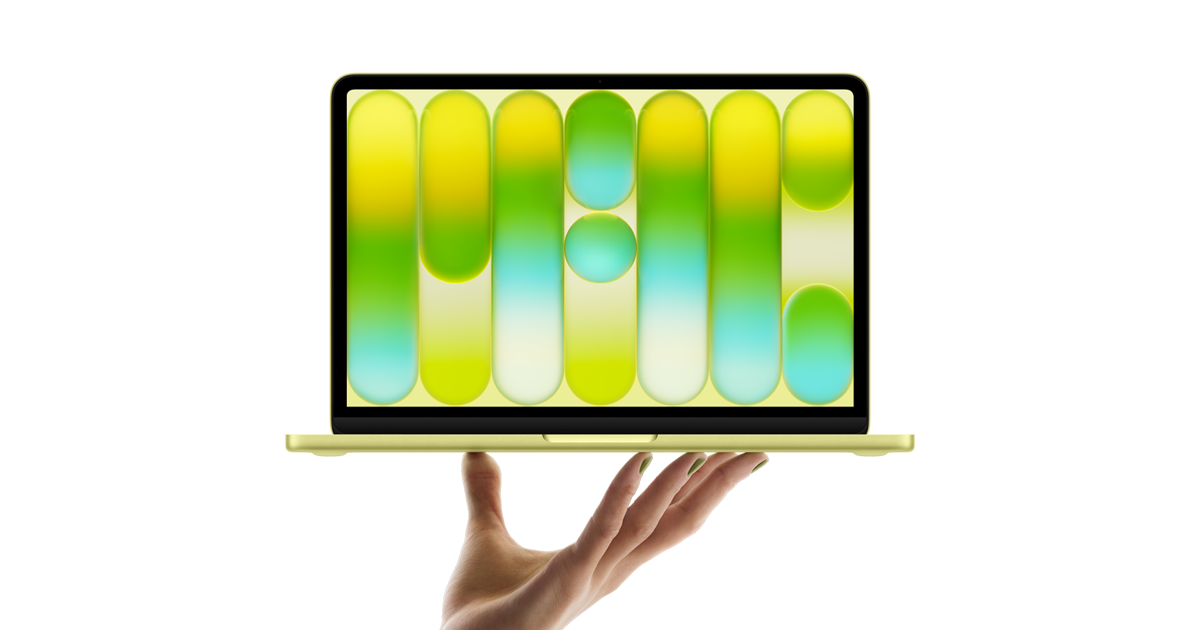
And honestly, I get it. I've been enjoying my MacBook Neo. Most days I've been grabbing it and taking it into the family room to do lighter work, and it handles everything I throw at it without complaint. In fact, this entire newsletter was written on it. The build quality is surprisingly good for a $599/£599 laptop, the screen is decent, and for the kinds of things most people actually use a computer for, browsing, email, documents, streaming, light photo editing, it handles everything without breaking a sweat. The A18 Pro chip is more than enough for everyday use, even if it's not going to trouble anyone doing serious video work or running heavy creative apps. Is it going to replace my MacBook Pro? Absolutely not. But I was never the target audience. The Neo is aimed at students, first-time Mac buyers, and the kind of people who've been using a Chromebook or a five-year-old Windows laptop and wondering whether they could afford to switch. At this price, the answer is now yes, and clearly a lot of people have been waiting for exactly that.
The interesting question is where Apple takes this next. The "Neo" branding feels like it could extend beyond just the MacBook. There's been some speculation about whether Apple might introduce a Mac Neo, a desktop version at a similar price point, perhaps something even smaller and more affordable than the Mac mini. It's a fun idea, but I'm not entirely sure the market is there. The Mac mini already starts at $599/£599 with the M4 chip, it's tiny, it's powerful, and it runs the full version of macOS without any of the compromises the Neo makes. If you already have a monitor, keyboard, and mouse, the Mac mini is arguably the better buy for the money. A desktop Neo would need to come in meaningfully cheaper to justify its existence, and it's hard to see where Apple cuts costs without making something that feels more like a toy than a computer.
For now, the Neo's success tells us something Apple has suspected for a while: there's a huge pool of people out there who want a Mac but have always felt priced out. At $599/£599, that barrier is gone, and the sales numbers are proving it. Whether Apple expands the Neo lineup or keeps it as a one-product entry point remains to be seen, but either way, the little laptop that nobody expected to be a big deal is turning out to be one of Apple's smartest moves in years.
The Siri Team goes back to school
There's a certain irony to this week's AI news that I think is worth dwelling on. On Tuesday, The Information reported that Apple is sending nearly 200 Siri engineers to a multi-week AI coding bootcamp to learn how to build with modern AI tools. On the very same day, Google launched a native Gemini app for Mac. You couldn't script the timing better if you tried.
Let's start with the bootcamp. According to the report, the Siri team has fallen behind other parts of Apple when it comes to using AI coding tools like Anthropic's Claude Code and OpenAI's Codex, which have become standard across much of the tech industry. While other Apple teams have apparently embraced these tools and allocated large budgets for them, the Siri group has been lagging. So now, just two months before WWDC, where Apple is expected to unveil the long-awaited overhaul of Siri, a significant chunk of the team is being pulled off active development and sent to retrain. Around 60 engineers will stay behind to keep working on Siri, and another 60 will focus on testing and safety. Everyone else is going back to school.
It's hard not to read this as a sign of how far behind Apple feels. The Siri overhaul was originally promised for iOS 18, then delayed to iOS 26.4, then pushed to iOS 26.5, and now appears to be landing with iOS 27 in September. The AI chief who oversaw the project, John Giannandrea, stepped down late last year and is retiring this week. Craig Federighi has taken over, and Apple has signed a deal with Google to power the new Siri with Gemini's models. Sending your engineers to a bootcamp two months before your biggest reveal of the year doesn't exactly scream confidence.
Which brings us to Google. The new Gemini Mac app launched this week and it's genuinely well done. It's a native Swift app, it sits in your menu bar, and you can summon it from anywhere with Option + Space. You can share your screen with it for contextual help, drag files into it, generate images, get coding assistance, and use it as a general-purpose AI assistant without ever opening a browser tab. It's free to use with a Google account, and it joins ChatGPT and Claude as the third major AI assistant with a dedicated Mac app. Siri, of course, still doesn't have one, because Siri on the Mac is still essentially the same limited voice assistant it's been for years.
The timing makes this feel a bit awkward for Apple. Google's AI is already running natively on Mac hardware, right now, today, while Apple's own AI team is being sent to learn how to use the tools that everyone else has been using for months. And the kicker is that the new Siri, when it finally does arrive, will be powered by Google's technologyanyway. It's a strange position for a company that has always prided itself on owning the full stack.
None of this means Siri is doomed, or that WWDC won't deliver something impressive. Apple still has enormous advantages when it comes to on-device integration, privacy, and ecosystem control. If anyone can turn Gemini's models into something that feels properly Apple, it's probably Federighi's team. But this week offered a neat little snapshot of where things stand right now: Google is shipping, Apple is studying, and the clock is ticking towards June 8th.
Tip of the week
Did you know, when setting a timer using Siri, instead of setting a duration, you can ask it to set the timer to finish at a specific time? So for example, you might say, "Set a timer to finish at 4pm", if you know that you've got a deadline at 4pm. The timer will automatically set for exact amount of time required.