This week, Apple turns 50, and we're getting a new feature in Maps that NOBODY wanted.
Apple at 50 - The Year that HAS to Count
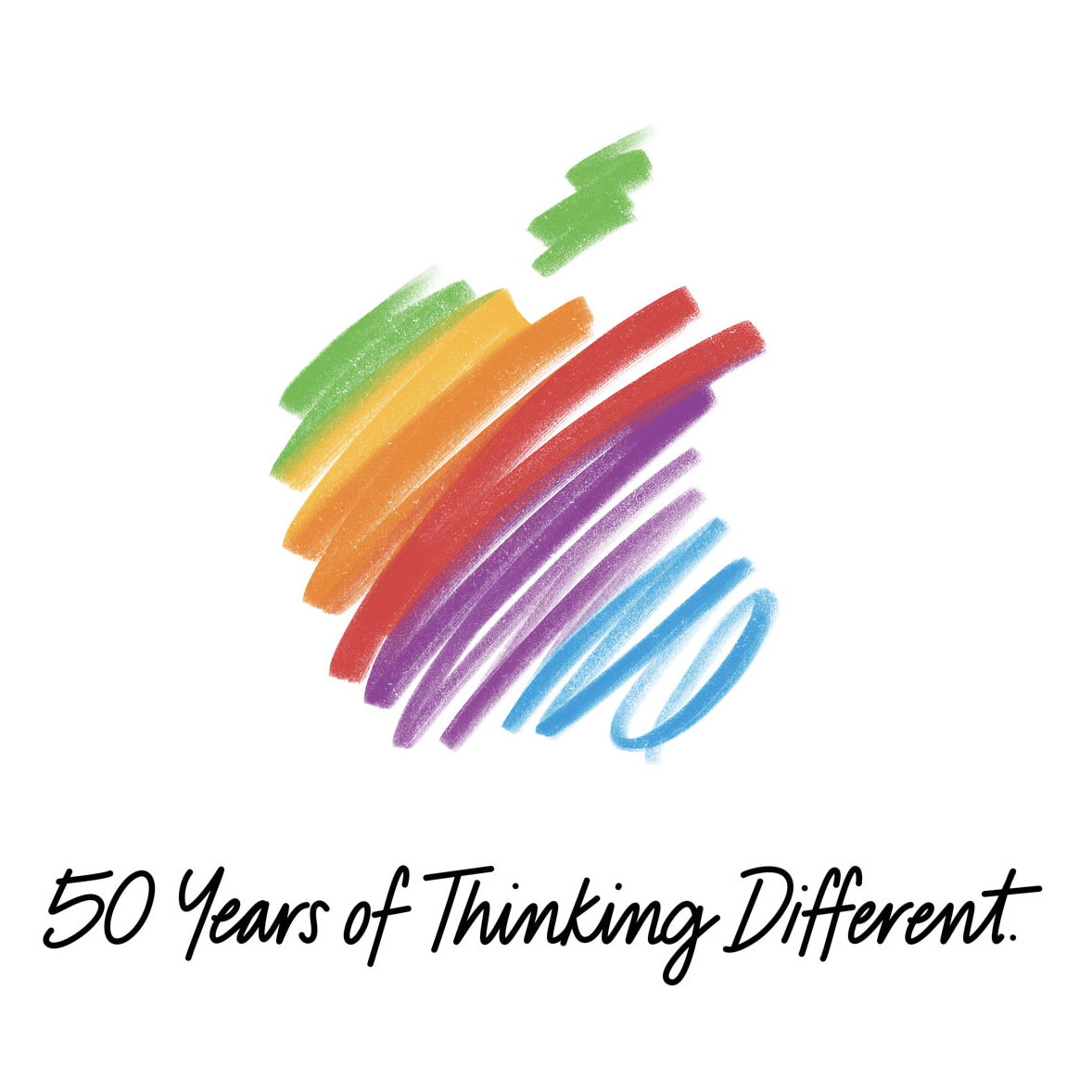
Apple turned 50 this week. On 1 April 1976, Steve Jobs and Steve Wozniak founded a company in a garage in Los Altos, California, and half a century later it remains the most valuable public company on the planet. The celebrations have been a mix of concert performances at Apple Stores around the world and a private finale featuring Sir Paul McCartney at Apple Park. Tim Cook shared a reflective letter, employees got commemorative t-shirts and a "50" pin, and the Apple homepage was updated with a sketch-art animation tracing the company's most iconic products.
Beyond the nostalgia, though, the more interesting way to mark the milestone might be to look at what Apple has actually been doing this year, and what's still to come. Because 2026 is shaping up to be one of the busiest product years in the company's history, and there's a real sense that Apple needs it to be. After a couple of years of incremental updates, delayed features, and a Siri overhaul that still hasn't materialised, the pressure is on to deliver something meaningful.
Let's rewind quickly. January gave us the AirTag 2, announced via a simple press release. February was a complete blank. And then March happened. Over the course of a couple of weeks, Apple rolled out the iPhone 17e, the M4 iPad Air, the M5 MacBook Air, the M5 Pro and M5 Max MacBook Pro, the brand new MacBook Neo, the updated Studio Display, the new Studio Display XDR, the AirPods Max 2, and the Nike Powerbeats Pro 2. That's more than ten products in a matter of days, all launched through a mixture of press releases and what Apple called "Special Experience" events in New York, London, and Shanghai. No live-streamed keynote, no polished two-hour video. Just hands-on press sessions and a steady drip of announcements.
It was impressive in volume, if nothing else. But the real tests are still ahead.
Looking at what's still to come, you can start to see a fairly clear split between the products Apple is likely to put on a big stage and the ones that will probably land with a press release, a website refresh, and a quiet Tuesday morning notification.
Starting with WWDC, which is confirmed for 8 to 12 June, the headline will obviously be software. iOS 27, macOS 27, and the rest of the annual operating system updates will take centre stage, and this year they carry extra weight because iOS 27 is expected to finally deliver the overhauled version of Siri that Apple first teased back at WWDC 2024. I say "finally" deliberately. This is a feature that was originally supposed to arrive in iOS 18, then got pushed to 26.4, then got pushed again to iOS 26.5, and now appears to be landing with iOS 27 instead. That's two years of promises, and Apple really cannot afford to underwhelm on this one. The revamped Siri is supposed to be more conversational, more context-aware, and genuinely useful in a way that the current version simply isn't. If it arrives and still feels half-baked, that's going to be a difficult conversation for Apple to have, especially given how far ahead the competition has moved with their own AI assistants in the meantime.
On the hardware side, the Mac Studio is widely expected to arrive at WWDC with M5 Max and M5 Ultra chip options. This has strong precedent, as Apple launched the M2 Max and M2 Ultra Mac Studio at WWDC back in 2023. With the Mac Pro now discontinued, the Mac Studio is Apple's flagship desktop, and the introduction of the first ever M5 Ultra chip would be a significant moment for power users. There's also a good chance we'll see the M5 and M5 Pro Mac mini announced around the same time, though that feels more like a product Apple could introduce via press release rather than dedicating keynote time to it. The iMac is rumoured to get an M5 chip and new colour options at some point this year, but the timing is less clear and it could easily slip to later in the year or even into 2027.
Then comes September, which is shaping up to be one of the most packed Apple events in recent memory. The iPhone 18 Pro and iPhone 18 Pro Max will lead the way as usual, but the real story is Apple's first ever foldable iPhone. Whether it ends up being called the iPhone Fold or something else entirely, this book-style foldable with its roughly 5.5-inch outer display and 7.7-inch inner display is going to dominate the conversation. It's expected to be announced at the September keynote alongside the Pro models, though actual shipping may come later, perhaps October or even December, because manufacturing a foldable at this level of quality is genuinely difficult. Bloomberg's Mark Gurman has said there is "no doubt" the foldable will ship after the Pro phones, comparing it to the way the iPhone X arrived later than its stablemates back in 2017. With pricing rumoured to start north of $2,000/£2,000, Apple will also need to make a convincing case for why its foldable is worth the premium when Samsung is already on its seventh generation.
September is also when Apple is expected to finally unveil its smart home lineup. The long-awaited home hub, sometimes referred to as the "HomePad," with its roughly 7-inch touchscreen display, A18 chip, and FaceTime camera, has been delayed repeatedly because of the Siri situation. Now that the revamped Siri is expected to arrive with iOS 27, the home hub should finally see the light of day. Alongside it, Gurman has confirmed that a new Apple TV 4K, a new HomePod mini, and a new full-sized HomePod are all ready and waiting, and have reportedly been finished since last year. Apple held them back specifically to launch alongside the new Siri experience. These feel like strong candidates for a September stage appearance, because Apple will want to tell a joined-up story about Siri and the smart home rather than just listing spec bumps. It's worth noting, though, that the current HomePod mini launched in 2020 and the Apple TV 4K in 2022, so customers have been waiting a very long time for these refreshes. Apple will need to show that the wait was actually worth it.
The Watch Series 12 and Watch Ultra 4 will almost certainly appear in September too, as they do every year, though neither is expected to bring dramatic changes beyond new chips and potentially Touch ID in the side button.
Now, the products that are more likely to arrive as quieter announcements. A new entry-level iPad with an A18 or A19 chip and Apple Intelligence support has been rumoured for this year, but Apple chose not to include it in the March batch and there's no strong indication it needs keynote treatment. It's the kind of product Apple tends to update via press release, much like the AirTag 2 in January. The Mac mini similarly feels like a press release product unless Apple decides to bundle it with the Mac Studio announcement at WWDC. The iMac refresh, if it comes this year, could go either way, though the addition of new colours might make it tempting stage material.
Then there's the OLED MacBook Pro, which is the wildcard, and the Mac product I'm waiting for this year. This would be a major redesign with a touchscreen, OLED display, Dynamic Island replacing the notch, a thinner chassis, and potentially M6 Pro and M6 Max chips built on TSMC's 2nm process. Some rumours point to late 2026, others suggest it could slip to early 2027. If it does arrive in 2026, it would almost certainly get its own dedicated event, likely in October or November, following Apple's well-established pattern of holding a second autumn event for Mac and iPad announcements. This laptop, which some are calling the "MacBook Ultra," would represent the first major MacBook Pro redesign since 2021, so it would certainly warrant the full keynote treatment.
Looking at the full picture, the shape of the year is fairly clear. WWDC in June will be about software, Siri, and the Mac Studio. September will be the big one with the iPhones, the foldable, the smart home hub, and the refreshed home products. And then there's a decent chance of a third event later in the autumn if the OLED MacBook Pro is ready. Everything else, the Mac mini, the entry-level iPad, perhaps a few accessory refreshes, will likely arrive the same way most of this year's products already have: with a press release on a Monday morning and a refreshed product page on apple.com.
Fifty years in, and there's no question that Apple still knows how to ship products at scale. The bigger question for 2026 is whether it can ship the right ones, on time, and with the software to match. The Siri revamp, the foldable iPhone, and the smart home push are all high-stakes bets, and each one has been a long time coming. If Apple gets them right, this could be a genuinely landmark year. If it doesn't, the 50th anniversary celebrations might end up feeling a little premature.
Your iPhone can do SO MUCH more
If you've ever found yourself Googling how to do something on your iPhone that feels like it should be obvious, you're not alone. Most people only scratch the surface of what their phone is capable of, and it's not because they're doing anything wrong. It's because nobody ever showed them. Apple doesn't include a manual, and the tips you find online are often outdated, overly technical, or buried in a ten-minute video when you just need a straight answer.
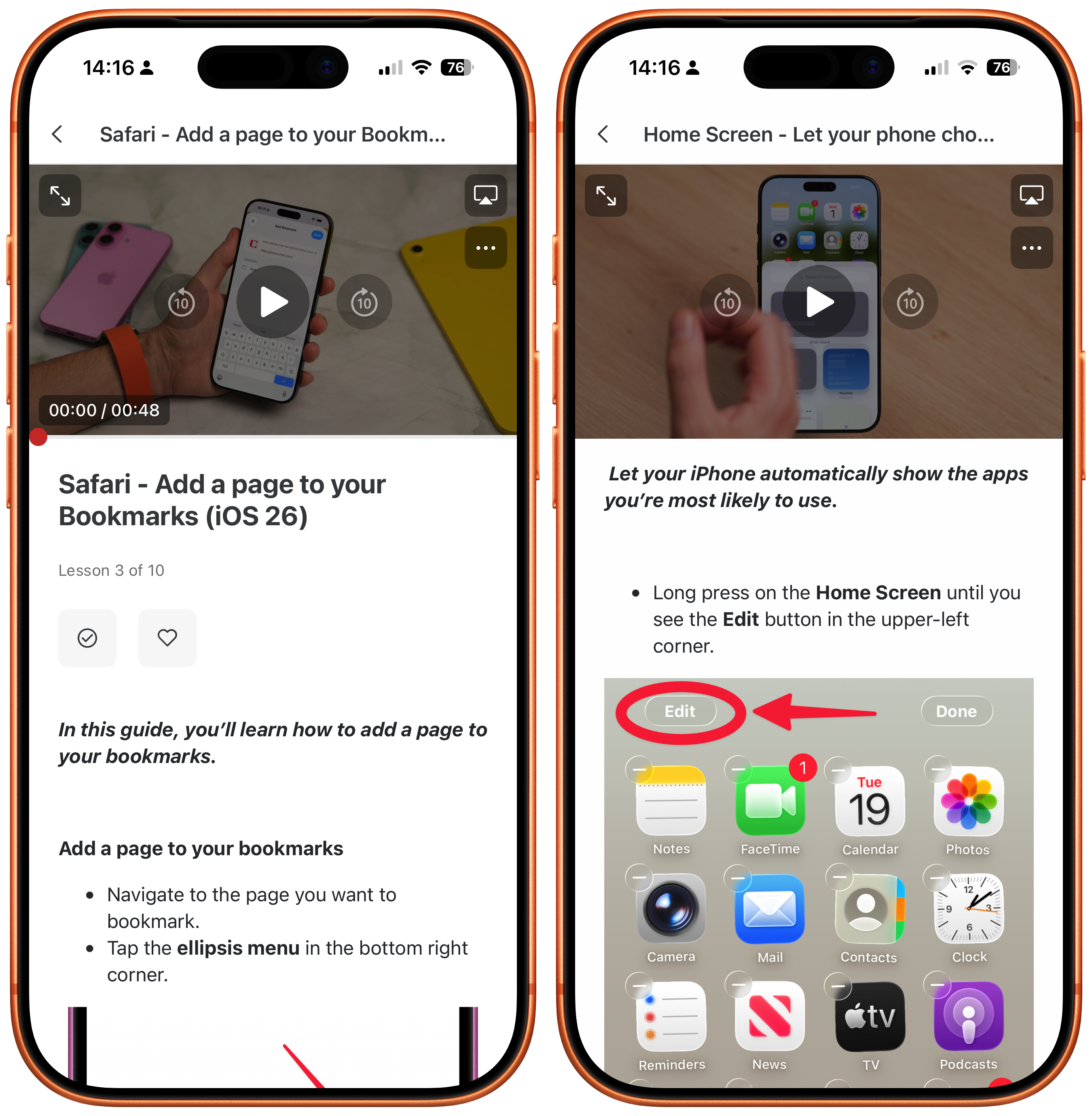
That's exactly why I built iPhone Essentials Plus. It's a library of over 250 lessons covering everything your iPhone can do, explained in plain English with video walkthroughs, step-by-step written guides, and downloadable PDFs you can keep. Whether it's getting more out of the camera, understanding your privacy settings, organising your home screen, or just feeling more confident with the basics, it's all in there.
You get lifetime access, and the course is updated regularly as Apple releases new features, so it grows with your phone. I've also recently added ad-free, sponsor-free versions of my YouTube videos as bonus content, plus a brand new standalone course called iPhone Battery Made Easy is now included at no extra cost.
If you've been reading this newsletter for a while and haven't taken the leap yet, this might be the nudge you need. It's a one-time purchase, no subscription, and it's designed for real people who just want to use their iPhone properly, not tech enthusiasts who already know it all.
Purchase Links;
- iPhone Battery Made Easy
- iPhone Essentials Plus
- Mac Essentials Plus
- iPhone & Mac Essentials Plus Discount Bundle
Ads are coming to Maps - Should You Be Worried?
Apple confirmed last week that paid ads will start appearing in Apple Maps this summer, initially in the US and Canada. If you search for something like "coffee shop" or "hardware store," a sponsored result will now be able to appear at the top of your results, clearly marked with a blue label. Ads will also show up in a new Suggested Places feature that recommends nearby locations based on trending spots and your recent searches.
It's part of a bigger move Apple is calling Apple Business, a free platform launching on 14 April that consolidates several of its existing business tools into one place. The ads piece is really just one component of that, but it's the bit that caught everyone's attention, and understandably so. Apple Maps has been ad-free since it launched in 2012. That's about to change.
Now, before anyone panics, it's worth looking at how Apple says it's going to handle this. They're limiting it to one ad per search, which is a far cry from the experience you get on Google Maps, where sponsored results can sometimes feel like they outnumber the organic ones. The ad will be clearly labelled, and Apple says that your location data and the ads you see won't be tied to your Apple Account or shared with third parties. All the processing happens on device. In theory, this is advertising done the Apple way: restrained, private, and not particularly invasive.
But there's a reasonable question to ask here, which is where does it stop? Apple has already been expanding ads in the App Store over the past few years, and there are now ad placements in Apple News and the Stocks app too. Maps feels like a more personal space than any of those. It's the app you open when you're looking for directions, trying to find somewhere to eat, or navigating an unfamiliar city. Introducing commercial results into that experience, however tastefully, does change the dynamic a little.
The privacy-first approach is genuinely different from what Google does, and Apple deserves some credit for that. But it's also worth remembering that this is ultimately about revenue. Apple's services business has become an increasingly important part of its financial picture, and Maps ads open up an entirely new income stream. For users, the key thing to watch is whether Apple sticks to its current restraint or whether the ad placements gradually expand over time, as they have done in the App Store. One ad per search is fine. Five ads per search would be a very different conversation.
For now, this won't affect anyone in the UK. Apple hasn't announced any plans to bring Maps ads beyond the US and Canada, though it would be surprising if it stayed that way forever. If you're a US reader, expect to start seeing these from the summer. And if you're anywhere else, consider this your early warning.
Tip of the week
Did you know, if you own an Apple Watch Series 9 or later (including the SE 3 and Ultra 2), there's a gesture in watchOS 26 that lets you dismiss just about anything on screen without touching it?
It's called wrist flick. All you do is flick your wrist away from you and then back again in one quick motion, almost like you're flicking water off your hand. That's it. And it works in more situations than you'd expect. You can use it to dismiss notifications, silence alarms and timers, mute incoming calls, close apps, and return to your watch face. It's completely hands-free, which makes it incredibly useful when you're carrying shopping, cooking, pushing a buggy, or just can't be bothered to tap the screen.
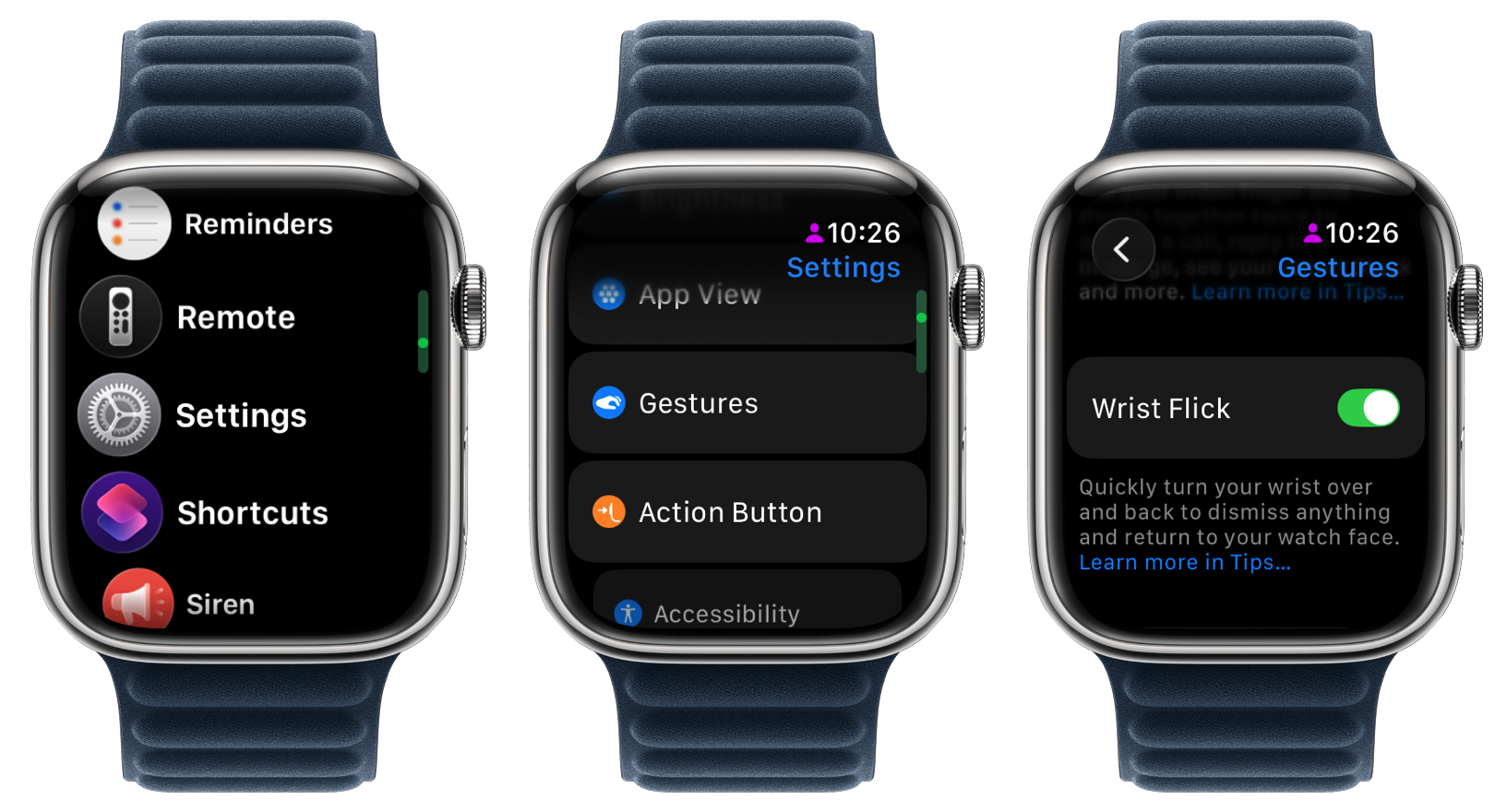
It should be turned on by default, but if it's not working for you, head to Settings, then Gestures, then Wrist Flick on your Apple Watch and make sure it's enabled. Give it a few tries to get the motion right. It needs to be a fairly quick, deliberate flick rather than a gentle turn. Once you've got the feel for it, it becomes second nature.