This week, the first M5 reviews are in, and Apple may have told us more than planned, with regard to the future of Apple & AI.
The M5 Chip is here - but should you care?
I mentioned recently in the newsletter that Apple had launched the M5 chip, bringing its flagship silicon to three of their product lines: the base model MacBook Pro, the iPad Pro, and the Vision Pro. And now, with early adopters having had their units for just over a week, we’re beginning to see the first batch of meaningful reviews come through.
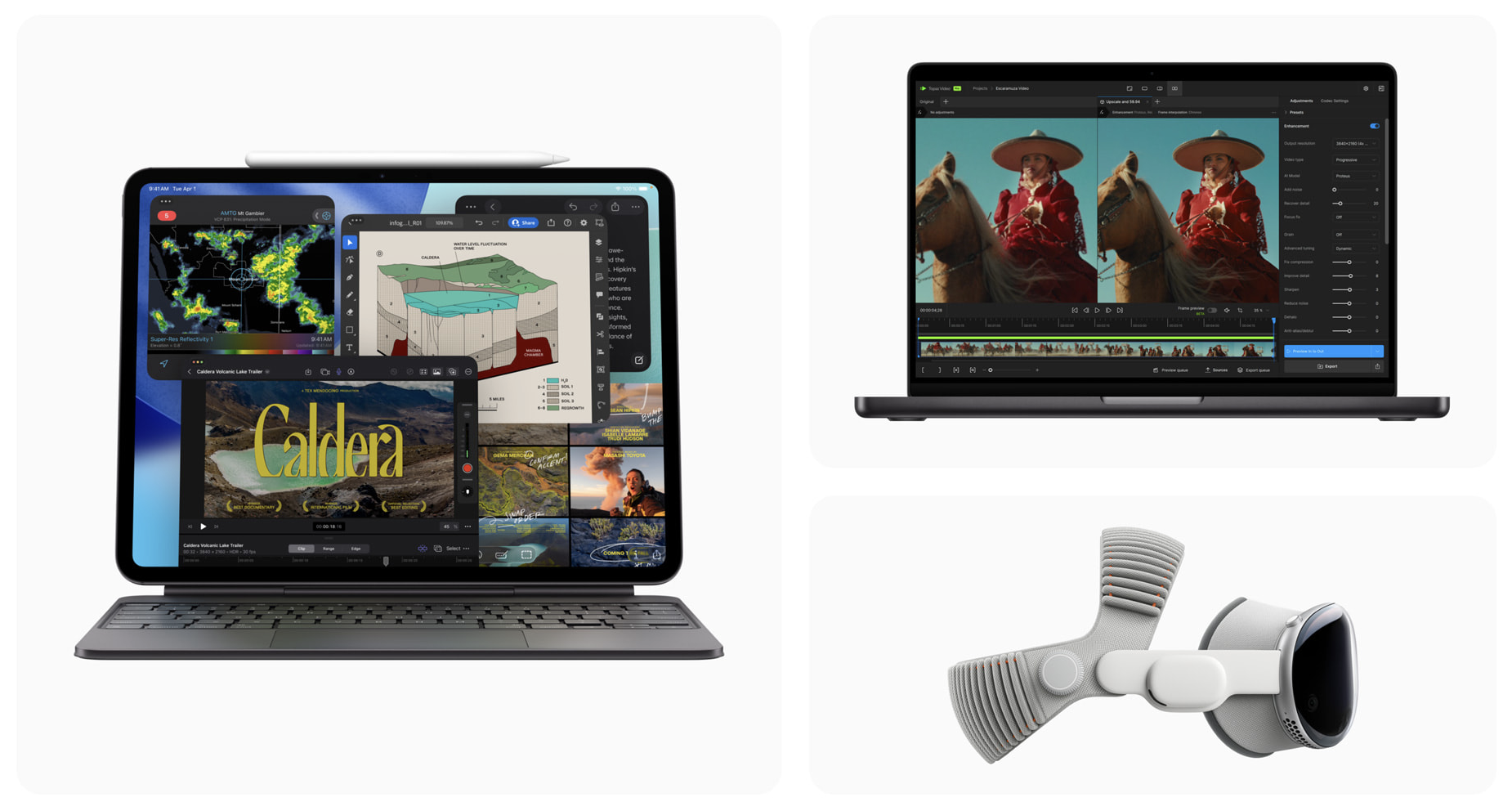
So far, the consensus is largely positive, albeit with the caveat that these are incremental updates in most cases. The changes are focused almost entirely on improvements to the silicon, rather than the physical hardware. The M5 MacBook Pro and M5 iPad Pro have been described as solid, performance-focused updates. Apple is touting a 60% GPU speed boost, record-breaking single-core scores, and an increase in memory bandwidth compared with the previous M4 iteration.
MaxTech on YouTube has already run a full battery of tests and found notable gains in read and write speeds. The 512GB M5 MacBook Pro reached 6068MBps write speeds using the Blackmagic Disk Speed Test, compared with just 3293MBps on the M4 model. Even more impressive were the read speeds — 6323MBps on the M5 compared to 2031MBps on the M4, making the new laptop over three times faster for read performance.
This kind of improvement could be significant if you’re planning to experiment with on-device AI models, especially as more third-party tools start to support them. It would also be helpful for raw photo editing or working with high-res video files. That said, if you’re already using an M4 MacBook Pro, it might be difficult to justify upgrading on performance alone.
The same applies to the M5 iPad Pro. It’s an undeniably powerful tablet, but if you’re already using the M4 version, there’s very little reason to make the leap. You’d be spending a lot of money for marginal gains unless your workflow is pushing the limits of what the M4 could do.
The real surprise this time around is the Vision Pro. Like the other two products, it hasn’t seen a design refresh, although the new dual-knit headband is proving to be a welcome improvement. I’ve picked one up myself and it is a night-and-day upgrade over the original. The redesigned dial now lets you adjust both the back and top straps independently, helping to shift the weight of the headset off your face and make the whole thing feel lighter and more balanced.
But it’s not just comfort. Vision Pro owners are reporting noticeable performance gains with the M5 model. Remember, this is a jump from M2 to M5, compared to a single-generation bump in the MacBook Pro and iPad. Apps and games now load faster, visuals are sharper, and refresh rates are smoother. The new chip allows for 10% more pixels to be rendered from the same micro-OLED panels, and several early adopters have said that putting the M2 version back on after using the M5 makes it feel laggy and sluggish by comparison.
This could present an interesting dilemma for M2 Vision Pro owners. If you bought the headset at launch, you might find that the M5 version finally delivers the experience you expected in the first place — particularly when combined with the new strap and increased refresh rate. I’m not saying it’s worth upgrading for everyone, but for people who are all-in on the Vision Pro platform, this might be the first Apple headset where an upgrade makes practical sense.
The next step for Apple is likely to be rolling out the M5 chip across the rest of the product line — namely the Mac Mini, iMac, and iPad Air. But all eyes will be on the Pro, Max and Ultra versions of the M5 chip, which we expect to see next year inside the MacBook Pro, Mac Studio, and Mac Pro. Rumours are also swirling about new Apple displays arriving in 2026, so I wouldn’t be surprised if Apple hosts a dedicated Mac Pro event early next year to announce the next chapter of its silicon transition.
Enjoy tips videos, but struggle to remember everything?
Then you should definitely take a look at iPhone Essentials Plus. It’s my dedicated iPhone training portal with more than 150 lessons covering every aspect of your device, and I’m adding new content all the time.

Each lesson includes a short video, a step-by-step guide with screenshots, and a downloadable PDF, so no matter how you like to learn, you’re sorted. There are no ads, no sponsors, just straight-up content, and it’s all available for a one-time payment, no subscription.
And if you’re a Mac user, I’ve recently launched a Mac version too. You can pick that up on its own or bundle it with the iPhone course to get the best value. If you’re interested, click the links below to get started.
Purchase Links;
- iPhone Essentials Plus
- Mac Essentials Plus
- iPhone & Mac Essentials Plus Discount Bundle
- iPhone & Lifetime PDF
- Mac & Lifetime PDF
- iPhone, Mac & Lifetime PDF
Apple investor call may have held some AI related clues
Apple’s Q4 2025 earnings are in, and the company has delivered another record-breaking quarter, driven primarily by strong iPhone and Services performance. Revenue hit $102.5 billion, up 8% year-over-year, and profit more than doubled to $27.5 billion, thanks in part to one-off tax impacts in the previous year.
Services revenue reached a new high of $28.8 billion, while iPhone sales came in at just over $49 billion, marking a September quarter record. Mac revenue grew 13% to $8.73 billion, while iPad sales held steady at $6.95 billion. Apple said its active device install base is now at an all-time high across all product categories and territories.
There were a couple of trouble spots. Revenue in Greater China fell 4%, mostly due to supply constraints on the new iPhones, and Wearables, Home, and Accessories revenue remained flat. Operating expenses were also up 11% year-on-year, with increased R&D and tariffs both cited.
Tim Cook called out strong demand for the iPhone 17 lineup, the M5-powered MacBook Pro, and recent iPad models. He also reiterated that Apple’s rebuilt version of Siri with Apple Intelligence remains on track for 2026, though still without a firm release window. The high-profile exits from Apple’s AI division, combined with fresh doubts about the state of the new Siri, don’t exactly inspire confidence. But for now, I’m choosing to remain sceptical — and still, somehow, a little hopeful.
Cook made headlines with a short but telling comment about Apple’s AI strategy, stating that the company intends to “integrate with more people over time” — a nod to potential partnerships with other AI providers. Google’s Gemini remains the most likely candidate, and new references in macOS Tahoe 26.1 suggest Apple is also testing integration with Anthropic’s MCP system.
It’s clear that Apple sees AI partnerships as a way to close the gap with Android competitors, especially as devices like the Pixel and Galaxy S25 continue to lean heavily into AI tools. And with delays to Siri’s full overhaul, third-party integration might not just be helpful — it may be essential to delivering the AI experience Apple promised at WWDC 2024.
All told, Apple’s numbers are very strong heading into the holiday quarter, but 2026 could be just as pivotal — particularly if it’s the year we finally see Apple Intelligence deliver in full.
Deals of the week
Tip of the week
Did you know, that when typing on your iPhone, there's a trick to let you select numbers from the number key more easily? Instead of pressing the '123' button in the bottom left corner, press and hold it, then slide your thumb or finger to the number you want to select, then let go.

My new content
10 Hidden iPhone Tips & Tricks I BET You Didn't Know!
|
Content I've enjoyed
The problem with this Humanoid Robot
|

The M5 Vision Pro is what should've shipped first
|