This week, we talk about the newly unveiled M5 chip
Apple finally unveils the M5 chip
The big story this week is, of course, the news that Apple has finally lifted the lid on the M5 chip, the successor to last year’s M4 and the fifth entry in their Apple Silicon lineup. The company quietly unveiled the chip alongside updates to three products in the range, doing so with even less fanfare than I had anticipated.
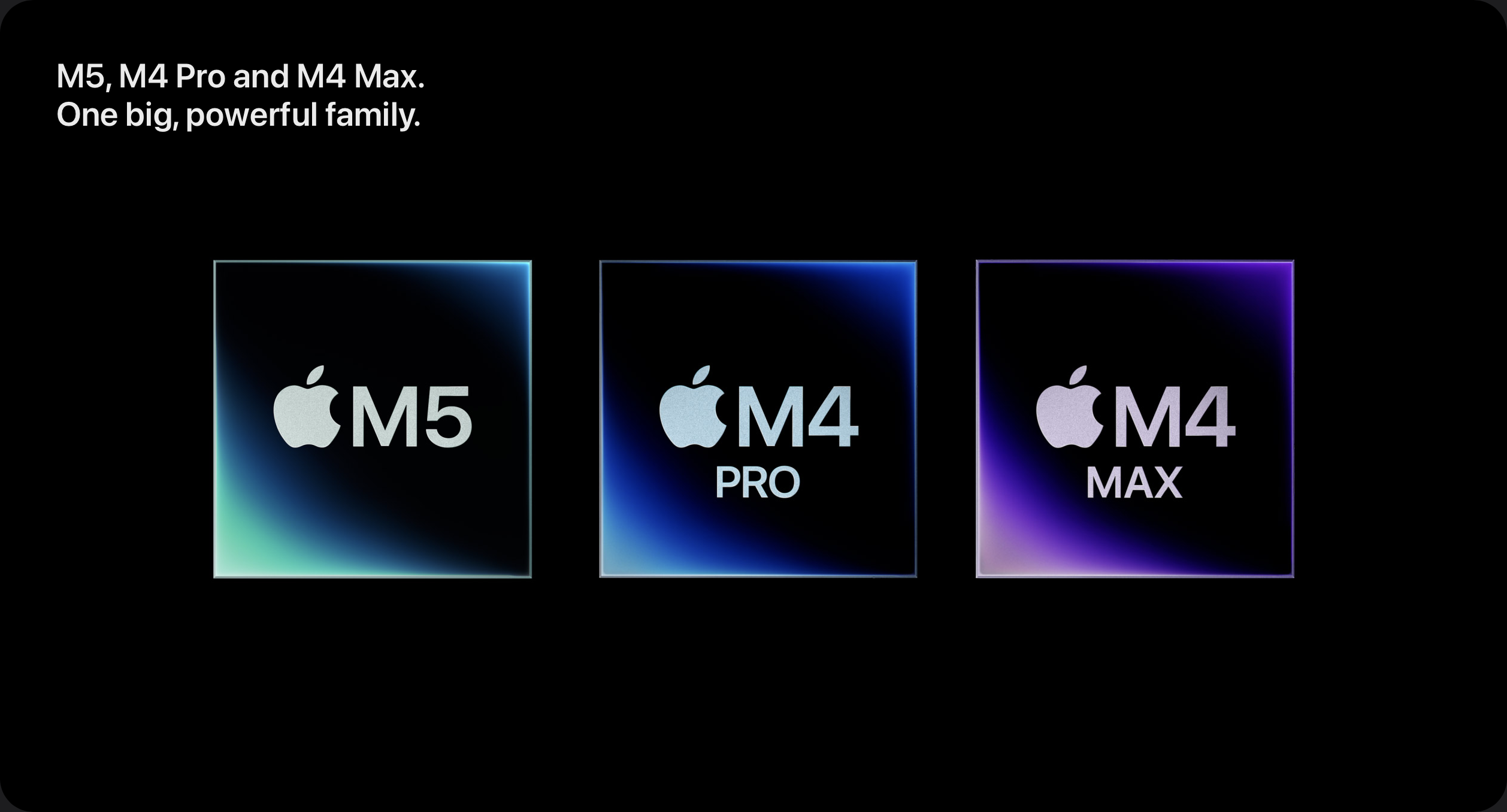
While early signs pointed to an October event, once we passed the usual window for press invites, it became clear that Apple was taking a more low-key approach. I had assumed we might get a set of YouTube announcements, similar to the M4 Mac mini launch. But what we actually got was even more subtle, with a few press releases and some quiet changes to the Apple Store.
That’s not entirely surprising when you look at the products being updated and compare them to the previous models. We’ll start with the chip itself. As expected, everything about the M5 is a spec bump on the M4, but that doesn’t make it any less impressive.
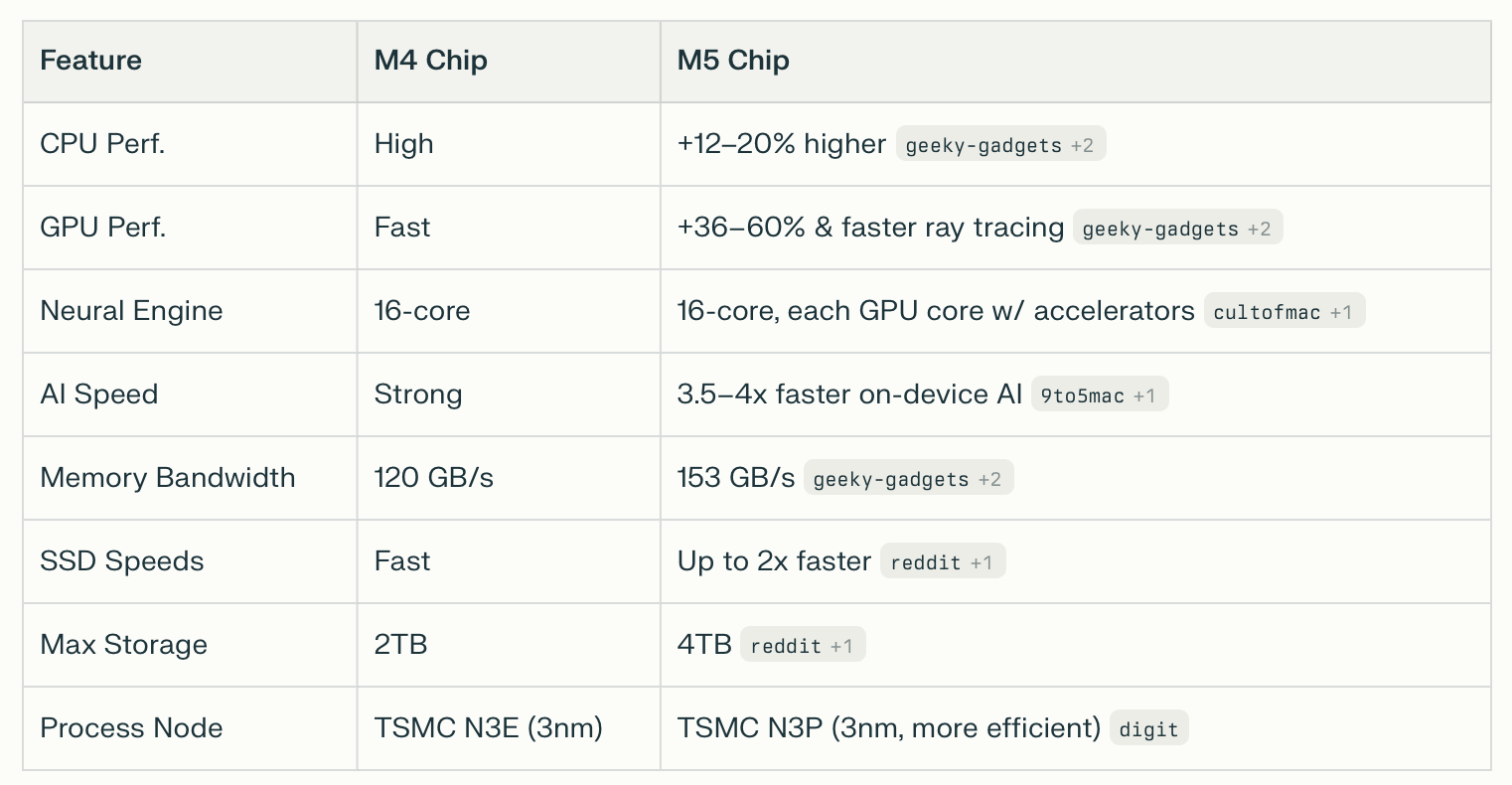
Apple is claiming up to 12 to 20 percent faster CPU performance, especially for multi-threaded tasks like software development and video editing. More notable is the GPU upgrade, offering 36 to 60 percent faster graphics performance, which Apple says will benefit designers, gamers and content creators with improved ray tracing and rendering capabilities.
Real-world tasks like video enhancement and 3D rendering are said to be 1.7x to 2.9x faster than on the M4, which is a significant leap considering how capable the M4 already was.
In terms of AI capabilities, both the M4 and M5 include a 16-core Neural Engine, but Apple has added dedicated neural accelerators to each GPU core in the M5. That should translate to better machine learning performance and more efficient AI workflows across the board. While the entry-level M5 devices launching this month aren’t necessarily aimed at AI professionals, this does give us a sense of what we might expect when the M5 Pro, M5 Max, and (maybe) M5 Ultra chips arrive next year.
The M5 also gets a notable memory bandwidth boost, up to 153 GB/s compared to 120 GB/s on the M4, which should help with multitasking and working with large files. And for the first time, Apple is introducing a 4TB storage option in the base M5 range, along with SSD speeds up to twice as fast as the previous generation.
It’s an impressive leap forward from what was already a very capable M4 chip, but what’s more interesting to me is where we’re going to see the M5 show up first. In the early days at least, Apple is bringing the new chip to three key products, and while the chip itself is exciting, it’s the product choices that have really caught my attention. We’ll talk more about them in the next section.
Enjoy tips videos, but struggle to remember everything?
Then you should definitely take a look at iPhone Essentials Plus. It’s my dedicated iPhone training portal with more than 150 lessons covering every aspect of your device, and I’m adding new content all the time.

Each lesson includes a short video, a step-by-step guide with screenshots, and a downloadable PDF, so no matter how you like to learn, you’re sorted. There are no ads, no sponsors, just straight-up content, and it’s all available for a one-time payment, no subscription.
And if you’re a Mac user, I’ve recently launched a Mac version too. You can pick that up on its own or bundle it with the iPhone course to get the best value. If you’re interested, click the links below to get started.
Purchase Links;
- iPhone Essentials Plus
- Mac Essentials Plus
- iPhone & Mac Essentials Plus Discount Bundle
- iPhone & Lifetime PDF
- Mac & Lifetime PDF
- iPhone, Mac & Lifetime PDF
The products receiving the M5 chip
I mentioned in last week’s newsletter that it was already widely rumoured the M5 chip would initially appear in only a small number of Apple products. Early speculation pointed towards one of each of the more consumer-focused Macs getting the update, including models like the Mac mini, the iMac, and the MacBook Air. But interestingly, none of those made the cut in this latest announcement.
Instead, the M5 chip is currently available in just three products: the base model 14-inch MacBook Pro, the iPad Pro, and the Vision Pro headset.
The MacBook Pro upgrade isn’t a surprise on its own, but Apple’s decision to limit the M5 to only the 14-inch model is a curious one. At first, I assumed it might be a glitch on the Apple website, but sure enough, when you browse the site, the 14-inch model offers multiple configurations with the M5 chip. Switch over to the 16-inch, however, and your only options are the M4 Pro or M4 Max.
It’s a bit of a head-scratcher. You can easily spec out a 16-inch MacBook Pro to cost several thousand £/$, and yet you’re being asked to buy into a chipset that is already on borrowed time. We don’t yet know exactly when the M5 Pro and M5 Max chips will land, though current rumours suggest early 2026. So if you’re set on a 16-inch model or one of the higher-tier chip variants, I’d strongly recommend holding off for now.
That said, the base model 14-inch MacBook Pro looks like a great buy at the moment. You’re getting all the benefits of that new M5 chip, and outside of the chip itself, the rest of the device remains the same excellent machine we’ve come to expect.
The iPad Pro, meanwhile, has had both its 11-inch and 13-inch models updated with the M5 chip. Unlike the MacBook Pro, there’s no custom chip selection here — just a choice between size, colour, and storage capacity. Storage goes up to 2TB, but it’s worth noting that RAM differs by configuration. The 256GB and 512GB models come with 12GB of RAM, while the 1TB and 2TB versions bump that up to 16GB.
If you’re a serious pro user who relies on the iPad Pro for your work, the cost of the 13-inch model with 2TB and nano-texture glass may well be justifiable. But for the average user, this remains a wildly overpowered tablet. As someone who owns the base model 11-inch M4 iPad Pro, I can say confidently that there is no compelling reason to upgrade at this point.
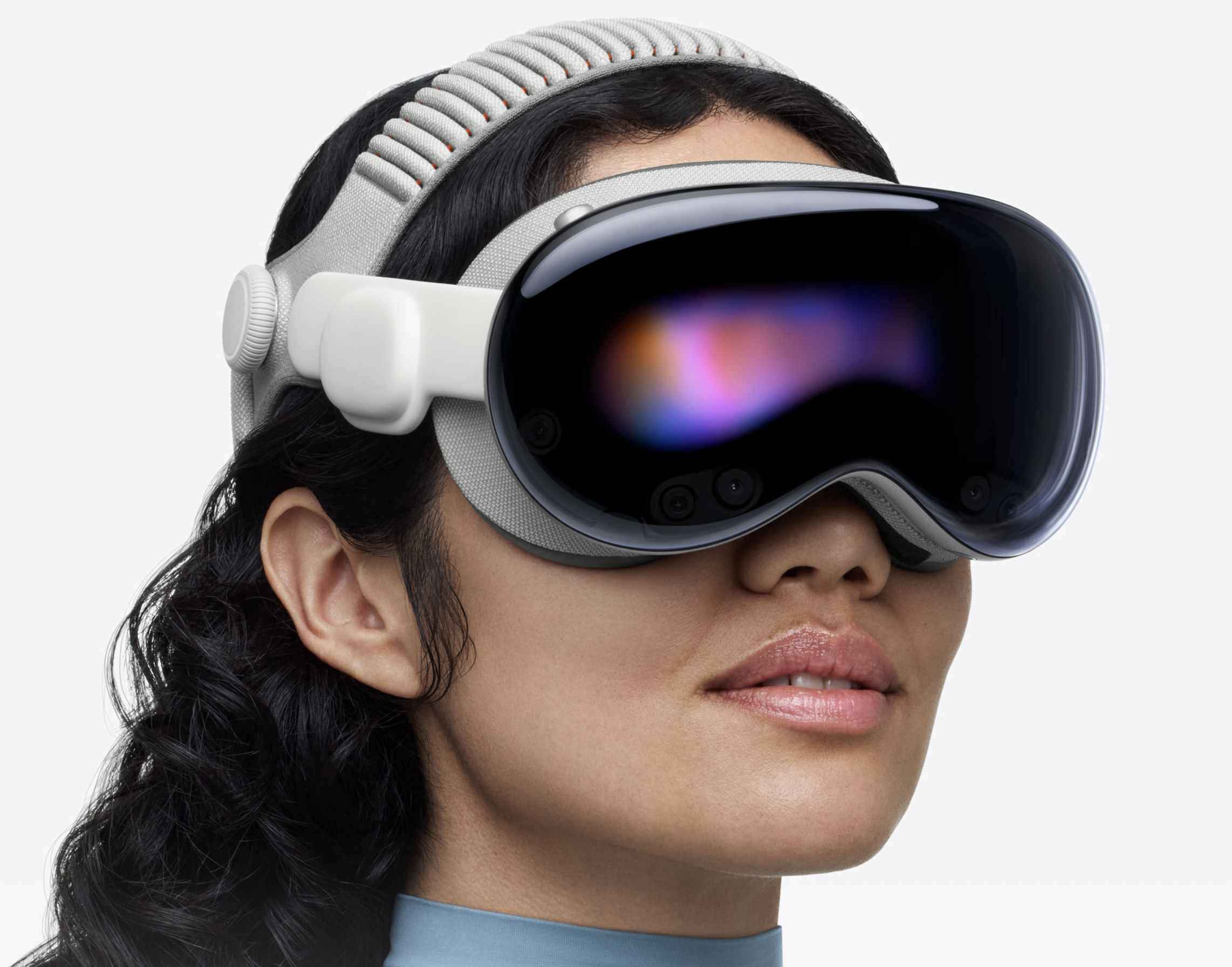
The Vision Pro was arguably the most surprising update of the week. We’ve known for some time now that a spec bump was likely, and on paper, it made perfect sense. Apple clearly wants to phase out as many of its older chips as possible and streamline its active lineup around the latest generation silicon. Until now, the Vision Pro was the last major Apple device still shipping with an M2 chip, while the rest of the Mac and iPad range had already moved to M3 or above. So swapping in the M5 seemed logical.
But Apple hasn’t just swapped the chip. The new M5-powered Vision Pro actually delivers meaningful improvements, and in some ways, it goes further than I expected. The most headline-grabbing upgrade is the 10% increase in pixel density. Apple has been able to extract sharper visuals and clearer text from the same micro-OLED panels used in the original model, purely because the M5 chip’s rendering power allows it to drive those panels more effectively. That’s going to make a real difference for things like reading documents or working in productivity apps.
There’s also a bump in the maximum refresh rate, now increased from 100Hz to 120Hz. This is a welcome change that should improve the smoothness of pass-through video and Mac Virtual Display performance. You also get hardware-accelerated ray tracing and mesh shading, which would benefit gaming use, though I still don’t personally know anyone who’s using their Vision Pro to play games.
Battery life has been nudged slightly upwards as well. Apple now claims around 2.5 to 3 hours of battery life, up from the previous 2 to 2.5. It’s a modest improvement, but worth noting if you’re someone who pushes the device beyond short demo sessions.
The other update, and one that might make the biggest practical difference to current users, is the redesigned band. The new Dual Loop Band replaces the single back strap with a design that also goes over the top of your head. The goal here is to lift the weight of the device and relieve some of the pressure on your cheeks and the bridge of your nose. Anyone who’s used the Vision Pro for more than 15 minutes at a time knows how uncomfortable that can get. So this change is long overdue.
Speaking as someone who owns the current Vision Pro, it’s disappointing that Apple didn’t offer this new strap to existing users at no extra cost. I’ve gone ahead and ordered one for £99 and I’m really hoping it helps make the device more comfortable to wear. If it does, I suspect it could go a long way toward increasing usage among those who already have one but don’t reach for it as often as they expected to.
So, what's next?
I wouldn’t expect Apple to announce anything else for the remainder of the year. As far as I can tell, this latest round of updates essentially wraps up 2025 for the company. But if the current rumours are to be believed, 2026 could be a big year for Apple.
Starting with the M5 chip, I’d be surprised if we don’t see it rolled out to the rest of the consumer Mac lineup early next year. That would include the MacBook Air, along with long-overdue updates to the Mac mini and iMac. None of these products are likely to need major redesigns to accommodate the chip, so assuming Apple sticks to its usual pace, we should expect those launches fairly early in the year.
The more interesting launch, in my opinion, will be what happens on the Pro side of the Mac range. Specifically, we’re expecting to see the M5 Pro and M5 Max chips appear, and those would likely be introduced through a proper event. The MacBook Pro lineup, which still uses the M4 Pro and Max chips, is a prime candidate. But I also wouldn’t be surprised to see updates to the Mac Studio and perhaps even the Mac Pro.
Adding fuel to this theory is some recent macOS source code, found within macOS Tahoe, that makes reference to two unreleased professional displays. One is thought to be a new version of the Studio Display, which has been rumoured for some time. The other is potentially a second-generation Pro Display XDR, this time with a dedicated chip and a Center Stage camera built in. That combination of new Macs and new displays would certainly justify a dedicated spring event.
And if Apple doesn’t want to combine it with WWDC in June, then a launch sometime around March or April feels likely.
Tip of the week
Did you know, that Siri is able to open pretty much anything that you need it to in Settings, and it's often better than searching?
For example, as I write this week's newsletter, searching Settings for 'Vehicle' or 'Motion' does not bring up Vehicle Motion Cues. But activating Siri, and saying "open Vehicle Motion Cues in Settings" takes you right there!
My new content
10 iPhone Tips That Will Genuinely Make Your Life Better
|
How to fix 13 ANNOYING iPhone issues
|
Content I've enjoyed
ROG XBOX Ally Review - The Curse of “XBOX”
|
ChatGPT in a robot does exactly what experts warned
|

Watch this if you want to learn how to make videos
|