This week, OpenAI has poached a high-profile Apple alum, Google has shown off some seriously impressive AI, we’ve had a timely reminder about the importance of data protection, and WWDC rumours are really starting to take shape.
Jony Ive is back...
Without a doubt, the most significant piece of news in the tech world this week is the announcement of a major business collaboration between OpenAI, the company best known for creating ChatGPT, and Sir Jony Ive, one of the most influential figures to have ever worked at Apple, perhaps second only to Steve Jobs himself.
Announced earlier this week, OpenAI has acquired LoveFrom’s hardware startup IO in a deal valued at approximately $6.5 billion. It’s the company’s most significant acquisition to date and signals just how serious OpenAI is about evolving from a pure software company into a hardware powerhouse, aiming to create a bridge between AI and a new generation of intelligent devices.
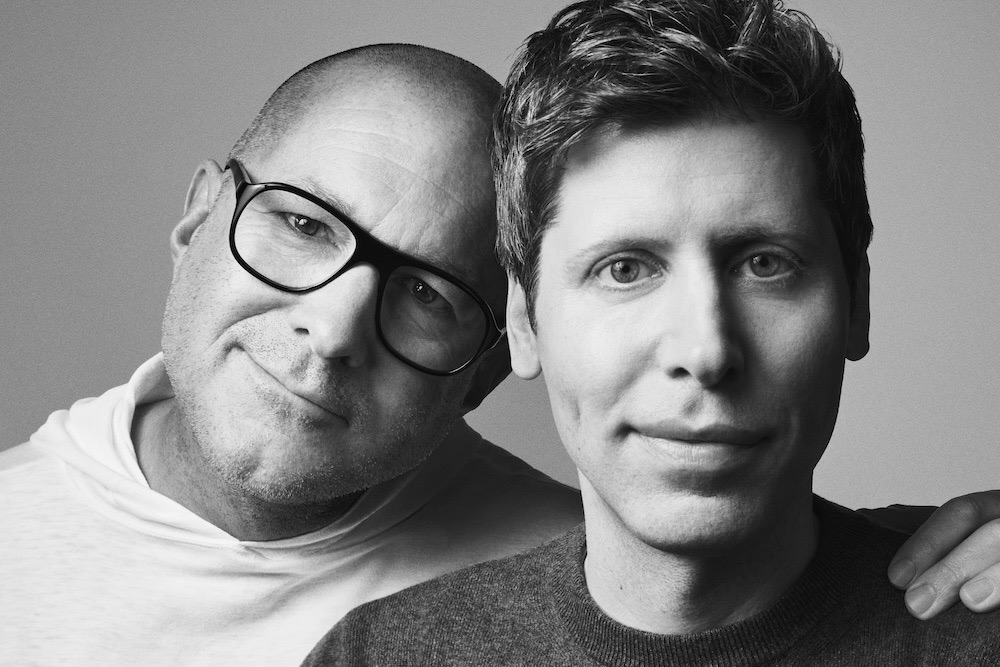
In terms of the deal, OpenAI is paying $5 billion in stock for IO, with the transaction expected to close this summer. Jony Ive will become Head of Design at OpenAI, though interestingly he won’t become a direct employee. Instead, his design agency LoveFrom will remain independent (albeit with OpenAI as their sole client) but will oversee all design aspects at OpenAI, including software.
As part of the acquisition, around 55 hardware engineers, software developers, and manufacturing specialists from IO will join OpenAI to form a brand new hardware division, with many of these people having previously worked at Apple. It’s thought the two companies had already been collaborating behind the scenes for the past two years, with OpenAI previously holding a 23% stake in IO.
What this means for consumers is still somewhat unclear. The only detail so far has come from a somewhat self-congratulatory 10-minute video released on social media on Wednesday. True to form, it’s classic Jony Ive: all style, but sketchy on the true details. But the ambition is bold; the goal is to create entirely new hardware experiences that redefine human-computer interaction.
|

This won’t be a ChatGPT phone. Instead, it’s believed the first product will be a third device, designed to complement laptops and phones. Early leaks suggest it will be a compact, screen-free, context-aware device that sits on a desk or fits in a pocket. It’s not a wearable, and it’s not smart glasses, it’s something entirely new.
The idea is for this to act as an AI companion, with a deep awareness of its user’s environment and daily life. One would assume this means it will include cameras and microphones to interpret surroundings in real time. Comparisons are already being drawn to the Humane AI Pin, which was widely considered a flop, but it’s safe to say Altman and Ive will be doing everything they can to avoid a similar fate.
It also raises questions about how Apple will respond. Jony Ive was responsible for designing many of Apple’s most iconic products; the iMac, iPod, iPhone, iPad, MacBook, and Apple Watch, not to mention leading the iOS 7 visual overhaul. With Apple under pressure for their sluggish AI rollout and conservative hardware updates, this could be the spark they need.
The pairing of Sam Altman and Jony Ive has all the ingredients of a match made in tech heaven, and I, for one, can’t wait to see what they build together.
Enjoy tips videos, but struggle to remember it all?

You should check out my training portal, iPhone Essentials Plus!
It’s more than 150 lessons for the iPhone, covering every aspect of it, with each lesson containing a video, a step-by-step guide with screenshots, and a downloadable PDF, with new content being added on a regular basis.
Sound interesting? Check it out by clicking here, or tapping the image above.
Google showed off a LOT of AI this week
Google held their annual I/O conference earlier this week, and while I’m still very much an Apple fanboy at heart, I always watch with interest to see what the likes of Google and Samsung are up to. This year’s I/O event was an exciting one, especially if you’re into artificial intelligence.
|

One of the standout technologies was Google’s new AI mode for search, a chatbot-style tool now rolling out to US users. It lives within a separate tab in Google Search and reflects how consumer behaviour is shifting. Traditionally, planning a trip would involve a series of individual searches; hotels, restaurants, events, and so on. AI mode lets you run more complex, natural-language queries that pull everything together in one go, helping you get the answers you need with far less effort. It could just as easily be used to compare fitness trackers or find the best value event tickets in seconds.
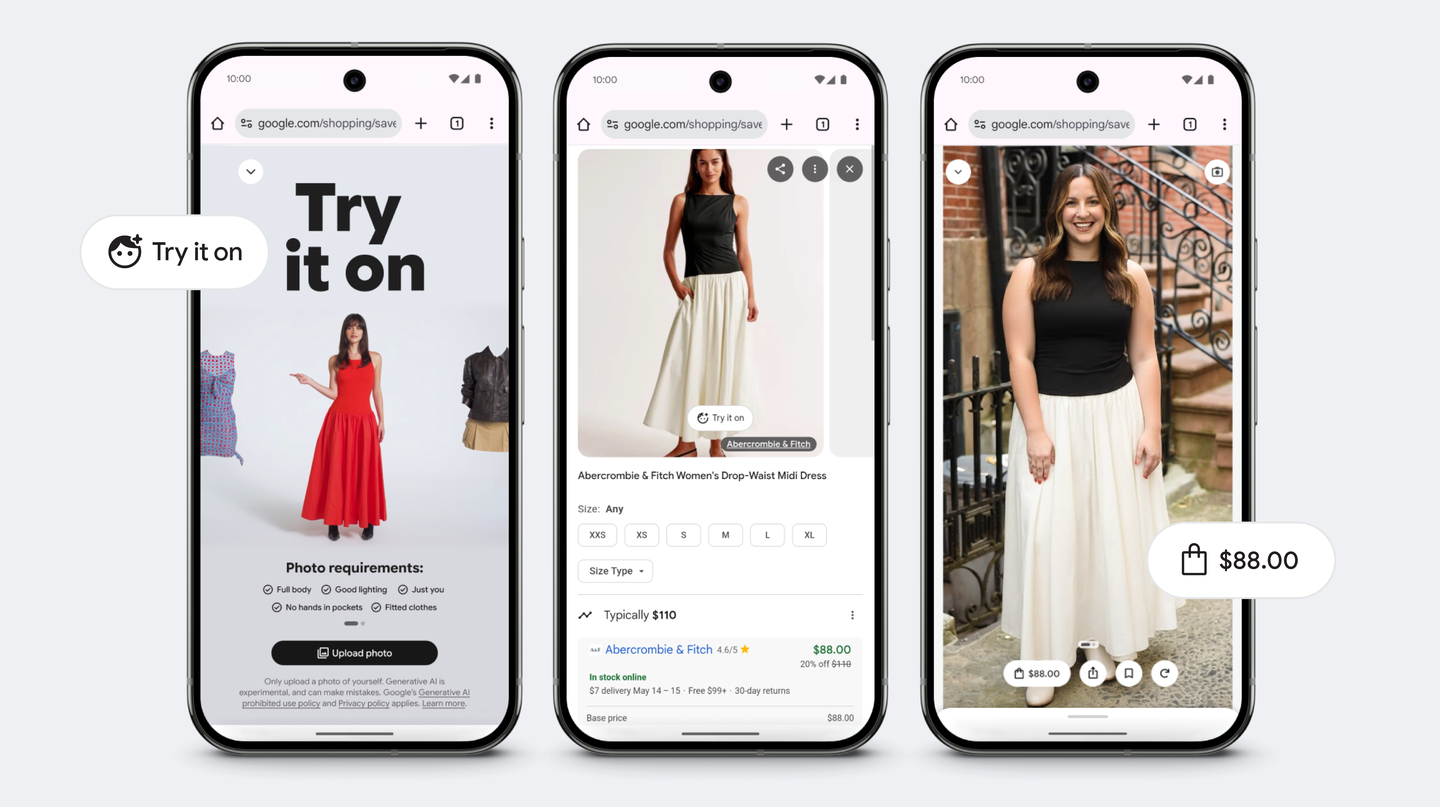
Another highlight was an AI-powered virtual try-on feature. Upload a photo of yourself and see how clothing would realistically look on your body, not just with basic editing, but using a model that understands how garments fit a range of body types. If this works as intended, it could revolutionise online shopping, reducing returns and helping people buy with more confidence.
Google also showcased progress on Project Astra, their vision for a universal AI assistant. In a demo, Astra helped fix a mountain bike by scanning emails for the model’s specs, researching a replacement part online, and even calling a local shop. It was a good reminder of just how powerful AI can be when it ties together real-world context with digital knowledge.
They also unveiled Flow, a new AI-powered filmmaking app. It brings features like perspective controls, video extension tools, and simulated camera movement. Even more impressively, Google’s new Veo 3 technology can generate videos complete with sound. The examples were impressive, even if they still drifted slightly into uncanny valley territory.
Finally, Google gave us another look at Android XR, their platform for augmented, mixed, and virtual reality. While the demo was fairly tame, showing turn-by-turn directions and message previews via smart glasses, the potential is clear. Several companies are already on board, including smart glasses maker Xreal, who is working on a new device called Project Aura. As someone who already owns a pair of Xreal glasses, I can vouch for the quality of their work.
All in all, Google had a lot to show this year, and for Apple fans, it’s a reminder of how fast things are moving in the world of AI and immersive tech.
Mac Essentials Plus

Following on from the success of iPhone Essentials Plus, I’m really excited to share that I’m putting the finishing touches to Mac Essentials Plus — my brand new training portal dedicated to helping you get the most out of your Mac.
This one’s going to be big. macOS is far broader in scope than iOS, and this training portal will reflect that. There’ll be more than 200 lessons available from the moment it launches in just a couple of weeks, and I’m already working on even more to roll out in the weeks and months ahead.
Just like iPhone Essentials Plus, each lesson includes a short video, a step-by-step written guide, and a downloadable PDF to make learning as easy and accessible as possible.
If you’d like to be the first to know when Mac Essentials Plus launches, follow the link here to join the waiting list.
MASSIVE Data Breach
Had this week have been a quieter one for tech news, I probably would have spent the entirety of this newsletter talking about this single topic. But with so much going on, we’ll start here: a massive data breach has just been discovered, exposing a staggering 184 million records.
Cybersecurity researcher Jeremiah Fowler reported on WebsitePlanet.com that he had uncovered a publicly exposed database that was neither password-protected nor encrypted. The database contained unique usernames and passwords for major platforms including Facebook, Instagram, Microsoft, Roblox, Snapchat, Apple, Amazon, Nintendo, Spotify, Twitter, WordPress, and Yahoo, as well as for banks, health services, and government portals.
The scale of the breach is enormous. Although Fowler couldn’t confirm the database’s original purpose, he did report it to the hosting provider, which then restricted access. But because there’s no way to tell how long the database was publicly accessible, there’s also no way of knowing who else may have already accessed the information.
Fowler was able to verify some of the records by reaching out to a few of the email addresses found in the dataset, identifying himself as a researcher.
Data breaches like this happen all the time, and they are becoming an increasingly serious problem. So it’s worth taking a moment to remind ourselves of some basic but critical steps we can take to protect our personal data.
The number one tip? Use a unique, strong password for every single site or service you use. It’s tempting to recycle the same password across multiple platforms, but doing so leaves you extremely vulnerable. If a hacker gets hold of your login credentials from one breach, they’ll almost certainly try them on other websites.
Most modern devices now include built-in password managers, often secured with biometrics. That means there’s really no excuse not to use strong, unique combinations across your accounts.
Beyond that, stay vigilant when it comes to unexpected calls, texts, or emails. Don’t trust anything at face value. If something feels off, stop. Close the message or hang up, and contact the company directly through a trusted channel. If the message is legitimate, they’ll still be there when you reach out.
WWDC Rumours are taking shape
This week, Apple sent out its invitations for WWDC 2025, which is now just a couple of weeks away. And while it can feel hard to get excited about WWDC, especially after last year’s disappointments and with Apple clearly lagging behind in AI, the company knows it has to showcase something meaningful this time around.

If the rumours are accurate, there should be plenty to talk about. It’s widely expected that Apple will avoid discussing Siri altogether, and I’m not at all surprised. The company doesn’t appear to have made much progress with its smart assistant, and after the backlash last year, when it showed off features that didn’t exist in any form behind the scenes, I suspect Apple now realises that making promises about Siri is a losing game. Much better to release it quietly when it’s actually ready.
What we are expecting is a major redesign of iOS 19, and hopefully iPadOS 19 and macOS too. If this happens, it would mark the biggest visual overhaul since iOS 7. It’s believed the redesign draws heavily from visionOS, the system used in the Vision Pro headset. And as someone lucky enough to own a Vision Pro, I can tell you that it’s a genuinely enjoyable operating system to use; fresh, clean, and a welcome contrast to an iOS experience that’s started to feel a little tired.
On the iPad side, it’s rumoured that Apple may push iPadOS a step closer to macOS-style functionality, possibly including a menu bar and a revamped version of Stage Manager to make multitasking feel more natural, much like it does on the Mac.
There’s even talk of USB-C iPhones gaining the ability to connect to external displays and run an iOS experience that’s optimised for larger screens. If true, this could be a standout feature, though I’m not convinced it’s coming just yet.
We’re also expecting visionOS 3 to be a substantial update. One rumoured feature is the ability to scroll through content using only your eyes. That’ll be an interesting one to try. I still catch myself grinning whenever I use the Vision Pro, whether I’m typing on a floating virtual keyboard or swiping at mid-air windows.
Another AI feature to watch for is Project Mulberry, Apple’s long-rumoured health coach. The idea is to use the biometric data collected by your devices to provide AI-driven personalised health recommendations. The less exciting news is that this may be a standalone subscription service, not bundled into any of Apple’s existing plans, a move clearly aimed at generating a new revenue stream from the growing wellness space.
And finally, Apple is expected to announce that its on-device AI models will be opened up to third-party developers. This would allow app makers to tap into Apple’s AI infrastructure without needing to build their own full-scale models, potentially making apps faster and more efficient, and a whole lot smarter.
Tip of the week
If you wear your Apple Watch overnight, your iPhone quietly collects some fascinating health data, and there’s a feature called Vitals that lets you see it all in one place.
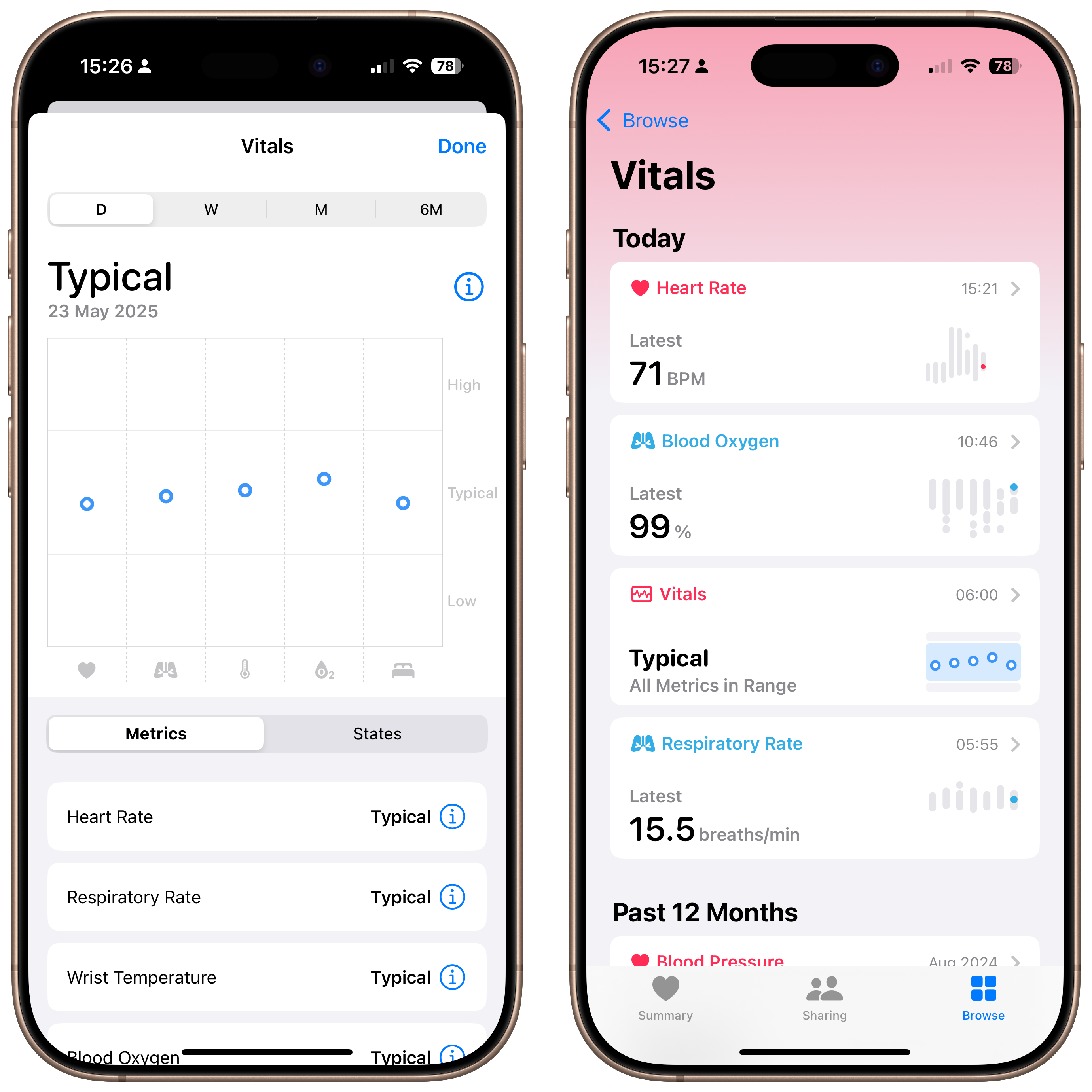
Open the Health app on your iPhone, tap Browse at the bottom, then choose Vitals. You’ll find five key metrics: heart rate, respiratory rate, wrist temperature, blood oxygen, and sleep duration.
Better still, your iPhone will flag any unusual readings, helpful for spotting early signs that you might be coming down with something.
Content I've enjoyed this week
Android XR Glasses
|

Robots!
|
That's all from me, speak next week!