We have so much to talk about this week, including CarPlay Ultra, new Accessibility features, AI being used to keep your battery going longer, and the iPhone roadmap!
CarPlay Ultra is here (and only the super-wealthy can have it...)
With Apple News seemingly breaking the news almost daily this week, I thought it would be a good idea to start with an actual new product announcement, albeit a software product that most of us won’t be able to use for a while. Apple has finally unveiled its next-generation CarPlay, now called CarPlay Ultra.
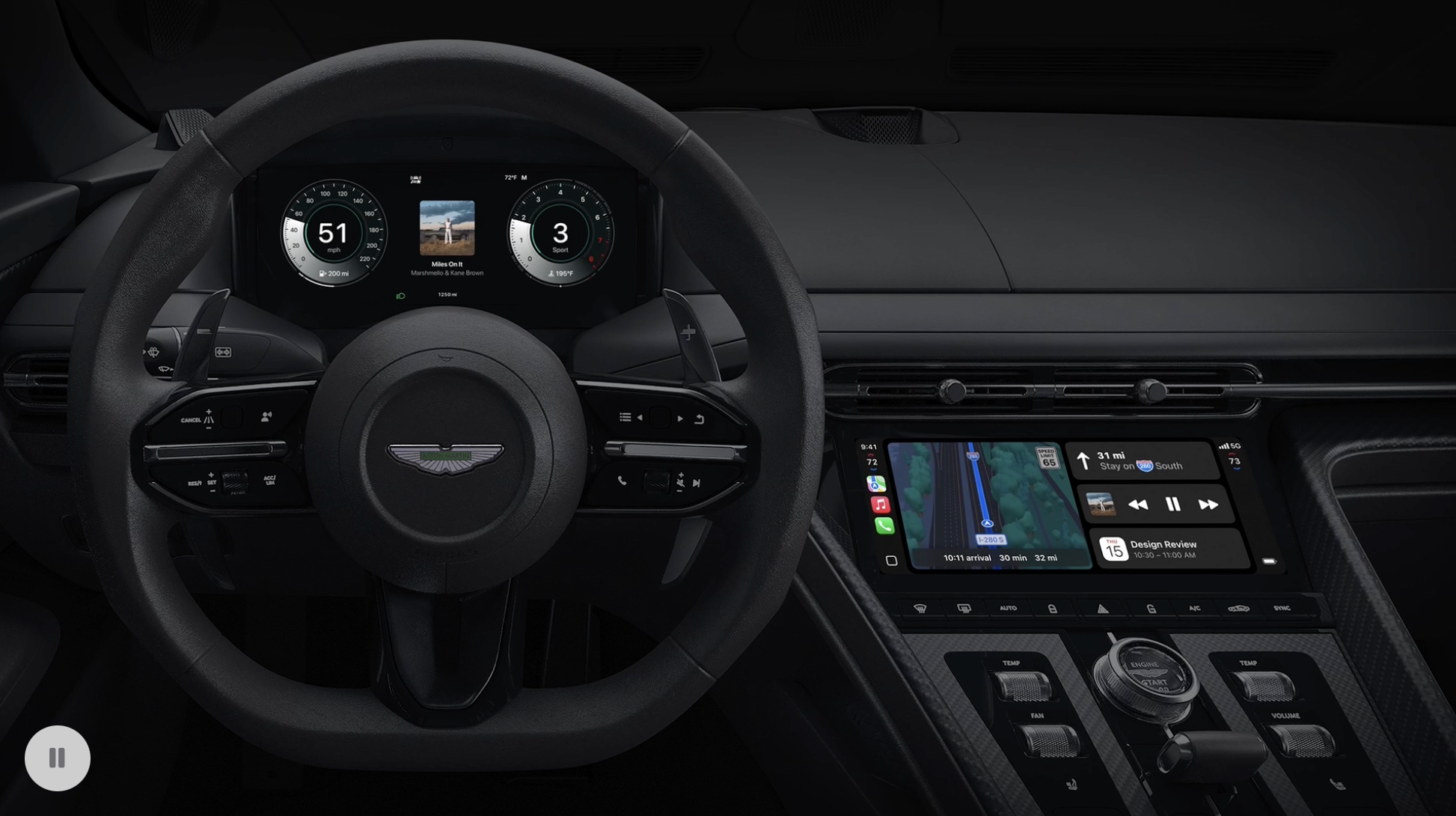
If you missed it, Apple first showed off the next-generation version of CarPlay way back in 2022. They hinted at a future where CarPlay would stretch beyond the usual entertainment screen and take over other in-car displays. The goal? More than just podcasts and Maps, this version would be fully integrated into your car’s system, bringing Apple’s signature design to everything from your speedometer and rev counter to heated seats, aircon, and tyre pressure.
For a while, some people thought Apple had quietly scrapped the idea, another AirPower-style disappearance. But it turns out, they’ve been quietly plugging away behind the scenes. And what they’ve come up with looks pretty impressive.
They’re calling it CarPlay Ultra, and it’s launching first in partnership with Aston Martin, exclusively in brand-new models sold in the US and Canada. Apple says they’re also working with other brands like Hyundai, Kia, and Genesis to bring it to more cars.
At a glance, the main screen in CarPlay Ultra looks a lot like regular CarPlay, just bigger. But the real upgrade is what you see behind the steering wheel.
In a recent video from Top Gear (highly worth a watch, and I’ve linked it later in this email), they walk you through how you can customise the display to suit your taste. You can go for dials that feel like classic Aston Martin, or lean into something more Apple-esque. It’s not necessarily about showing more data, it’s about showing it in a way that’s familiar, polished, and thoughtfully designed. As Top Gear puts it, Apple’s real advantage is user experience, something car companies have often struggled to nail.
To me, it makes complete sense to let Apple handle the software side. Most in-house car interfaces still feel like they’re five years behind. With CarPlay Ultra, anyone who’s used CarPlay before will feel instantly at home, no learning curve, just hop in and go.
It also just looks good. I wish I could say I’ll be trying it out soon, but unless someone surprises me with a brand-new Aston Martin, I might be waiting a while. Still, the fact that this tech will be rolling out to more manufacturers in the next year or two is genuinely exciting.
That said, it does raise a bigger question—how many car makers are actually willing to hand over this much control to Apple? Letting another company take over the in-car experience is a big step. Fortunately, Apple has built in a “punch-through” mode, which means the car’s own interface can override CarPlay Ultra when needed, for example, when you’re using the reverse camera. That kind of flexibility could be key in getting more brands on board.
All in all, it looks very promising. And if anyone reading this happens to get their hands on CarPlay Ultra before I do, I’d love to hear what you think. Let me know!
New iPhone Roadmap promises an exciting couple of years
Popular Apple-related Twitter account Apple Hub earlier this week released an image that they claim is a visual representation of the iPhone roadmap, as laid out by renowned Apple analyst Ming-Chi Kuo, covering the second half of this year through to the end of 2027. And if accurate, the image certainly makes for some interesting reading.
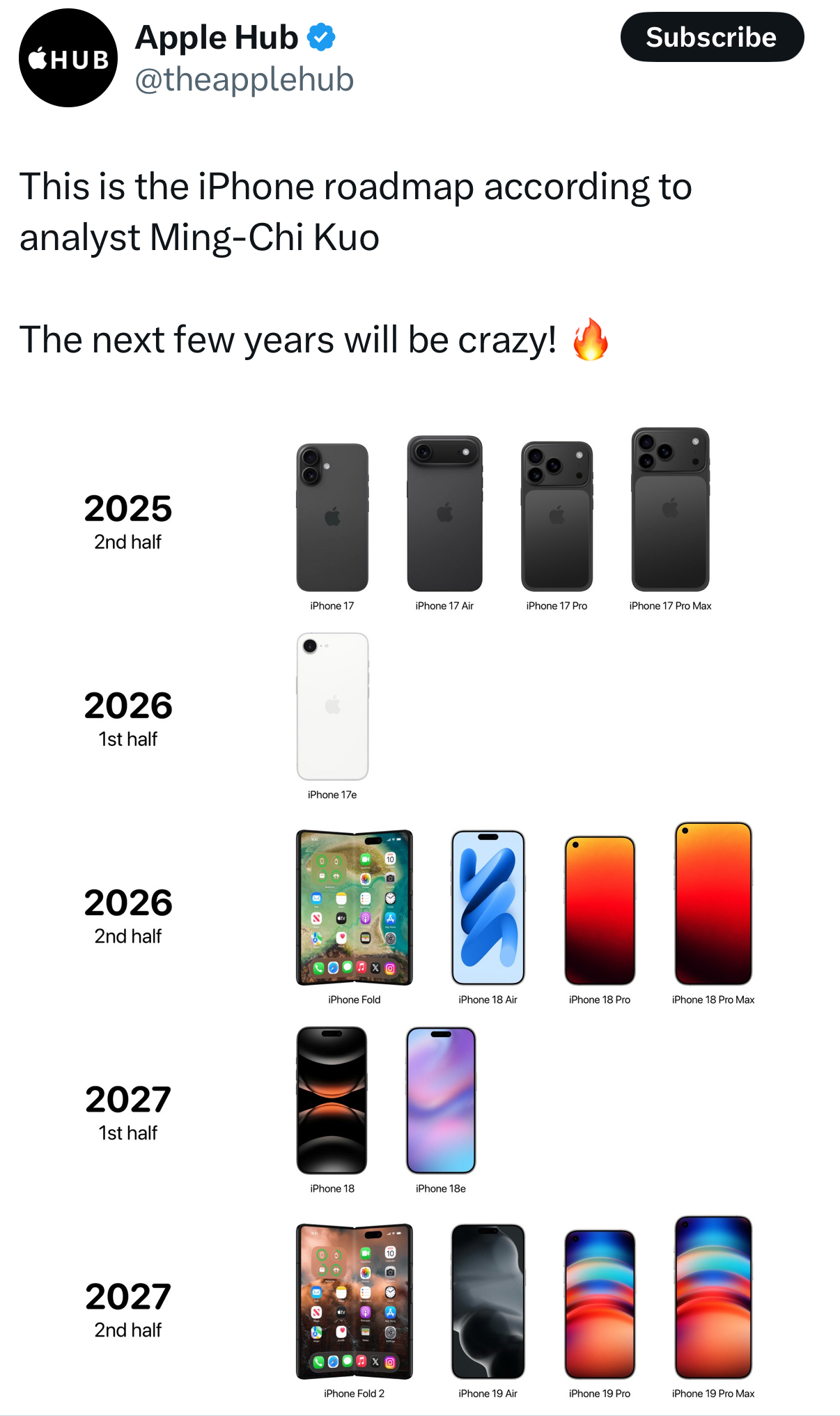
The roadmap begins pretty much as expected, with four phones being released in September this year: the iPhone 17, iPhone 17 Pro, iPhone 17 Pro Max, and the ultra-thin iPhone 17 Air, which is said to replace the previous iPhone 17 Plus. That would mean that if you want the largest screen size, you’ll now need to go for the most expensive model, the 17 Pro Max.
The budget-friendly iPhone 17e is expected to arrive in the first half of 2025, mirroring the approach Apple took this year with the iPhone 16e launching back in February.
It’s the second half of next year where things start to get particularly interesting. Apple is allegedly planning to release an iPhone 18 Air, alongside the 18 Pro and 18 Pro Max, and the all-new iPhone Fold. But there’s one notable omission; there’s no regular iPhone 18 listed for September. According to the roadmap, that model, along with the iPhone 18e, has been pushed to the first half of 2027.
In other words, September could become the exclusive launch window for premium models, while the more consumer-focused devices would arrive in the following spring. It’s unclear exactly why Apple is moving in this direction, but the idea of better segmenting the market by target audience does make a certain kind of sense.
The second half of 2027 is then expected to bring the full iPhone 19 range, including the second-generation iPhone Fold 2.
Enjoy tips videos, but struggle to remember it all?

You should check out my training portal, iPhone Essentials Plus!
It’s more than 100 lessons for the iPhone, covering every aspect of it, with each lesson containing a video, a step-by-step guide with screenshots, and a downloadable PDF.
Sound interesting? Check it out by clicking here, or tapping the image above.
Oh, and if you're more into the Mac — I’m really excited to announce that by the end of this month, I’ll also be releasing Mac Essentials Plus. It will follow the same format as iPhone Essentials Plus, but specifically for the Mac. It’s not available just yet, but it will be in a few weeks. If you’d like to be one of the first to know when it’s live, click here to join the waiting list.

Apple announces major additions to their Accessibility suite
In what is beginning to feel like an annual tradition, Apple has released a wealth of information about upcoming accessibility features roughly a month ahead of the annual WWDC conference. I do wonder if this is because Apple, for whatever reason, doesn’t particularly like spending any significant time talking about accessibility during WWDC. By getting this information out to the public now, they give people a chance to see what the company has been working on and possibly build a little bit of hype and excitement about what might be coming next month.

Certainly, looking at what the company has been doing from an accessibility perspective, it’s very impressive. In a press release, which I’ll link to, the company showcased features using a mixture of screenshots and videos. They demonstrated a magnifier feature coming to Mac thanks to Continuity Camera. In the demo video, a student attends a lecture and sets their MacBook up with a magnetic mount that allows their iPhone to attach to the top of the display and point the main camera at the lecturer on stage. The user can then control things from their Mac to zoom in, snap a picture of the presentation, and use tools to automatically enhance, straighten and clarify the image, capturing a near-perfect visual of the lecture in seconds.
The company also showcased accessibility nutrition labels, coming soon to the App Store. These give users a new way to check if an app will be accessible to them before downloading it. Developers will also have the chance to better inform users about the accessibility features their app supports. If an app includes VoiceOver, captions or reduced motion, for example, that will all be visible at a glance.
Another standout announcement was the new Braille experience called Braille Access, which will allow users to operate their iPhone, iPad, Mac and even Vision Pro as a fully featured Braille note taker. Accessibility Reader also looks promising, it’s set to take the well-loved Reader View on iPhone to a new level, offering a clearer reading experience for users with conditions like dyslexia or low vision.
And Live Captions are coming to Apple Watch. If you’ve used Live Captions on your Mac or iPhone, you’ll know how useful they can be, they let your device listen to real-world conversations and instantly turn them into on-screen captions. Being able to do this from your wrist will be a very welcome addition for those who rely on the feature.
There are a range of other accessibility updates Apple has shared as well, so if this is of interest to you, it’s definitely worth checking out the full press release.
Some Apple Intelligence we can all get onboard with!
If reporting from Mark Gurman in Bloomberg this week is accurate, a feature we can expect to see added to iPhones later this year in iOS 19 is AI-powered battery management. The enhancement is said to analyse how users interact with their device and then make real-time adjustments to conserve energy and improve overall performance.
Apple has allegedly drawn from a huge volume of battery data collected over the years from consumer devices to identify usage trends and make intelligent predictions. The goal is to lower power draw from certain apps or features at the right time, without the user needing to intervene.
It’s also believed that there will be a lock screen indicator showing how long it will take for the device to fully charge. Apple hasn’t officially confirmed or denied the feature, but if true, I’d expect it to be one of the new additions showcased at WWDC in just a few weeks’ time.
Tip of the week
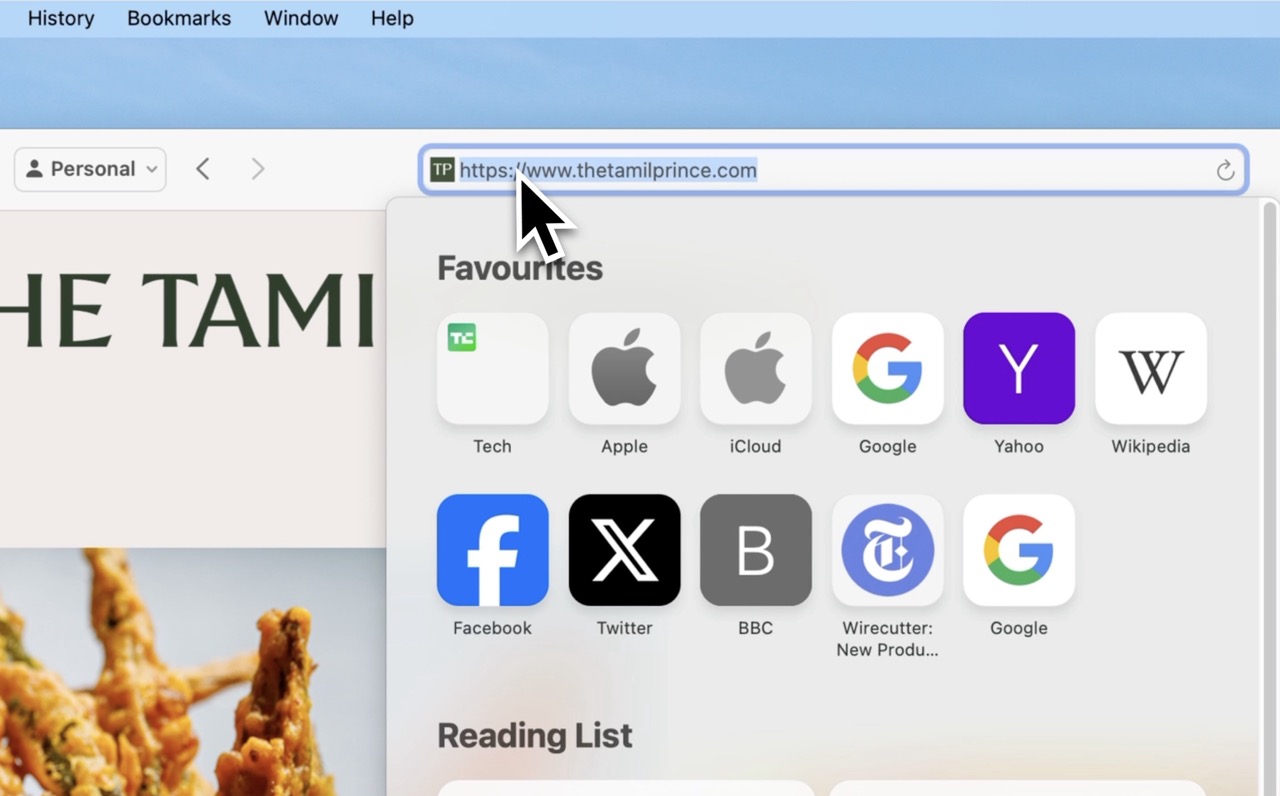
Did you know, on a Mac, you don't need to copy and paste a URL from an address bar - you can simply drag and drop! So, if you're looking to share a link with someone for example, just drag the URL from the address bar of Safari, into whatever app you need it to go into.
My new content
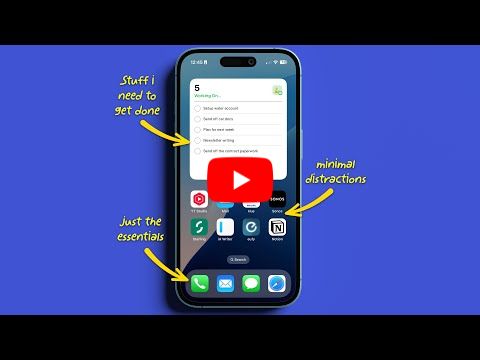
How I use MY iPhone to get more done (20+ tips)
|
20 BRILLIANT things your Mac can do RIGHT NOW
|

Content I've enjoyed
New Android looks like MAJOR competition for Siri
|

CarPlay Ultra
|

Samsung S25 Edge
|

An interesting take on Apple Intelligence
|

That's all from me, speak next week!