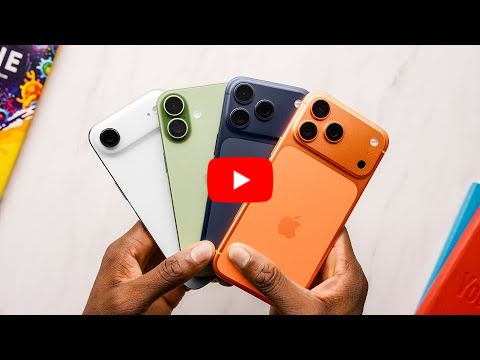
This week, new iPhones land in the hands of early adopters. Plus, Liquid Glass launches to mixed reviews, and we look to October, to see what else Apple has in store.
Happy 'new iPhone' day (if you celebrate)
The most significant piece of Apple-related news this week, of course, is the launch of the all-new iPhone 17 range, the latest updates to the Apple Watch series, and the newly released AirPods Pro 3, all of which will be available to purchase from stores today and will be making their way to early adopter consumers via courier, hopefully today as well. And if you have made a purchase, I hope you have good fortune in receiving yours today without any kind of delays.
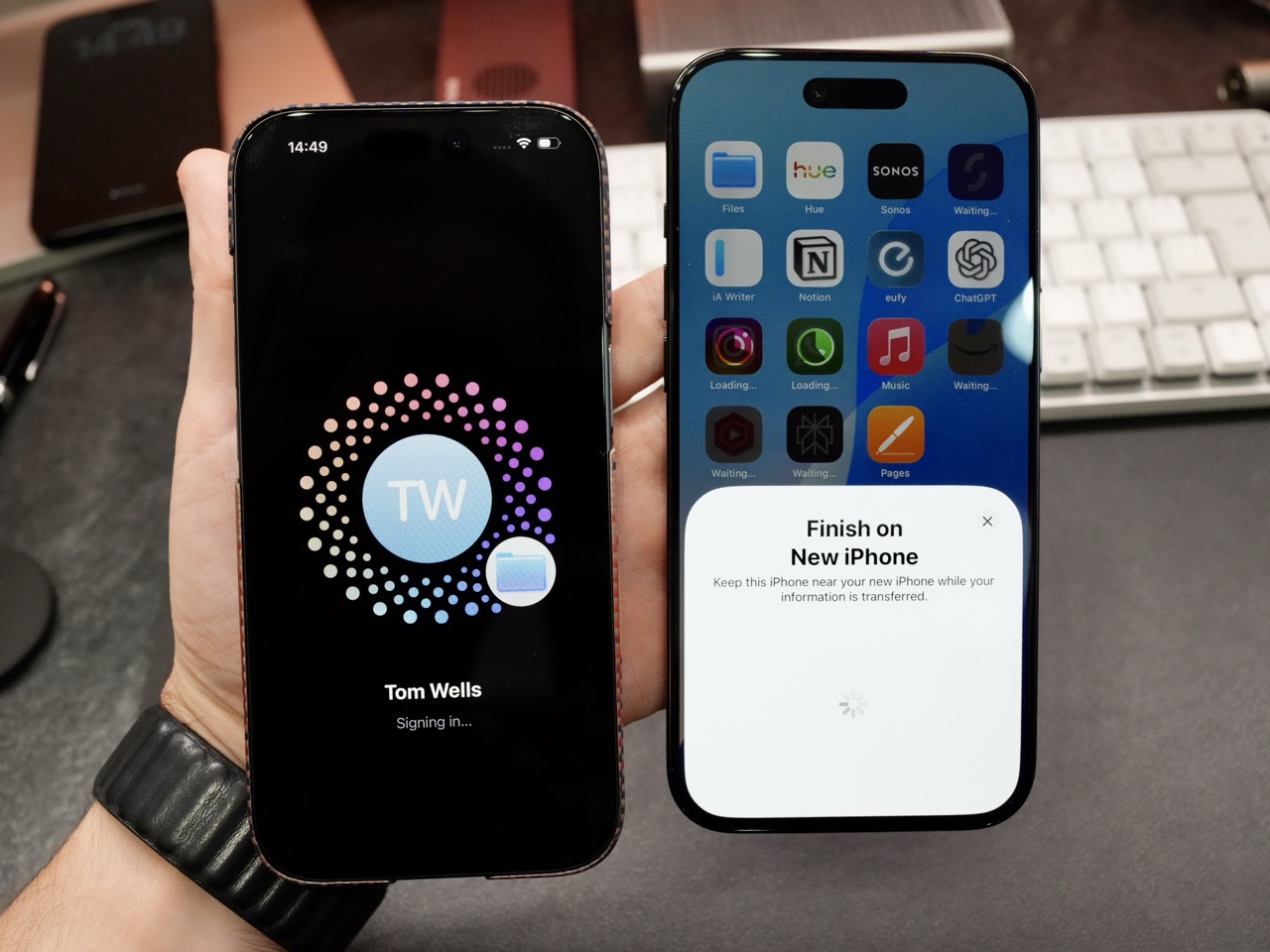
In the end, I opted for one of each of the new iPhones, and I did pick up the AirPods Pro 3 as a personal purchase for myself, although I stopped short of upgrading my Apple Watch. I decided instead to stick with the Titanium Watch Series 10 and the Black Watch Ultra 2 that I picked up last year. After a year of wear, I don’t like the black colour of the Watch Ultra 2 as much as I thought I was going to, and was looking forward to a potential excuse to purchase a Watch Ultra 3 to get back into that previous colour, the natural titanium colour. There just isn’t enough happening with the new watches this year to justify the outlay right now. I might revisit that decision at some point down the line, but for the time being last year’s Apple Watches do more than enough for me and still allow me to talk about all of the latest and greatest features here in the newsletter, and on the channel.
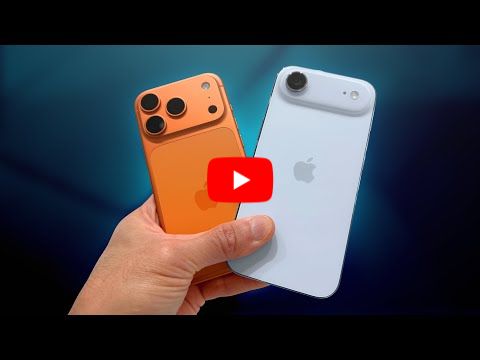
The iPhones, of course, are a different story altogether, and this is the first year in a number of years where I’m genuinely excited to take delivery of them. The 17 Pro Max was on back order immediately as soon as I tried to complete my pre-order here in the UK, and that was in every single colour and storage configuration, so that one won’t be arriving until next week at some point. But my 17 Pro and 17 are arriving today alongside the iPhone Air, and it is the Air that I’m most excited to try out.
Early reviews are starting to come through, and they mostly echo what I’ve suspected for some time; this looks like a remarkable piece of Apple engineering, cramming a full-featured iPhone into an incredibly thin design. But as you’d expect from a brand-new product category, there are some trade-offs. These aren’t your usual iPhone caveats - these are compromises directly tied to the size and shape of the iPhone Air. With such a slim form factor, there’s only so much room for hardware. So you’re getting just one speaker, one rear camera, and a noticeably smaller battery compared to the other models. That doesn’t make it a bad product, far from it, but it does mean buyers should go in with their eyes open about where the limitations are.
If mine arrive in time, I’ll include a couple of photos here in the newsletter, but they are undoubtedly going to arrive too late in the day for me to really talk about early impressions or anything like that here, so I will save that for next week instead.
Enjoy tips videos, but struggle to remember everything?
Then you should definitely take a look at iPhone Essentials Plus. It’s my dedicated iPhone training portal with more than 150 lessons covering every aspect of your device, and I’m adding new content all the time.
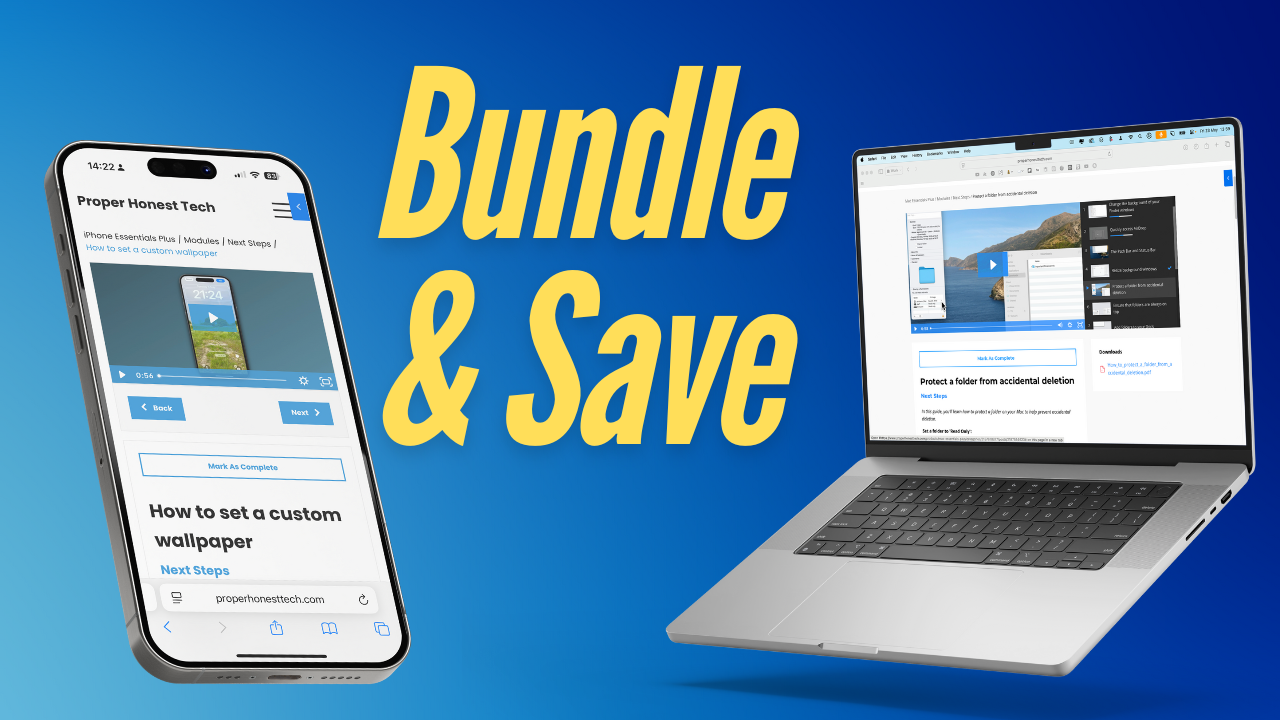
Each lesson includes a short video, a step-by-step guide with screenshots, and a downloadable PDF, so no matter how you like to learn, you’re sorted. There are no ads, no sponsors, just straight-up content, and it’s all available for a one-time payment, no subscription.
And if you’re a Mac user, I’ve just launched a Mac version too. You can pick that up on its own or bundle it with the iPhone course to get the best value. If you’re interested, click the links below to get started.
Purchase Links;
- iPhone Essentials Plus
- Mac Essentials Plus
- iPhone & Mac Essentials Plus Discount Bundle
- iPhone & Lifetime PDF
- Mac & Lifetime PDF
- iPhone, Mac & Lifetime PDF
Liquid Glass is here - not everyone's happy
This week marked the full public release of Apple’s new operating systems, including iOS 26 and macOS 26, and if you’ve been following the channel, you’ll know I’ve been working with these builds for a while now and covering them in detail. But now that the updates are in the hands of the general public, I’ve noticed something — the feedback coming in is more polarised than usual.

That’s not to say that this is unusual for Apple launches. With any major redesign, the most vocal voices at first are often the ones who dislike something strongly, not the ones who quietly enjoy it. And the early weeks are always shaped by bugs, quirks, and changes in muscle memory. But something feels slightly different this time. The design overhaul is so visual, so prominent, and so opinionated, that people are reacting in a stronger way than usual.
One of the most thoughtful pieces I’ve read on the subject this week came from Fast Company, who published a longform editorial titled “Apple’s Liquid Glass: The Liquid Works, But the Glass is Broken.” It’s well worth a read. The article doesn’t just nitpick the usual “iOS is too shiny” complaints. Instead, it challenges the very nature of what Apple is doing with Liquid Glass, and who this redesign actually benefits — and who it might inadvertently leave behind.
Liquid Glass, for those who haven’t updated yet, is Apple’s new design system. It adds translucent layers, animated glassy panels, and physics-based lighting across many parts of the interface. It’s sleek, technically clever, and visually dramatic. But Fast Company argues that it comes at a cost: clarity.
The key issue the article raises is that the new interface, while beautiful, can make certain screens harder to read. Not for everyone. But for people with mild vision impairments, or those using their phones in certain lighting conditions, the visual flourishes sometimes obscure the content. Text blends into backgrounds. Icons sit on top of blurry gradients. Information feels less grounded. The example they give is Notification Centre — already a tricky space — now made even more visually busy. You can see how someone with less-than-perfect eyesight might struggle.
And this is where it gets interesting. Because the article points out that Apple is not unaware of this. In fact, they argue that Apple’s approach is deliberate. That the company is making bold design choices not because it is careless, but because it is preparing for something bigger.
They liken this shift to “move fast and break things,” the old Silicon Valley motto. Except with Apple, the idea isn’t chaos or experimentation. It’s calculated disruption. The company knows that design changes affect over a billion people, and they don’t make those changes lightly. But every now and then, they move in a way that deliberately resets expectations — because they believe they need to.
In this case, Fast Company suggests that Liquid Glass is less about today’s iPhones and more about the future. Specifically, future devices. It’s a design language that feels purpose-built for spatial interfaces, dynamic displays, AR, and devices like Apple Vision Pro. Apple is gently pushing users towards a world where screens float, content adapts, and interfaces need to feel fluid rather than fixed. In that context, Liquid Glass makes sense. It’s just a slightly awkward fit on today’s flat screens.
And here’s the thing. I agree with a lot of what the article says. I think Liquid Glass is impressive. It’s ambitious. It moves the whole visual identity of the OS forward. But I also think there’s some real friction with usability, especially in areas like Control Centre and Notification Centre, where visibility is key. I’ve had to adjust my contrast settings already on one of my test devices just to feel comfortable.
So where does that leave us? I don’t think Apple has made a mistake here. I think they’re doing what they always do — steering the ship towards where the future is heading. But I also think it’s important that feedback is heard, particularly when it comes to accessibility and usability. Because while this new interface may be setting the stage for Apple’s next generation of products, we’re all still using the current ones, and we need the experience to work just as well in the present.
If you’ve installed the new OS and had strong feelings about it, good or bad, I’d love to hear them. Hit reply, or leave a comment on this week’s videos. And if you haven’t updated yet, maybe wait a week or two. Let the dust settle. Apple often fine-tunes things quickly in the first few point releases, especially when it comes to design-related feedback.
Can we expect an October event?
With both the iPhone event and launch day now firmly in the rearview mirror, attention naturally starts to turn to what comes next. And if you’ve been following Apple for a while, you’ll know that October has increasingly become a second act, a follow-up showcase where the company reveals products that sit outside the iPhone and Watch lineup. Products that, while not as headline-grabbing, are still important for the wider ecosystem.

The iPad lineup is a perfect example. It’s been mostly quiet in 2025, especially when compared to 2024, which saw updates across almost the entire range. That silence may be short-lived though. Bloomberg’s Mark Gurman is reporting that Apple plans to refresh the iPad Pro in October, with the big change being the move to an M5 chip. If you’ve been eyeing up a Pro model, now is definitely the time to hold off. The new chip will bring a decent performance bump, and with iPadOS 26 slowly evolving into something a little more laptop-like, the iPad Pro might finally start to live up to the potential that has long been promised.
Speaking of M5 upgrades, Gurman also notes that the Vision Pro may receive a chip bump as well. But that’s likely to be the only thing that changes. This would not be a Vision Pro 2 or a slimmed down model. So if you’ve been on the fence about buying one, this upgrade alone probably won’t change your mind. As someone who owns and uses a Vision Pro a couple of times a month, I can say performance has never been the issue. Rumours of a new strap and a space black finish could tempt existing owners, but for most people, it won’t move the needle.
Another product that’s been long rumoured is AirTag 2. I still think this is more likely to show up via press release than event stage time. However, Apple could use the opportunity to highlight some real-world AirTag success stories, similar to how they do with the Apple Watch. The only real upgrade here would be the inclusion of the U2 chip, which we’ve just seen added to AirPods Pro 3. That would improve precision finding, but don’t expect anything radically new.
The Apple TV and HomePod mini are also being whispered about. I’m all for a new Apple TV box if it brings a faster chip and better support for the new operating systems. The current box is already a great product and this could make it even better. But the HomePod mini, I’m less convinced about. Unless Siri is getting smarter (which it isn’t just yet), then upgrading the hardware feels a bit premature. The smarter move would be to wait for the long-rumoured HomePod-iPad hybrid, which is more likely to make a meaningful impact.
Taken together, none of this screams major keynote. And to be honest, even writing it out here makes it feel more like a round of press releases or short YouTube announcements, similar to what Apple has done in the past.
There’s quite a bit more coming in early 2026, particularly around the Mac ecosystem, which has also been a bit quiet in 2025. We’re expecting the M5 chip to eventually make its way into the MacBook Pro and MacBook Air, but not until next year. October would usually be the time for the MacBook Pro refresh, but it sounds like Apple is pushing everything to 2026. These will be basic chip updates, and not the full design refresh that’s rumoured for later down the line.
The product I’m personally most interested in is the next-generation Apple display. I’m lucky enough to own both a Pro Display XDR and a Studio Display, and they’re fantastic. I don’t feel like I need a better display, but if Apple introduces something with ProMotion or better HDR performance, it’s the kind of update I’d be very tempted by.
So while October may not bring anything flashy, it could still be a useful month for incremental updates and tidying up the rest of Apple’s 2025 roadmap before the next big push in the new year.
Tip of the week
Have you updated to the latest version of iOS, but don't like Liquid Glass? Try reducing the transparency. Head to Settings, then Accessibility, then Display and Text Size, and enable Reduce Transparency.

My new content
iOS 26 Overview
|
macOS Tahoe Overview
|
watchOS 26 Overview
|
iPadOS 26 Overview
|
iOS 26 Settings to change
|
macOS Tahoe Settings to change
|
iOS 26 Customisation Tutorial
|
macOS Tahoe Customisation Tutorial
|
Content I've enjoyed
A great iPhone Air overview
|
Meta Ray-Ban Display
|

iPhone Range - Unboxing
|