This week, things aren't going so well for Apple, and Siri is only partially to blame...
RIP iPhone Air, we hardly knew ye...
It might seem like a bold move for me to offer Apple some business advice, but as I sit down to write this week’s newsletter, the sun is shining, I’ve had a decent night’s sleep, and I’ve got a bit of a kick in my step. So here goes. Stick to what you know.
I say that as someone who’s been creating YouTube videos for around five years now, and if there’s one thing I’ve learned, it’s that straying too far from your core content usually doesn’t work out. Every time I’ve tried to do something totally different, it’s resulted in lower views. But iPhone tips and tricks? Always a winner. No matter how many times I make them, people still enjoy watching.
So how does this apply to Apple? Well, last month Apple refreshed its iPhone lineup and, in doing so, dropped the iPhone Plus and introduced an all-new model — the iPhone Air. The idea was clear: create the thinnest iPhone ever made, pack it full of modern features, and offer something that stands out from the usual lineup. And visually, the iPhone Air definitely looks the part. That single camera ridge at the top makes it instantly recognisable, even from a distance.
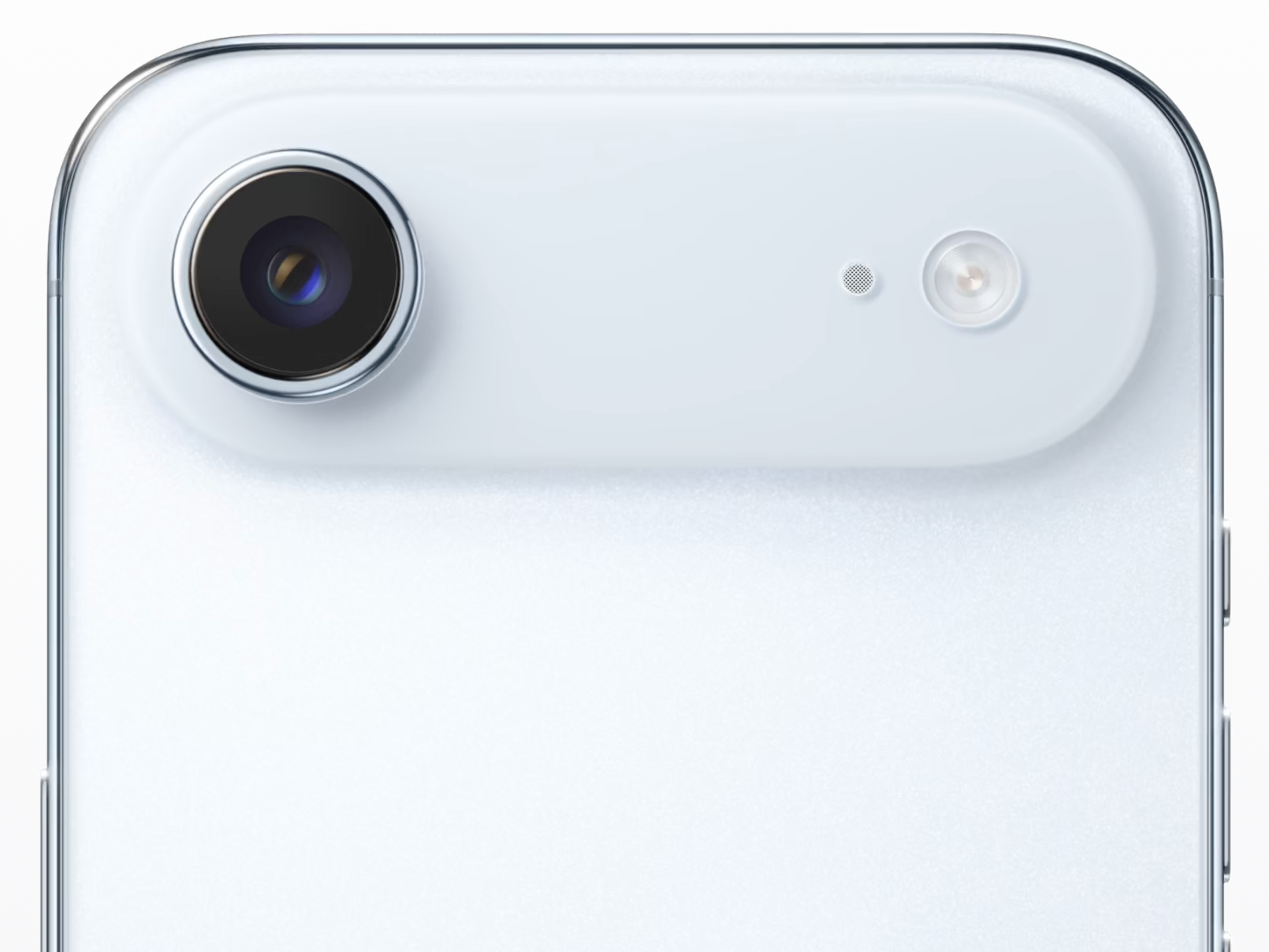
And it is a really good phone. I’ve said in the newsletter before, it’s the phone I wish I could use every day. But the truth is, the concessions Apple made to create this ultra-thin device might just be too significant for most people to accept. The single camera, the mono speaker, and the weaker battery life compared to the Pro models all add up. And while none of these things are bad exactly, they do make the phone feel like a compromise, especially when compared with the similarly priced iPhone 17 Pro.
So, it’s perhaps not surprising that while critics have praised the Air, public demand hasn’t matched that praise. Apple hasn’t shared any official sales figures, but this week supply chain reports and analyst notes have painted a clearer picture. According to sources, Apple is now drastically cutting back production of the iPhone Air. Some reports have described this as “end-of-life” production levels, the kind of scaling back you’d normally expect from a product being phased out, not one that just launched.
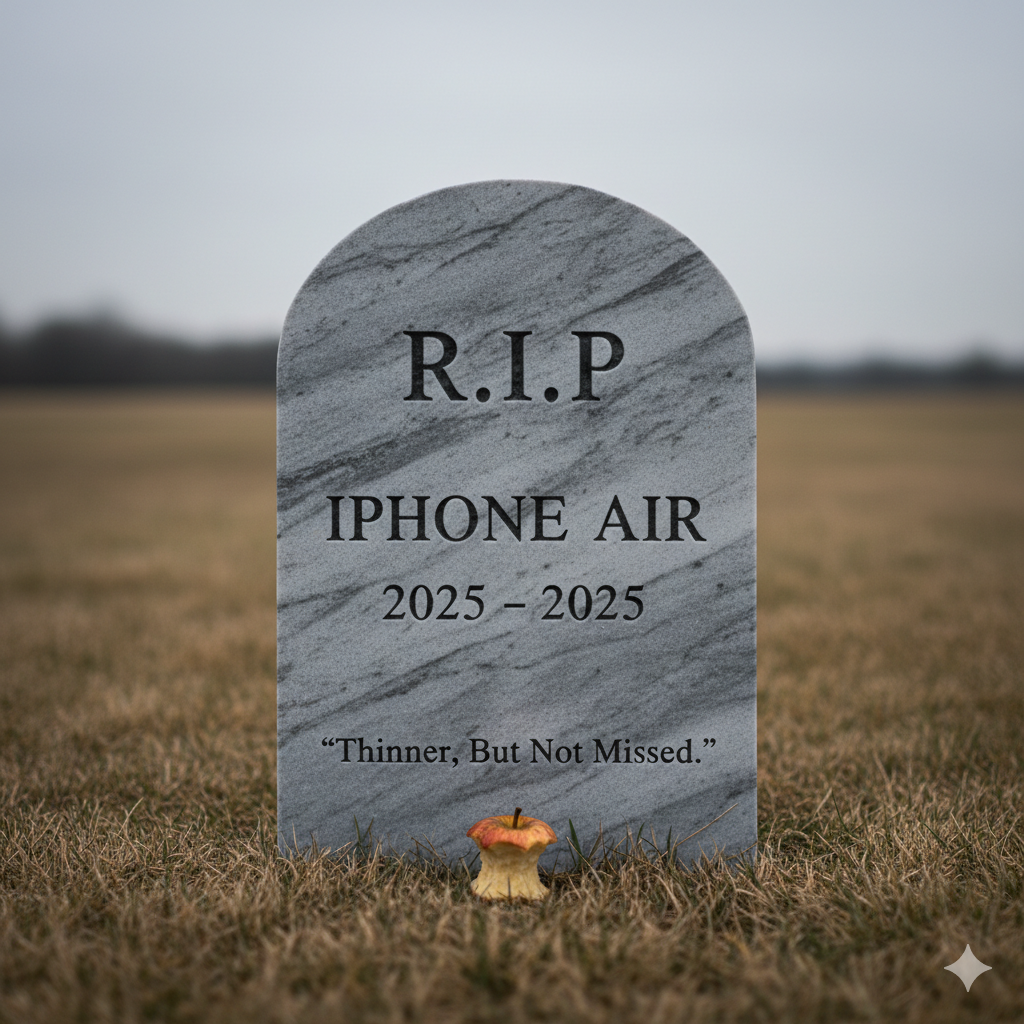
One supply chain manager cited that iPhone Air production orders are expected to drop to less than 10% of their September volume starting next month. Ming-Chi Kuo, the often-reliable Apple analyst, says that most iPhone Air suppliers are expected to reduce capacity by over 80% in the first quarter of 2026. The reason? Weak demand, particularly in Western markets.
KeyBanc Capital Markets conducted a survey that reportedly found virtually no demand for the iPhone Air, and limited consumer interest in foldables too, which could have knock-on effects for Apple’s 2026 plans to launch a foldable iPhone. Meanwhile, the iPhone Air has remained fully in stock on Apple’s website since launch, with all colours and storage options available for immediate shipping. In contrast, the 17 and 17 Pro models are still facing two to three week delays in many configurations.
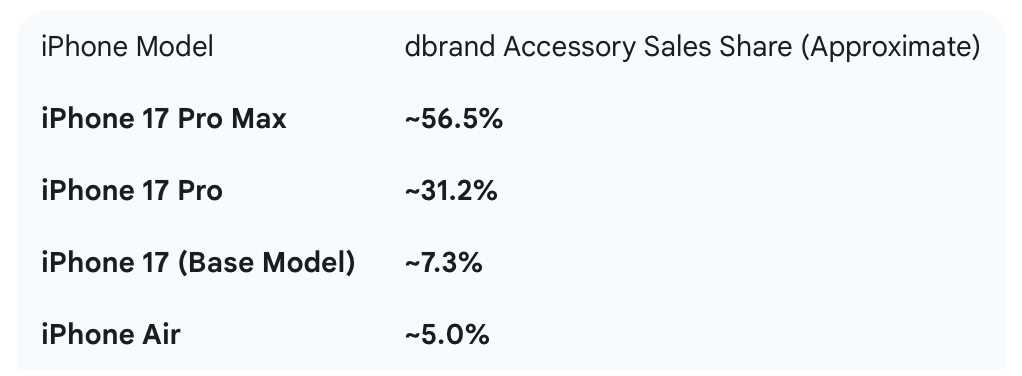
An interesting extra data point came from MKBHD, who shared sales breakdowns from his collaboration with dbrand, the popular case and skin manufacturer. According to their data, the iPhone 17 Pro Max accounted for 56.5% of case sales, followed by the 17 Pro at 31.2%. The regular iPhone 17 made up 7.3%, with the iPhone Air trailing at just 5%. And while that’s just case data, it’s still a decent indicator of demand — and it’s not a great look for Apple’s newest iPhone.
This isn’t to say the iPhone Air is finished. Far from it. But what we may be seeing is a shift in consumer preference, away from ultra-thin phones and towards feature-rich models with longer battery life and better cameras. The Air’s performance has already drawn comparisons to the rumoured cancellation of Samsung’s Galaxy S25 Edge, another ultra-slim model that was shelved before launch. And it’s likely Apple will be watching this closely as they consider their foldable strategy for next year.
It’s also worth noting that Apple hasn’t exactly gone all-in on marketing the iPhone Air. I’ve seen plenty of advertising here in the UK for the iPhone 17 Pro (especially the bright orange version) but I can’t think of a single ad for the iPhone Air. And that might be part of the problem. The Air is a phone that really needs to be held to be appreciated. But if most consumers are buying their phones through carrier contracts, and the difference between an Air and a Pro Max is only a few pounds per month, then it’s no surprise that people are choosing the more powerful, better-equipped model.
In the end, the iPhone Air is a brilliant concept and a beautifully designed piece of hardware. But its concessions might be just a little too steep for most people. And if the Air was meant to act as a stepping stone toward a foldable iPhone next year, Apple may now need to rethink how that story gets told.
Enjoy tips videos, but struggle to remember everything?
Then you should definitely take a look at iPhone Essentials Plus. It’s my dedicated iPhone training portal with more than 150 lessons covering every aspect of your device, and I’m adding new content all the time.

Each lesson includes a short video, a step-by-step guide with screenshots, and a downloadable PDF, so no matter how you like to learn, you’re sorted. There are no ads, no sponsors, just straight-up content, and it’s all available for a one-time payment, no subscription.
And if you’re a Mac user, I’ve recently launched a Mac version too. You can pick that up on its own or bundle it with the iPhone course to get the best value. If you’re interested, click the links below to get started.
Purchase Links;
- iPhone Essentials Plus
- Mac Essentials Plus
- iPhone & Mac Essentials Plus Discount Bundle
- iPhone & Lifetime PDF
- Mac & Lifetime PDF
- iPhone, Mac & Lifetime PDF
RIP Siri Q&A, we hardly knew ye...
Just when it seemed like the news couldn’t get much worse for Apple, we’ve gone from one product that feels dead on arrival to another that’s already showing warning signs months before it even launches. I’m talking, of course, about the long-awaited AI-enhanced Siri, the major Q&A overhaul first announced at WWDC 2024, and set to arrive early next year. According to multiple reports this past week, including from Bloomberg’s Mark Gurman, internal testing is already raising serious concerns, with some inside Apple questioning whether it will be ready for prime time at all.
The feature in question is what Apple internally refers to as Siri Q&A, part of the company’s broader attempt to turn Siri into a true AI-powered assistant. The idea is that Siri will be able to pull in information from across the web, combine it with your personal context, and then provide useful, summarised answers, essentially acting as Apple’s answer to ChatGPT or Google Gemini. It’s a huge shift in strategy, and one that Apple has been rebuilding from the ground up, using its own large language models in some places, and private cloud compute in others.
But the road to launch is looking rocky. According to Gurman, internal engineers working on early builds of iOS 26.4 (the version that’s expected to include the new Siri) are said to be “uneasy” and “concerned” about the current performance. The system is described as inconsistent, and not ready for a public debut. And considering that the Spring 2026 timeline already represents a full year of delay from its original schedule, this is not the kind of feedback Apple will want to be hearing.
Part of the issue appears to come down to what is being described internally as a “bake-off”, where Apple is currently running two separate development tracks. One involves using Apple’s own on-device models, which are preferred for privacy reasons. The other uses a version of Google’s Gemini AI model, hosted via Apple’s private cloud infrastructure. Speculation suggests that the less impressive results are coming from Apple’s internal models, which, if true, is concerning, especially considering the company’s longstanding reluctance to rely too heavily on external partners.
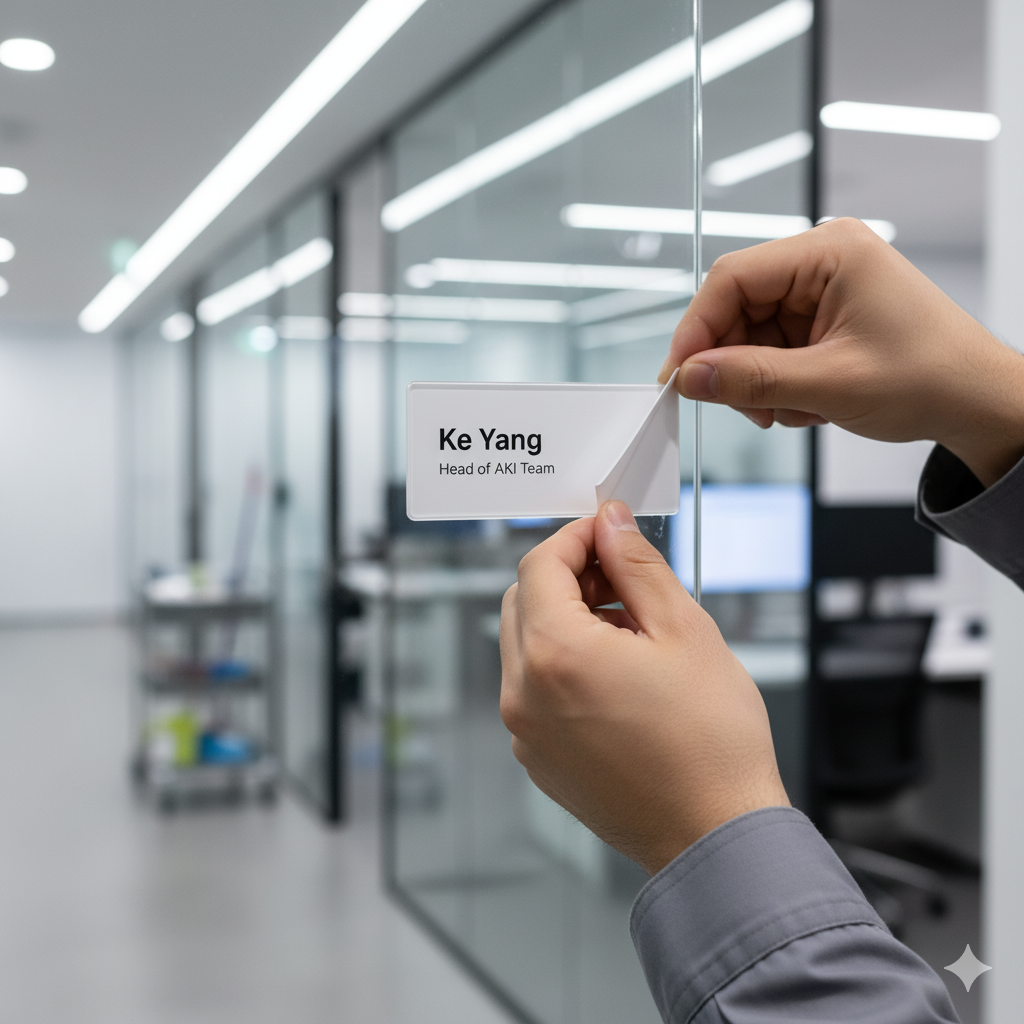
This wouldn’t be the first time Apple’s AI team has run into challenges, but what makes this story particularly troubling is the ongoing talent exodus happening inside the company’s AI and Foundation Models teams. Just last week, Ke Yang — the executive leading the Answers, Knowledge and Information (AKI) group responsible for Siri’s web search functionality — left the company entirely, reportedly heading to Meta. And he’s not alone. Apple has lost a string of top researchers and engineers in recent months, many of whom have left for rivals like Meta, OpenAI, and Anthropic.
Following Yang’s departure, responsibility for Siri’s Q&A systems has been handed to Benoit Dupin, who already oversees other machine learning infrastructure inside the company. The handover is being viewed internally as a bit of a triage move, consolidating roles under one executive rather than replacing Yang directly. The result is even more pressure on a project that is already significantly behind schedule.
There are also reports of a deeper culture clash within the AI teams. At Apple, AI work is tightly integrated into product teams, and expected to hit annual delivery deadlines. At Meta, OpenAI and others, top researchers are often given the freedom to publish, experiment and iterate, with much less concern for rigid timelines. That kind of freedom is appealing to some of the most sought-after AI minds in the world, and it may help explain why Apple is struggling to retain talent.
The stakes here are high. When Apple previewed the new version of Siri last year, they promised three core capabilities: on-screen awareness, personal context, and the ability to take action inside apps. It was billed as a fundamental reinvention of how Siri works. But what we’re now hearing suggests that even the simplest version of this - a basic Q&A assistant that can answer general web queries - may not be ready in time.
Apple has always been known for moving slowly and deliberately, often preferring to launch products late but polished. But with the AI arms race moving as fast as it is, this feels like one of those rare times where waiting too long might leave them too far behind. And unless something changes quickly, it’s hard to shake the feeling that Siri’s next big chapter might already be off to a rough start.
Tip of the week
Did you know, your iPhone has a dedicated setting that controls whether Apple uses your data, such as your account information, what you read, and what you download, to serve you personalised advertisements within apps like the App Store, News, and Stocks?
If you prefer to receive only non-targeted, generic ads, you can easily disable this feature by going to Settings > Privacy & Security > Apple Advertising and toggling the switch next to Personalised Ads to the off position. Note that while this limits Apple's ability to show you relevant ads, it will not reduce the total number of ads you see.

My new content
10 Brilliant things your iPhone can do RIGHT NOW
|
You Probably Just Made Your Last Slide Deck... (Gamma 3.0)
|
Content I've enjoyed
What's going on with Apple Vision Pro?
|

Steal this producitivity system
|