This week, it's CES time!
CES 2026
Every January, the tech world descends on Las Vegas for the Consumer Electronics Show, and every January, I spend a week sifting through the chaos to find the genuinely interesting stuff. There's always a mix of brilliant innovation, pointless gimmicks, and products that make you wonder who signed off on the budget. This year is no different. So let's dig into some of the more intriguing announcements that caught my attention this week.
Did Samsung just show us the screen for the iPhone Fold?
At CES this week, Samsung Display briefly showed off something rather interesting: a foldable OLED panel with no visible crease. It was displayed alongside a Galaxy Z Fold 7 for comparison, and the difference was immediately obvious. The new panel appears completely flat, even when viewed from an angle, with what Samsung is calling "seamless text across the fold."

Here's where it gets relevant for Apple fans. This is almost certainly the display technology that's destined for the foldable iPhone rumoured to launch in September. Apple has reportedly been working with Samsung on a laser-drilled metal display plate that disperses the stress created when the screen folds, allowing for a genuinely crease-free experience. That's been the hold-up with Apple's foldable device for years. They've been unwilling to launch a foldable phone with a visible crease, and now it looks like the technology has finally caught up with their standards.
The timing is intriguing. Samsung pulled the display from the show floor almost immediately after it started getting attention, with a spokesperson telling The Verge it was just an "R&D concept" with no fixed timeline for commercialisation. That's either Samsung being overly cautious, or it's them realising they've shown off something they weren't supposed to yet.
If this panel does end up in the foldable iPhone later this year, it would be a proper game-changer. A foldable phone with no crease would feel less like a compromised gadget and more like an actual product people might want to use every day. The Galaxy Z Fold 7 already does a decent job of minimising the crease, but it's still visible. This new panel looks like it's eliminated the problem entirely.
Of course, Apple hasn't said a word about any of this. But if the rumours are accurate, we're looking at a foldable iPhone with a 7.7-inch display when unfolded, a crease-free screen, and a launch sometime in September. That would be impressive. Let's see if they can actually pull it off.
Ready to actually master your Apple devices in 2026?
Whether you unwrapped a shiny new iPhone or MacBook over the holidays, or you're simply tired of only using 10% of what your devices can do, now's the perfect time to finally become an Apple power user.
That's exactly why I created iPhone Essentials Plus – a comprehensive training portal with more than 200 lessons that cover everything your iPhone can do. No fluff, no filler, just the skills you actually want to learn, with fresh content added regularly.
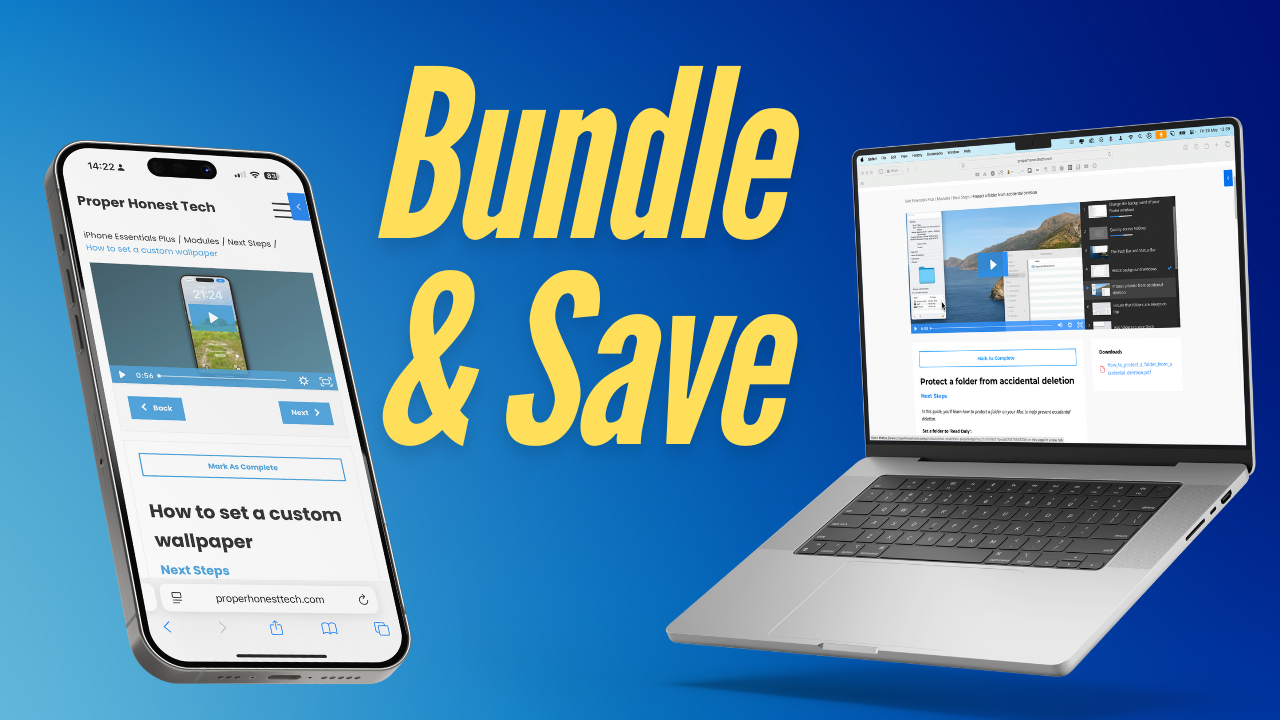
Every lesson is designed for real learning: a short video walkthrough, a step-by-step guide packed with screenshots, and a downloadable PDF so you can learn however works best for you. Whether you're commuting, relaxing at home, or need a quick reference, you're covered.
Best of all? No ads, no sponsors, no subscription traps. Just honest, straightforward teaching available for a single payment.
Got a Mac too? I've also created Mac Essentials Plus with the same approach. Grab it separately or bundle both courses for the best value and finally unlock everything your Apple ecosystem can do.
Make 2026 the year you stop Googling the same questions and start using your devices like a pro.
Purchase Links;
- iPhone Essentials Plus
- Mac Essentials Plus
- iPhone & Mac Essentials Plus Discount Bundle
- iPhone & Lifetime PDF
- Mac & Lifetime PDF
- iPhone, Mac & Lifetime PDF
This Robot Vac just grew legs (and can finally clean your stairs)
I've owned a few robot vacuums over the years, and there's one problem that's never been solved: stairs. If you live in a house with multiple floors, you either need to buy multiple robot vacuums (expensive), or you have to physically carry the thing upstairs whenever you want the first floor cleaned (annoying). It's been one of those frustrations that just comes with the territory of owning a robot vacuum.
At CES this week, Roborock unveiled something that might finally fix this: the Saros Rover, a robot vacuum with AI-powered wheel-legs that can climb stairs. And crucially, it can clean the stairs as it climbs them, which is the bit that matters.

The Saros Rover uses a two wheel-leg architecture where each wheel is paired with a leg-like mechanism that can deploy independently. This allows it to raise and lower each wheel-leg, keep its body level on uneven surfaces, and navigate stairs with what Roborock is calling "human-like agility." It can make small jumps, execute agile turns, stop suddenly, and change direction, all while maintaining balance as the ground changes beneath it.
Previous attempts at stair-climbing robot vacuums have involved separate modules or tracks that carry the vacuum up and down stairs, but they couldn't clean the stairs themselves. The Saros Rover is different. It moves sideways along each step, alternating between its two independently controlled legs, actively vacuuming as it goes. That's genuinely impressive.
Demos at CES showed the Rover navigating curved staircases, dodging thrown objects, and maintaining stability even when nudged. It uses AI algorithms, motion sensors, and 3D spatial information to understand its environment and react in real-time. The system is sophisticated enough to recognise when it's approaching stairs, deploy its legs, and transition between floors without human intervention.
Now, the caveats. This is still in development, with no pricing or release date confirmed. Controlled demos at CES are one thing; real homes with pets, toys, and daily clutter are another. But if Roborock can actually pull this off and ship a product that works reliably, it would solve one of the biggest limitations of robot vacuums.
For people with multi-storey homes, this could be genuinely transformative. No more carrying the thing upstairs. No more buying multiple units. Just one robot vacuum that can actually handle your entire house. Let's see if it lives up to the promise.
Some seriously impressive... Lego?
I absolutely adored Lego as a kid. I spent hours building airports, fire stations, and elaborate cities that would inevitably get knocked over by a stray football or an impatient younger sibling. Now I've got two kids of my own, and I'm desperately waiting for them to get old enough so I can justify buying lots of Lego sets for the house. Obviously for them. Not for me. Obviously.
At CES this week, Lego unveiled something that might make that wait even more unbearable: the Lego Smart Brick, part of a new Smart Play system that brings Lego builds to life in ways we could only imagine when we were kids. And the best part? No screens required.

The Smart Brick looks like a standard 2x4 Lego brick, but inside it's packed with a custom-made 4.1mm ASIC chip that's smaller than a standard Lego stud. It's got sensors, accelerometers, light and sound detection, a miniature speaker driven by an onboard synthesiser, and an LED array. Thanks to integrated copper coils, it can sense motion, orientation, magnetic fields, and even the distance and direction of other Smart Bricks nearby.
Here's how it works. The Smart Play system includes Smart Bricks, Smart Tags (2x2 studless tiles with embedded digital IDs), and Smart Minifigures (which also have digital IDs). When you attach a Smart Tag to a Smart Brick, it tells the brick what it should be - a car, an X-wing, a lightsaber - and the brick responds with context-aware sounds and lights. If you build a Lego car and move it around, it revs its engine. If you build a cat and stroke it with a Smart Minifigure, it purrs. If you're having a lightsaber duel between Luke Skywalker and Darth Vader, the bricks emit lightsaber sounds, and Vader even does his signature "nooooo" if he loses.
The Smart Bricks communicate with each other using BrickNet, a Bluetooth-based protocol that Lego developed specifically for this. Multiple Smart Bricks can talk to each other directly, with no need for apps, internet connections, or external controls. You literally just open the box, build the set, and it works. To charge them, you place them on a wireless charging pad. That's it.
Lego is launching this with three Star Wars sets on 1st March 2026, with pre-orders opening on 9th January. There's Darth Vader's TIE Fighter (473 pieces, £59.99), Luke's Red Five X-wing (584 pieces, £79.99), and the Throne Room Duel & A-wing (962 pieces, £139.99). Each set includes at least one Smart Brick, one Smart Minifigure, and multiple Smart Tags, all fully compatible with existing Lego bricks.
What's impressive here is that Lego hasn't just bolted technology onto bricks and called it a day. This feels like it's been designed by people who actually understand how kids (and let's be honest, adults) play with Lego. The sounds are reactive, not just pre-recorded clips. The lights respond to how you're moving the build. And crucially, there's no app to download or screen to stare at. It's still physical play, just enhanced.
Lego is calling this "the most significant evolution in the Lego System-in-Play since the introduction of the Lego Minifigure in 1978," and that's not an exaggeration. This is a proper innovation, not just a gimmick.
My kids are still too young for this when it launches in March, so I might just have to buy one for myself. For testing purposes, obviously.
Just got a new iPhone for Christmas? Here's how to keep it running like new.
There's nothing worse than unboxing a brand new iPhone, only to watch the battery drain to 20% by mid-afternoon. You start wondering what you're doing wrong, which apps are the culprits, or if you've somehow got a dud.
Here's the truth: most battery drain issues aren't about faulty hardware. They're about settings you didn't know existed, background processes you never approved, and Apple's defaults that prioritise features over longevity.
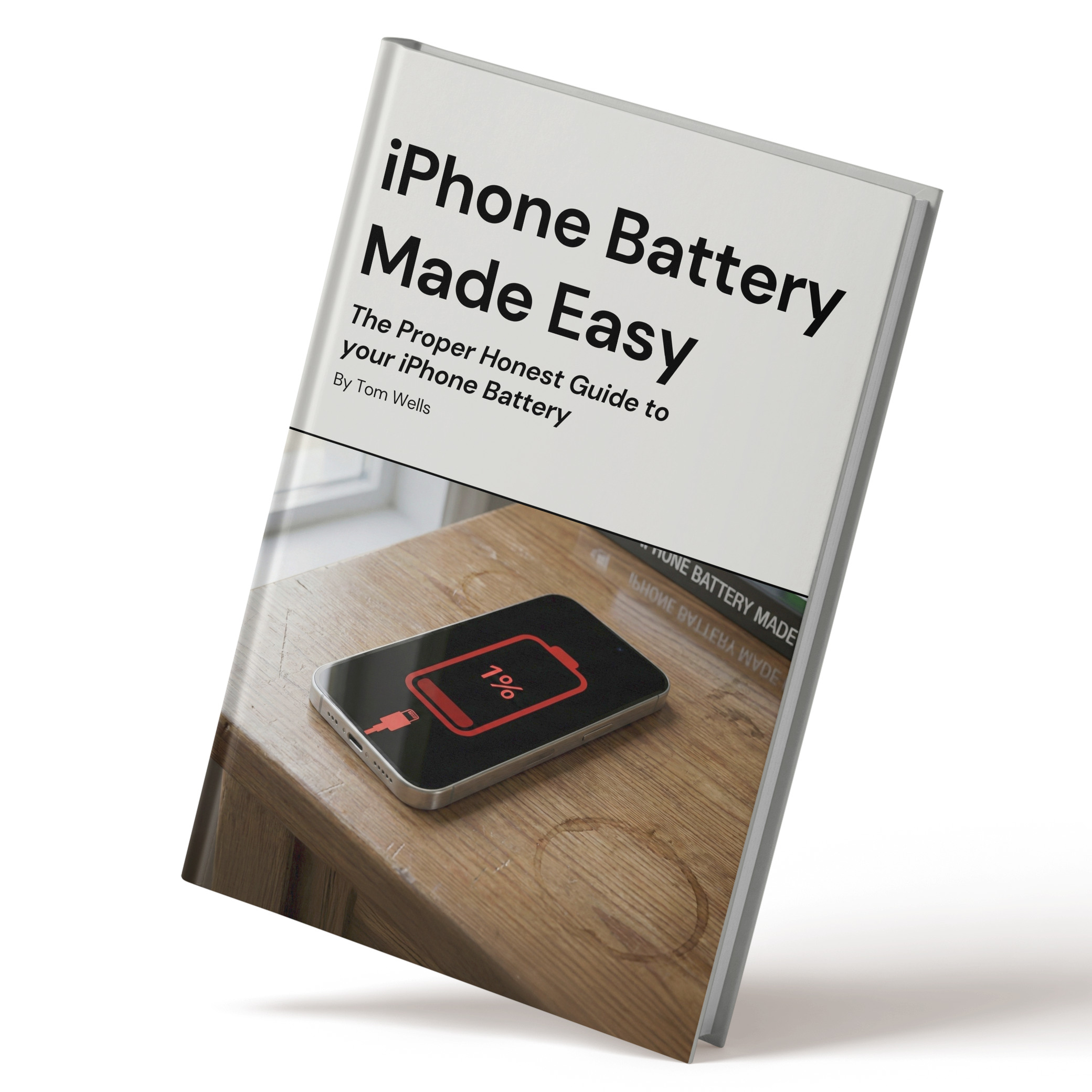
That's why I created iPhone Battery Made Easy – a no-nonsense guide that cuts through the confusion and gives you exactly what you need to maximise your battery life, starting today.
Inside, you'll discover how your iPhone battery actually works (it's not what you think), which settings are silently killing your charge, and the exact steps to slow down Battery Health degradation so your phone stays healthier for years, not months. You'll learn how to identify which apps are secretly draining power in the background, and which popular "battery saving tips" are complete myths that waste your time.
Everything is explained in plain English with screenshots and real examples you can implement in minutes. No technical jargon, no confusing menus – just clear, actionable steps that actually work.
Whether you're trying to protect your new Christmas iPhone or rescue your current one from constantly hunting for a charger, this guide will transform how long your battery lasts each day and how many years it stays healthy.
Stop accepting dead batteries by dinner time. Take control of your iPhone's battery life today.
Finally, a proper Foldable
I've always thought the true promise of a foldable phone is something that's really small in your pocket and becomes really big when you need it. Not just a phone that folds out once to become a slightly larger phone. That's why I've never been entirely sold on the current crop of foldables. Yes, they're clever, and yes, the Galaxy Z Fold 7 is impressive, but it's not transformative. It's a phone that unfolds into a small tablet, which is fine, but it doesn't feel like the sci-fi device we were promised.
At CES this week, Samsung showed off the Galaxy Z Trifold, and for the first time, I think we're getting close to what a foldable should actually be. This is a device that folds twice to give you a proper 10-inch tablet when you need it, but collapses down to something that's still pocketable when you don't.
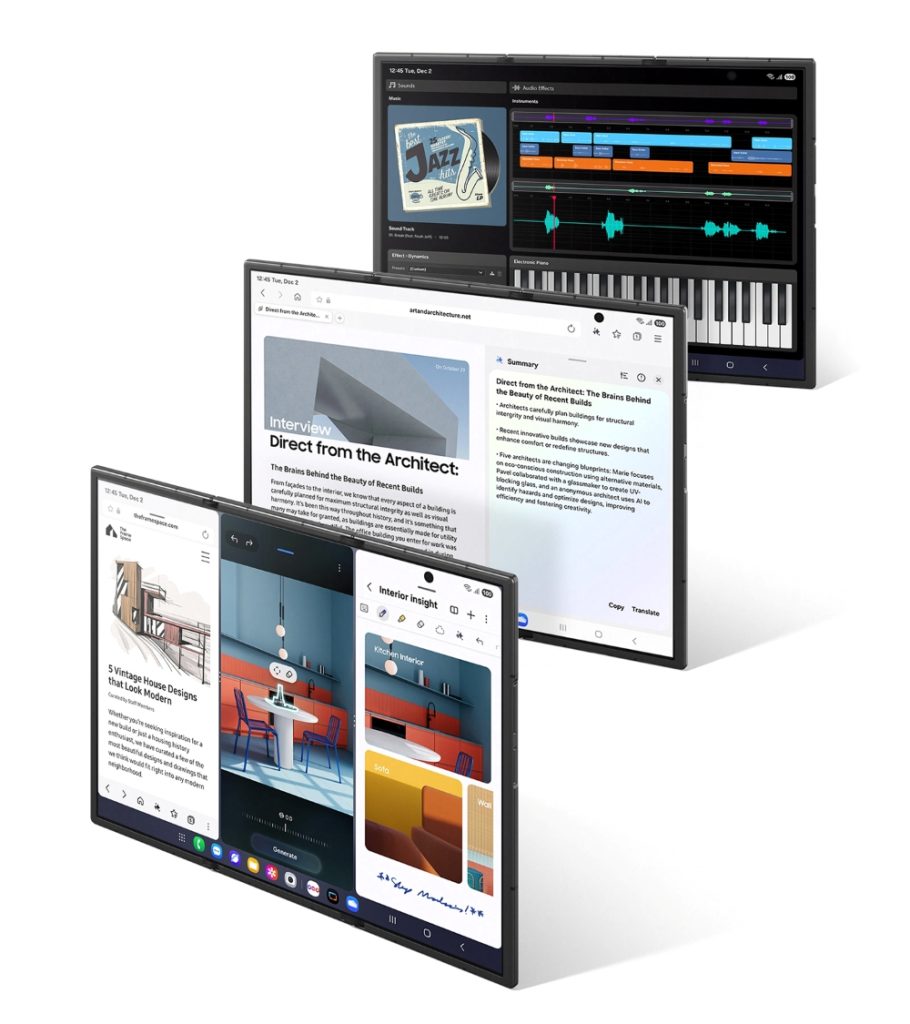
When folded, it's 12.9mm thick, which is admittedly chunky compared to a standard phone, but it's still manageable. When unfolded, it's just 3.9mm at its thinnest point, which is genuinely impressive. The main display is 10 inches, with a 4:3 aspect ratio, which means it's actually usable as a tablet rather than just a slightly bigger phone screen. You get a 6.5-inch cover display when it's folded, so it functions like a normal phone in your hand.
Here's what makes it interesting. The Trifold uses an inward-folding design, which protects the main display when it's closed. The two hinges are precision-engineered titanium, and Samsung has built in a smart auto-alarm system that warns you with haptic feedback if you try to fold it the wrong way. That's clever. Foldables are expensive, and the last thing you want is to accidentally bend it in the wrong direction and destroy the screen.
The specs are what you'd expect from a flagship Samsung device: Snapdragon 8 Elite, 16GB of RAM, up to 1TB of storage, a 200MP main camera, and a 5,600mAh battery spread across three cells for balanced power delivery. It supports Samsung DeX natively, which means you can use it as a desktop computer without an external display. Pair it with a Bluetooth keyboard and mouse, and you've got a portable workstation that fits in your pocket.
The two creases are visible, but reviewers who've gone hands-on say they're less noticeable than on previous Samsung foldables. That's promising. And the device feels surprisingly sturdy despite being so thin when unfolded. Samsung has used ceramic-glass fibre-reinforced polymer, Corning Gorilla Glass Ceramic 2, and Advanced Armor Aluminum throughout, and it shows.
Now, the downsides. It weighs 309 grams, which is heavy. For context, the Galaxy Z Fold 7 weighs 215 grams, and the iPhone 17 Pro Max is 233 grams. One reviewer described it as feeling like carrying an iPhone with a MagSafe power bank permanently attached to the back. That's not ideal. And when you use it unfolded, you'll inevitably leave fingerprints all over the cover screen, which sits on the back. You'll need a microfibre cloth if that bothers you.
The price is also going to be steep. Samsung hasn't announced US or UK pricing yet, but it's selling for around $2,500 in South Korea. That's a lot of money, even for a flagship device. For context, the Galaxy Z Fold 7 is £2,000, so expect the Trifold to be more. It's launching in the first quarter of 2026 in the US, with no exact date confirmed yet.
But here's the thing: this feels like the first proper foldable. Not just a phone that folds once, but a device that genuinely transforms from something pocketable into something you can actually do work on. A 10-inch display with DeX support is a legitimate laptop replacement for a lot of people. It's not perfect (it's heavy, it's expensive, and we don't know how the hinges will hold up over time) but it's the closest anyone has come to delivering on the promise of a foldable device.
If Samsung can refine this over the next couple of generations, make it lighter, and bring the price down, this could be genuinely transformative. For now, it's an expensive experiment. But it's an experiment that's finally going in the right direction.
A Docking Station with a removable hub (that you're definitely going to lose)
If you work with a laptop at a desk, you've probably dealt with the frustration of docking stations. They're brilliant when you're at your desk, one cable plugs into your laptop and suddenly you've got access to multiple monitors, USB ports, card readers, Ethernet, and everything else. But the moment you need to work somewhere else, you're stuck unplugging everything or carrying around a separate hub for when you're on the move.
At CES this week, Anker unveiled a solution to this problem: the Anker Nano Docking Station, a 13-in-1 dock with a built-in removable 6-in-1 hub that you can detach and take with you. It's clever. It's also a design choice that's guaranteed to result in you losing a crucial component at some point.

Here's how it works. When it's docked, you get the full 13-in-1 experience: three USB-A ports (5Gb/s), two USB-C ports (one at 10Gb/s, one at 5Gb/s), two HDMI ports, a DisplayPort, SD and microSD card slots, a 3.5mm audio jack, Gigabit Ethernet, and 140W power input. It supports triple 4K 60Hz displays, which is ideal for anyone who needs multiple monitors for work.
When you need to travel, you press a release button on the top, and a 6-in-1 hub slides out. This portable module includes the SD and microSD card slots, a 5Gb/s USB-A port, a 5Gb/s USB-C port, a 100W USB-C PD input, a USB-C upstream connection, and a 4K 60Hz HDMI output. It's compact enough to throw in a bag, and it means you don't need to carry a separate hub when you're working away from your desk.
The problem, of course, is that this is now a removable component. And removable components have a habit of going missing. It's small, it's portable, and it's exactly the sort of thing you'll leave behind in a hotel room, a coffee shop, or the bottom of a bag you haven't used in six months. When you get back to your desk and realise the hub is missing, you're stuck with a 7-in-1 docking station instead of a 13-in-1.
That said, it's a genuinely smart solution to a common problem. The alternative is either buying two separate hubs (one for the desk, one for travel) or constantly unplugging and replugging everything when you move between locations. At least with Anker's approach, you've got everything in one device, even if there's a risk of losing part of it.
The Anker Nano Docking Station is available now for $149.99 ($119.99 with a discount code auto-applied at checkout). That's not bad for a 13-in-1 dock with removable hub functionality, and if you're disciplined enough not to lose the removable bit, it's a decent solution for people who split their time between desk work and working on the move.
Just don't say I didn't warn you when you inevitably leave it in a coffee shop.
Tip of the week
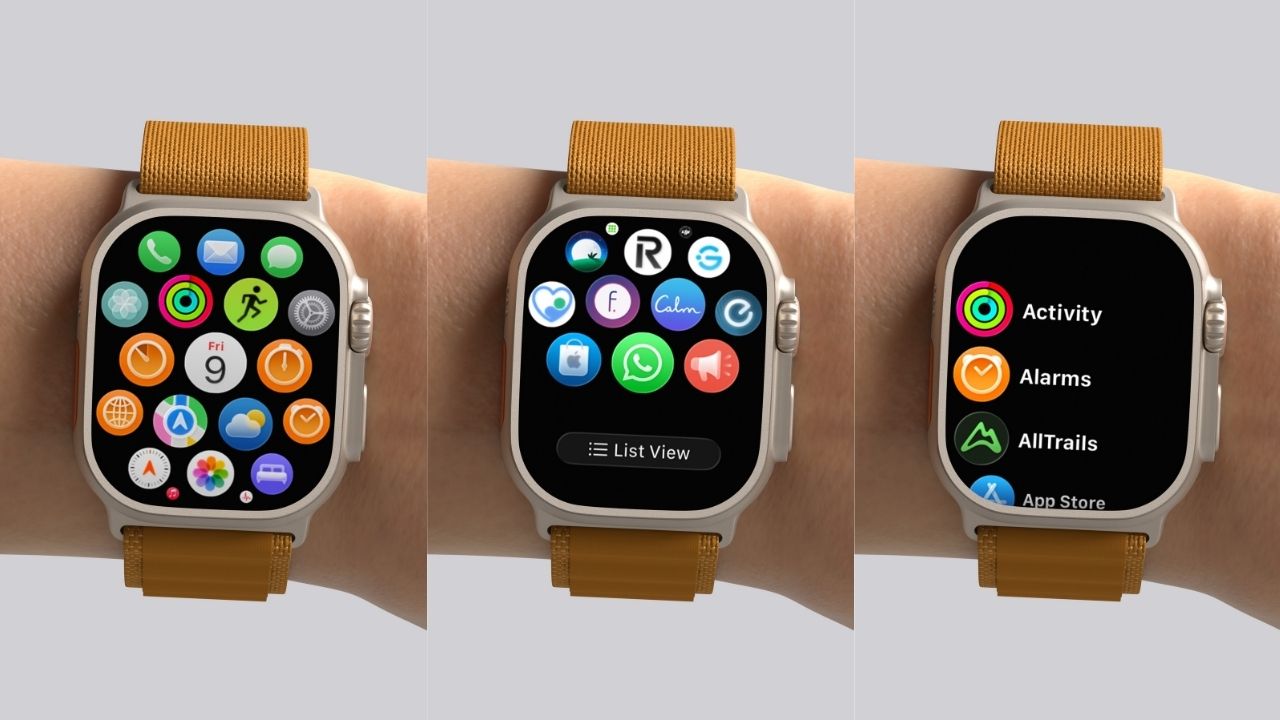
Did you know, if you don't like the grid view that comes as standard on your Apple Watch, you can simply scroll all the way down to the bottom of the grid, and choose List View. For many people, this is a much easier way of viewing the apps on your Apple Watch.
My New Content
Take AWESOME photos with these 13 iPhone Camera Tips
|
Content I've enjoyed
Best of CES 2026
|

More CES Content
|