This week, we finally know what’s powering Apple’s new AI tools, new Macs look like they could be just around the corner, and Apple may be starting to rethink its buy-outright approach.
True Apple Intelligence is finally, almost here (it's Google)
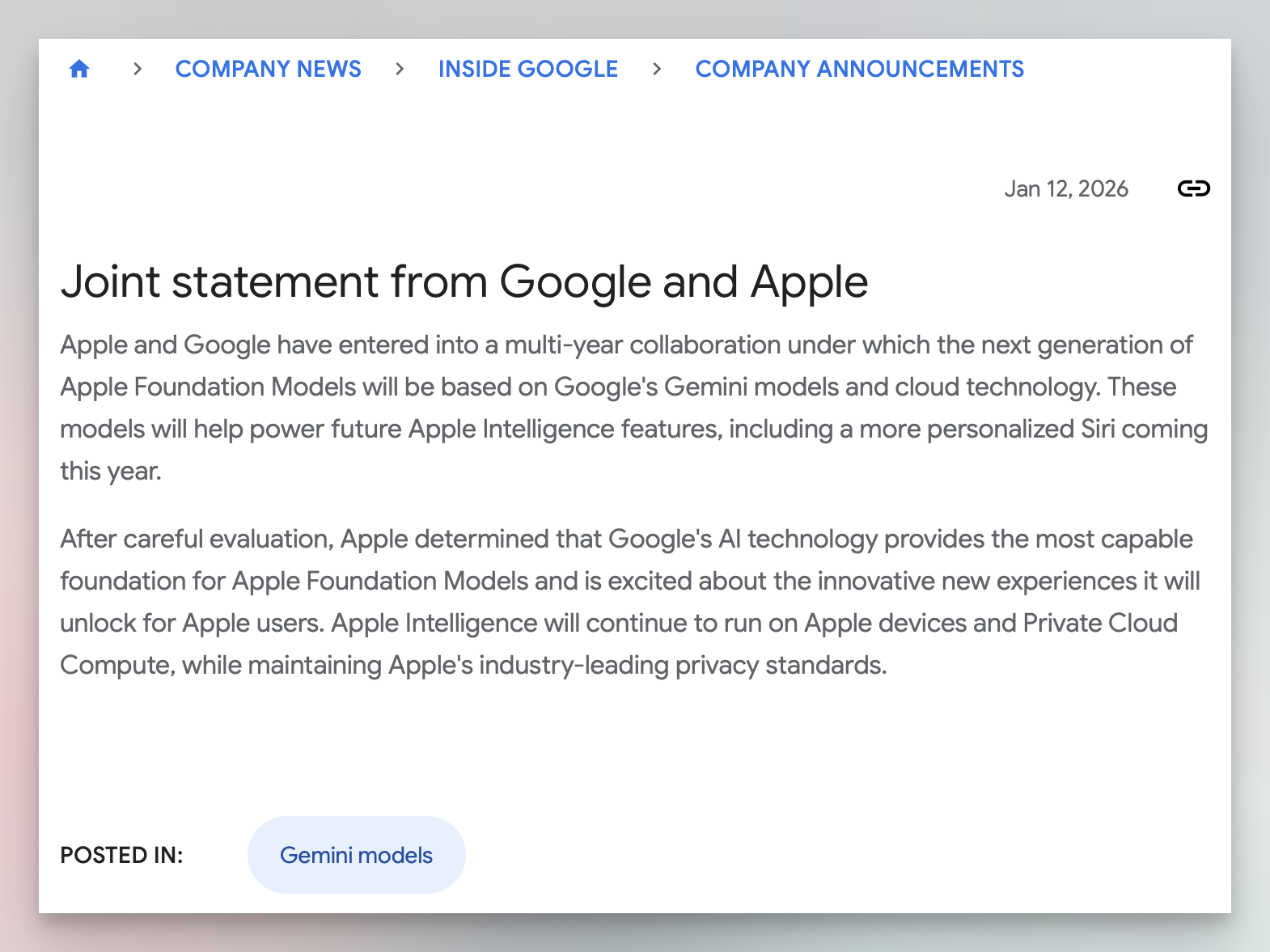
It's official. After months of rumour and speculation, Apple has confirmed a multi-year partnership with Google. The next generation of Apple's Foundation Models will be built on Google's Gemini technology. That includes the long-promised Siri overhaul. This is a significant moment, not because tech companies don't regularly partner with each other, but because of what this deal says about where Apple now sits in the AI race.
To understand why this matters, go back to June 2024. Apple took the stage at WWDC and promised a dramatically smarter Siri. Not the confused assistant we've learned to work around, but something that could understand context, work across apps, and actually do things on your behalf. The demo was compelling. A user asking Siri about their mother's flight, with Siri pulling together information from Mail, Messages, and Calendar to give a coherent answer. There was just one problem: it wasn't ready.
By early 2025, Apple quietly admitted the features would take longer than expected. The company pulled TV ads showcasing capabilities that didn't exist yet. A lawsuit emerged over false advertising. WWDC 2025 came and went with barely a mention of Siri at all. Internal reports painted a troubling picture, with engineers describing an architecture split between legacy systems and a newer AI framework that simply weren't talking to each other properly. Craig Federighi acknowledged that early versions worked in demos but fell apart under real-world testing.
So here we are, with Apple paying Google approximately $1 billion per year for access to a custom Gemini model. Bloomberg reports it's a 1.2 trillion parameter system, almost eight times larger than anything Apple has built internally. You can read this two ways. The critical interpretation: Apple tried, Apple failed, Apple gave up. The company that pioneered voice assistants is now outsourcing its AI brain to a competitor. The generous interpretation: Apple has done what it historically does well, recognising when it's behind, swallowing its pride, and partnering with whoever can help it catch up fastest. This is the company that shipped the original iPhone with Google Maps rather than wait years to build its own, and now has arguably the best Maps app in the business.
Both readings contain truth. Apple is clearly behind. Google's Gemini 3 is widely regarded as one of the most capable AI models available, and it helped push Google's market value past Apple's for the first time since 2019. If you're going to rely on someone else's AI, Google is a defensible choice. But let's not pretend this was the plan. Reports suggest Apple evaluated models from OpenAI and Anthropic before settling on Google. Apple didn't partner because it wanted to. It partnered because it needed to.
The obvious concern is what this means for privacy. Apple has spent years positioning itself as the company that doesn't harvest your data. Now it's depending on technology from the company that built its business on exactly that. Both companies have moved quickly to address this, with the joint statement emphasising that Apple Intelligence will continue running on Apple devices and through Apple's Private Cloud Compute. Google will not receive user data. The Gemini technology is being used to train Apple's own models, not embedded directly into iPhones. This is reassuring as far as it goes, but there's an uncomfortable irony in Apple, the privacy company, now depending on technology developed by Google, the data company.
The practical question is timing. Apple says the improved Siri is coming this year, with reports pointing toward March or April. That would mean features first promised in June 2024 finally arriving nearly two years later. If Apple hits that window, this partnership might look like smart pragmatism. A Siri that actually works could be genuinely transformative for how people use their iPhones. If there are further delays, the narrative becomes much harder. Apple is already facing scepticism from analysts and customers who feel they were promised something that never materialised.
As for the existing ChatGPT integration, Apple says it isn't making any changes to that agreement. But with Gemini now powering Apple's core AI infrastructure, ChatGPT increasingly looks like a stopgap rather than a strategic partner. The interesting possibility is a future where users choose which AI handles different types of requests. Reports suggest Apple is working on its own 1 trillion parameter model that could be ready next year. The goal is presumably to transition away from external dependencies entirely. That's the Apple playbook: use partners to fill gaps while you build the capability internally.
Whether it works with AI will determine how this partnership is remembered. For now, it's an admission that the company which launched Siri in 2011, years before Google Assistant or Alexa existed, now needs Google to make its voice assistant competitive again. That's a remarkable reversal, whatever spin you put on it.
Your iPhone can do more than you think
January's the month for fresh starts – and if you've been meaning to actually learn what your Apple devices can do, there's no better time.

Maybe you got a new iPhone or Mac over Christmas. Maybe you've had yours for years and still copy-paste the same way you did in 2019. Either way, I built something that can help.
iPhone Essentials Plus is a comprehensive training portal with more than 200 lessons that cover everything your iPhone can do. No fluff, no filler – just practical skills you'll actually use, with fresh content added regularly.
Every lesson gives you three ways to learn: a short video walkthrough, a step-by-step guide with screenshots, and a downloadable PDF for quick reference. Learn on your commute, at your desk, or whenever you've got five minutes.
There are no ads, no sponsors, and no subscription traps. One payment, lifetime access.
Got a Mac too? I've also created Mac Essentials Plus with the same approach. Grab it separately or bundle both courses for the best value.
Make this the year you stop Googling the same questions twice.
Purchase Links;
- iPhone Essentials Plus
- Mac Essentials Plus
- iPhone & Mac Essentials Plus Discount Bundle
- iPhone & Lifetime PDF
- Mac & Lifetime PDF
- iPhone, Mac & Lifetime PDF
New Macs coming?
If the current wave of speculation holds, Apple might be just two weeks away from refreshing its professional MacBook Pro lineup with M5 Pro and M5 Max chips. That's a surprisingly early window, and while nothing is confirmed, the timing would align with patterns we've seen from previous Apple silicon generations. It turns out that Apple has been fairly consistent with its cadence since the M1 era. The base chip arrives first, followed by the Pro and Max variants a few months later. The M5 made its debut in the latest MacBook Air and iPad Pro, so a late January or early February appearance for the higher-end chips wouldn't be unprecedented. It would, however, be faster than some expected.
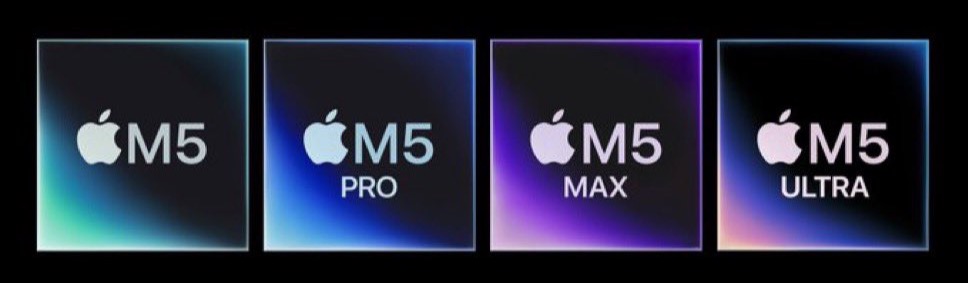
Benchmark speculation is already circulating, with some sources pointing to performance gains in the region of 15 to 20 percent over the M4 Pro and M4 Max. That sounds impressive on paper, but it's worth remembering that these figures are unverified and often represent best-case scenarios. Real-world improvements tend to be more modest once you factor in thermal constraints, power management, and the specific workloads professionals actually run. What we can say with more confidence is that Apple's chip team has consistently delivered meaningful generational improvements without dramatic power increases. If the M5 Pro and M5 Max follow that trajectory, the gains will likely show up most clearly in sustained performance, GPU throughput, and memory bandwidth rather than headline-grabbing single-core scores.
Zoom out from the Pro machines, and this year is shaping up to be unusually significant for the Mac lineup as a whole. At the entry level, rumours continue to point towards a new budget Mac running on an iPhone-class chip. This wouldn't be about raw performance. It would be about price. Apple has long struggled to compete in education markets where Chromebooks dominate, and a genuinely affordable Mac could change that dynamic. For families and first-time buyers, a lower barrier to entry might matter more than benchmark numbers.
At the other end of the spectrum, there's talk of an M5 Ultra Mac Studio arriving later this year, potentially alongside long-overdue updates to the Studio Display and Pro Display XDR. The Studio Display hasn't seen meaningful changes since its 2022 launch, and the Pro Display XDR is now approaching its sixth birthday. For professionals who have been waiting to invest in a complete Apple ecosystem, those refreshes would be welcome.
None of this is guaranteed. Apple's plans shift, timelines change, and speculation often outpaces reality. But the underlying logic holds together. Apple has momentum in the Mac space, and 2025 looks like a year where that momentum could translate into a more complete and more accessible lineup than we've seen in some time. Whether you're eyeing a MacBook Pro upgrade or simply curious about where the Mac is headed, the next few months should bring some clarity. For now, cautious optimism seems about right.
New iPhone? Here's how to keep it running like new.
There's nothing worse than unboxing a brand new iPhone, only to watch the battery drain to 20% by mid-afternoon. You start wondering what you're doing wrong, which apps are the culprits, or if you've somehow got a dud.
Here's the truth: most battery drain issues aren't about faulty hardware. They're about settings you didn't know existed, background processes you never approved, and Apple's defaults that prioritise features over longevity.
That's why I created iPhone Battery Made Easy – a no-nonsense guide that cuts through the confusion and gives you exactly what you need to maximise your battery life, starting today.

Inside, you'll discover how your iPhone battery actually works (it's not what you think), which settings are silently killing your charge, and how to identify apps secretly draining power in the background. Everything is explained in plain English with screenshots and real examples you can implement in minutes.
Whether you're setting up a new iPhone or rescuing your current one from constantly hunting for a charger, this guide will transform how long your battery lasts each day and how many years it stays healthy.
Stop accepting dead batteries by dinner time. Take control of your iPhone's battery life today.
Ownership - nice while it lasted...
It turns out that Apple's buy-once software model wasn't going to last forever. This week Apple announced Creator Studio, a new subscription bundle launching on January 28th. For $12.99 per month (or $129 per year), you get access to Final Cut Pro, Logic Pro, Pixelmator Pro, Motion, Compressor, and MainStage, along with premium features in Keynote, Pages, and Numbers. There's also a student and educator tier at $2.99 per month.
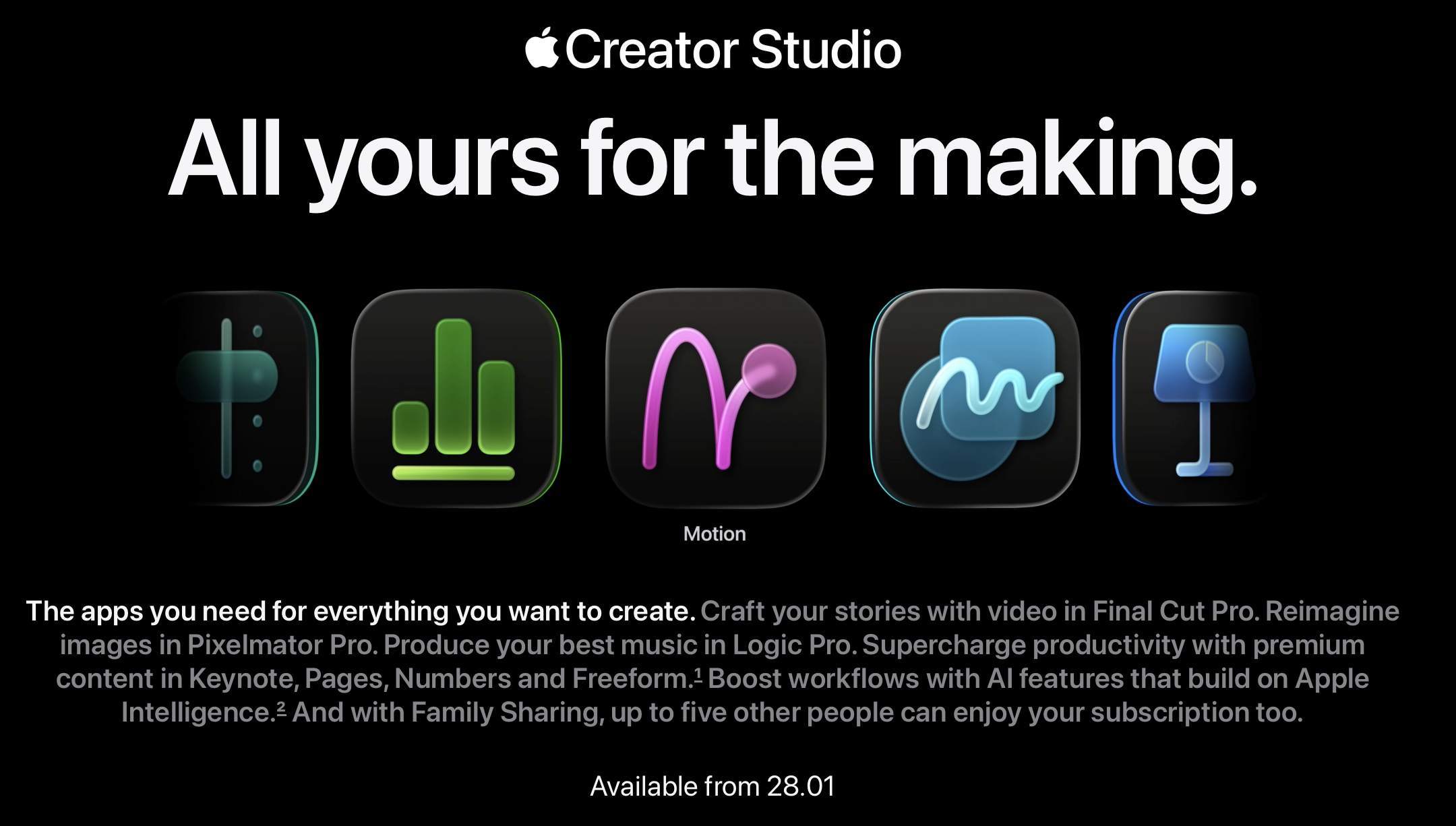
On the surface, the value proposition is reasonable. Buying these apps individually would cost around $700, and compared to Adobe's Creative Cloud at $70 per month, Apple's pricing looks almost restrained. Family Sharing support for up to six people sweetens the deal further.
But here's the catch. While Apple says existing purchasers will keep their apps and continue receiving updates, certain new features and premium content will be exclusive to subscribers going forward. Pixelmator Pro's new Warp tool, premium templates, and various AI-powered additions will all sit behind the subscription paywall.
I've always appreciated that when you buy Apple software, you actually own it. Final Cut Pro has been one of the best software investments I've ever made. I paid for it once, and it has more than paid for itself many times over through the work I've produced with it. No monthly fee quietly draining away in the background.
That model has been a major selling point for years, particularly for anyone who felt burned by Adobe's shift to mandatory subscriptions. Apple was the alternative. And while that alternative technically still exists, the writing is on the wall.
I've wondered for some time how long it would be before Apple moved in this direction. The rest of the industry normalised subscriptions years ago, and Apple's services revenue continues to be a key growth area. This was probably inevitable.
For new users, Creator Studio offers a lower barrier to entry than buying everything outright. For those of us who valued the simplicity of ownership, it feels like something is being lost. Not dramatically, not all at once, but gradually. Apple hasn't killed the one-time purchase. They've just made sure the best version of their software now requires a monthly commitment.
Tip of the week
Did you know, you can change the default search engine used on your iPhone? To do this, go to Settings, then Search, then Search Engine, and choose from the available options.

My new content
10 things you need to STOP doing on your iPhone!
|