This week, MORE Apple departures (and why that might not be a bad thing), and a strange missing feature of the iPhone 17 Pro.
Brain Drain, or Net Gain?
It's been a bruising week for the org chart at Apple Park.
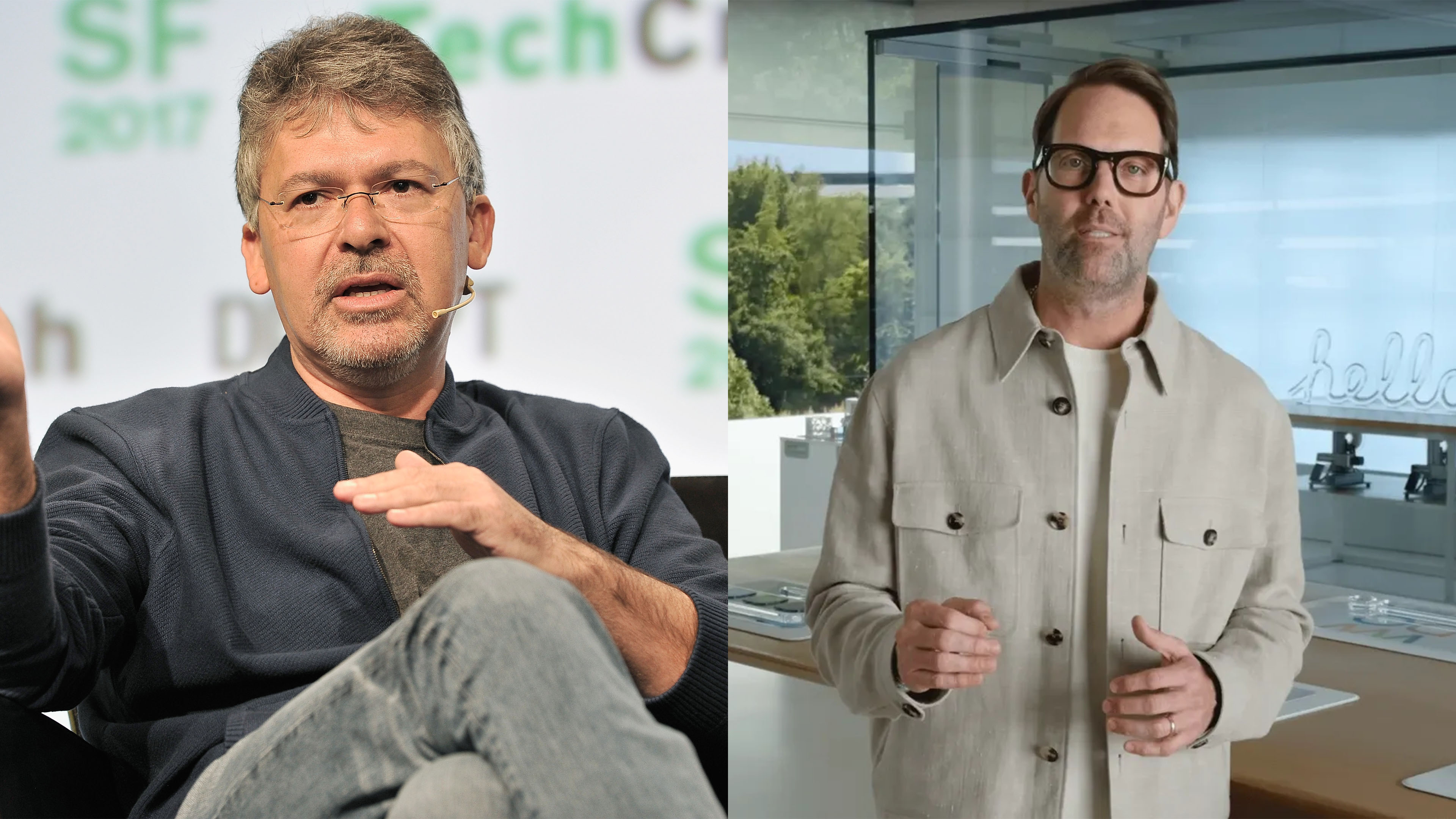
If you've been following the headlines, you'll know that John Giannandrea, Senior VP of Machine Learning and AI Strategy, and Alan Dye, VP of Human Interface Design, have both announced their departures.
On the surface, this looks like a crisis. In just the last few months, Apple has hemorrhaged talent to its biggest rivals. We're talking about a significant number of key AI researchers walking out the door since January, including former Foundation Models head Ruoming Pang, poached by the likes of Meta, OpenAI, and Anthropic. The numbers are eye-watering, with some compensation packages reportedly reaching $200 million. When you see staff leaving in this volume, it's easy to read this as a vote of no confidence in Apple's future, especially when Apple undoubtedly has the cash needed to lure those same folks back.
But I think there's more to it than that.
While the "mass exodus" narrative makes for dramatic reading, I actually think this might be exactly what Apple needed. Now, we need to be fair to both men here, they aren't just the villains of this week's news cycle. They have serious legacies, but as recent analysis has pointed out, their departures felt almost inevitable.
We shouldn't forget that when John Giannandrea was poached from Google seven years ago, it was considered a massive coup. He was the guy who was supposed to fix Siri, and in many ways, he built the privacy-first foundation that Apple stands on today. The reason your iPhone processes so much on-device rather than sending everything to the cloud? That's his "North Star" strategy. He correctly identified that privacy would be Apple's biggest differentiator.
But that same strategy eventually became a trap. While noble, his dogmatic focus on on-device processing made it nearly impossible for his team to keep up with the power-hungry "frontier models" from OpenAI and Google. The result is the deadlock we're in now: a delayed "new Siri" and an Apple Intelligence rollout that feels perpetually stuck in beta.
His replacement, Amar Subramanya, is a different breed. Coming from Google and Microsoft, he's a product guy, not just a researcher. He understands that to catch up, Apple might need to loosen the reins and embrace a hybrid approach. Apple has long needed someone brave enough to take this approach, and it promises truly exciting results, if he's successful.
Then we have Alan Dye. It’s easy to look at the blurry, illegible mess of the Liquid Glass UI in iOS 26 and say "good riddance", but that ignores the fact that Dye has quietly defined how we use our devices for the last decade.
Remember the iPhone X, and how much of a departure that was from every model that came before it? Removing the Home button was a terrifying gamble. It was Dye’s team that designed the fluid swipe gestures that replaced it, gestures so natural that we’ve completely forgotten how button-reliant we used to be. He was also instrumental in the Apple Watch UI, figuring out how to make a tiny screen usable when everyone said it was impossible. In doing so, he helped create the most successful Smart Watch of all time.
However, his tendency to prioritise "pretty" over "useful" has become a real issue lately. The Dynamic Island is a classic example: a beautiful piece of whimsy that blurs the line between hardware and software, yet three years later, it still serves very little actual function. And while Jony Ive was the public face of the MacBook Touch Bar, it was Dye’s team that built the software interface for it, yet another example of a feature that looked futuristic in a keynote but frustrated pro users in the real world.
Despite the narrative that the sky is falling, Wall Street doesn't seem to care. Apple stock hit a new all-time high this past week after surging 39% since August. Why? Because the market knows that sometimes, change is the only way forward. And there's a genuine belief on Wall Street that, in a world where AI models are becoming internchangable, Apple still has the ability to win the AI race.
Giannandrea and Dye were titans who helped build the modern Apple, but you could argue they were also the architects of its current stagnation. Their departures aren't a sign of collapse - they're a sign that Apple is finally ready to turn the page.
What do you think? Are you sad to see the old guard go, or are you ready for someone to finally fix Siri? Reply and let me know.
Enjoy tips videos, but struggle to remember everything?
Then you should definitely take a look at iPhone Essentials Plus. It’s my dedicated iPhone training portal with more than 150 lessons covering every aspect of your device, and I’m adding new content all the time.

Each lesson includes a short video, a step-by-step guide with screenshots, and a downloadable PDF, so no matter how you like to learn, you’re sorted. There are no ads, no sponsors, just straight-up content, and it’s all available for a one-time payment, no subscription.
And if you’re a Mac user, I’ve recently launched a Mac version too. You can pick that up on its own or bundle it with the iPhone course to get the best value. If you’re interested, click the links below to get started.
Purchase Links;
- iPhone Essentials Plus
- Mac Essentials Plus
- iPhone & Mac Essentials Plus Discount Bundle
- iPhone & Lifetime PDF
- Mac & Lifetime PDF
- iPhone, Mac & Lifetime PDF
The iPhone 17 Pro is WORSE than it's predecessor in one key area
If you’ve recently upgraded to the iPhone 17 Pro, you might have noticed something strange when shooting in low light. Or rather, you might have noticed something missing.
It turns out that Apple has quietly removed Night Mode from Portrait shots on the iPhone 17 Pro and 17 Pro Max.
This isn't a bug. It isn't a setting you've accidentally toggled off. It appears to be a deliberate removal of a feature that has been a staple of the "Pro" lineup since the iPhone 12.
The discovery was first made by confused users on Reddit and Apple’s support forums who found that the familiar yellow "Night Mode" icon simply vanished the moment they switched to Portrait mode.
When they dug into Apple’s own support documentation, the suspicion was confirmed. The updated pages list Night Mode Portraits as being available on the iPhone 12 Pro through to the iPhone 16 Pro. The iPhone 17 Pro is conspicuously absent from that list.
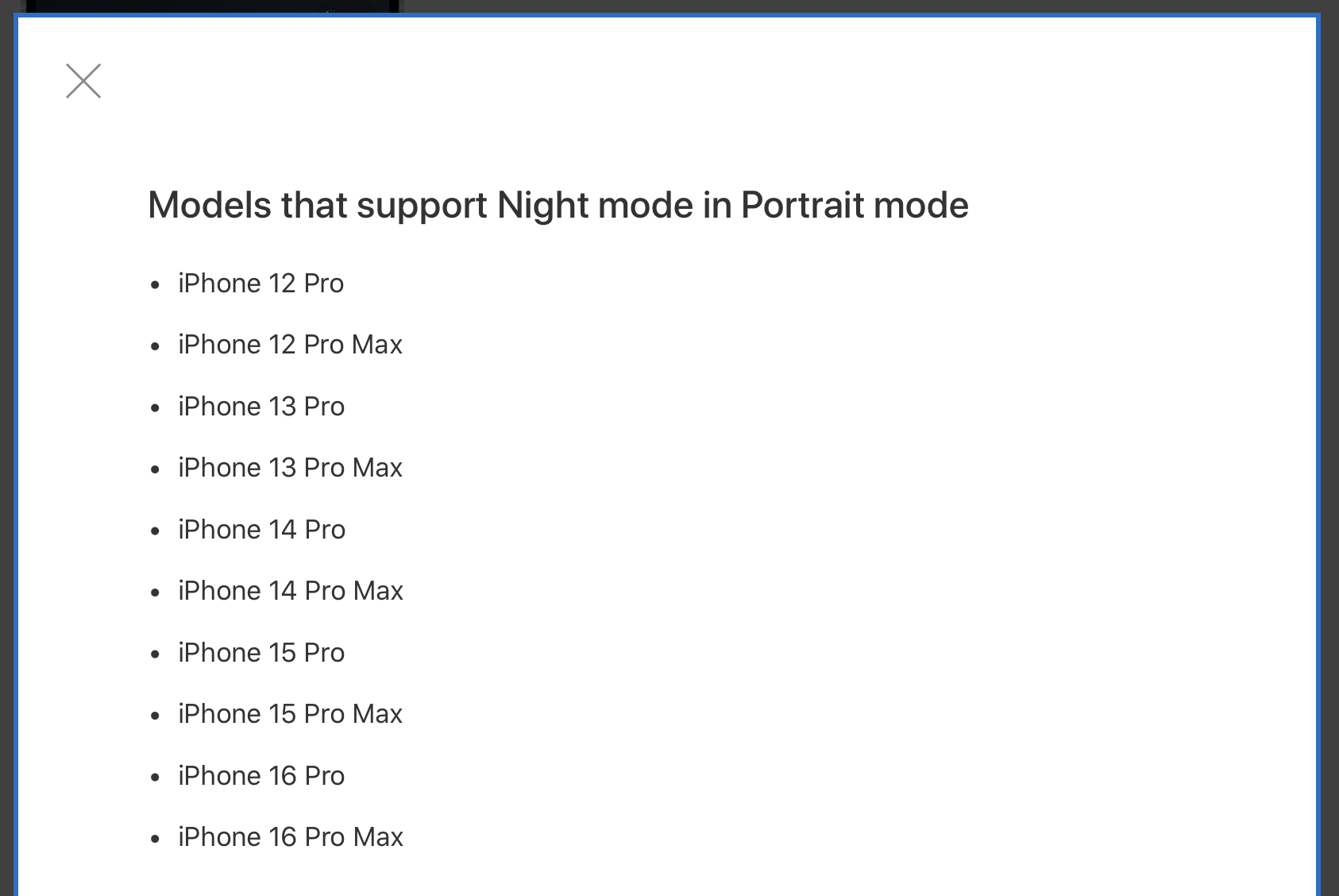
On paper, this makes zero sense. The iPhone 17 Pro still has the LiDAR scanner required for low-light depth mapping, and the new 48MP sensors should theoretically make it better at this, not worse.
So, why kill it?
There are two working theories. The first is quality control. Some analysts suspect that the new 24MP processing pipeline produces cleaner, sharper images on its own, whereas the old Night Mode Portraits (which often relied on heavy computational merging) looked too soft or "processed" by comparison. Apple might be betting that a darker, sharper photo is better than a brighter, muddier one.
The second theory is speed. Night Mode Portraits were slow. They required you to hold still for 1-3 seconds. By removing the option, Apple streamlines the experience, preventing users from getting annoyed by shutter lag.
Whatever the reason, it's a baffling regression, made more disappointing by Apple's refusal to discuss or acknowledge it. We're used to "Pro" meaning more options, not fewer. To have a five-year-old feature stripped away without explanation feels less like "courage" and more like a mistake.
For now, if you want that creamy bokeh effect in a dimly lit bar, you’re out of luck. You’ll have to stick to standard Photo mode and lose the blur, or use the flash - and nobody wants to be that person.
Picked up a new iPhone recently?
If you’ve picked up a new iPhone recently, or you’re planning to get one over the holidays, now is the best time to get into good habits with your battery. A lot of people notice that even a brand new iPhone can drain faster than expected, and it's not always obvious what is causing it or which settings actually make a difference.
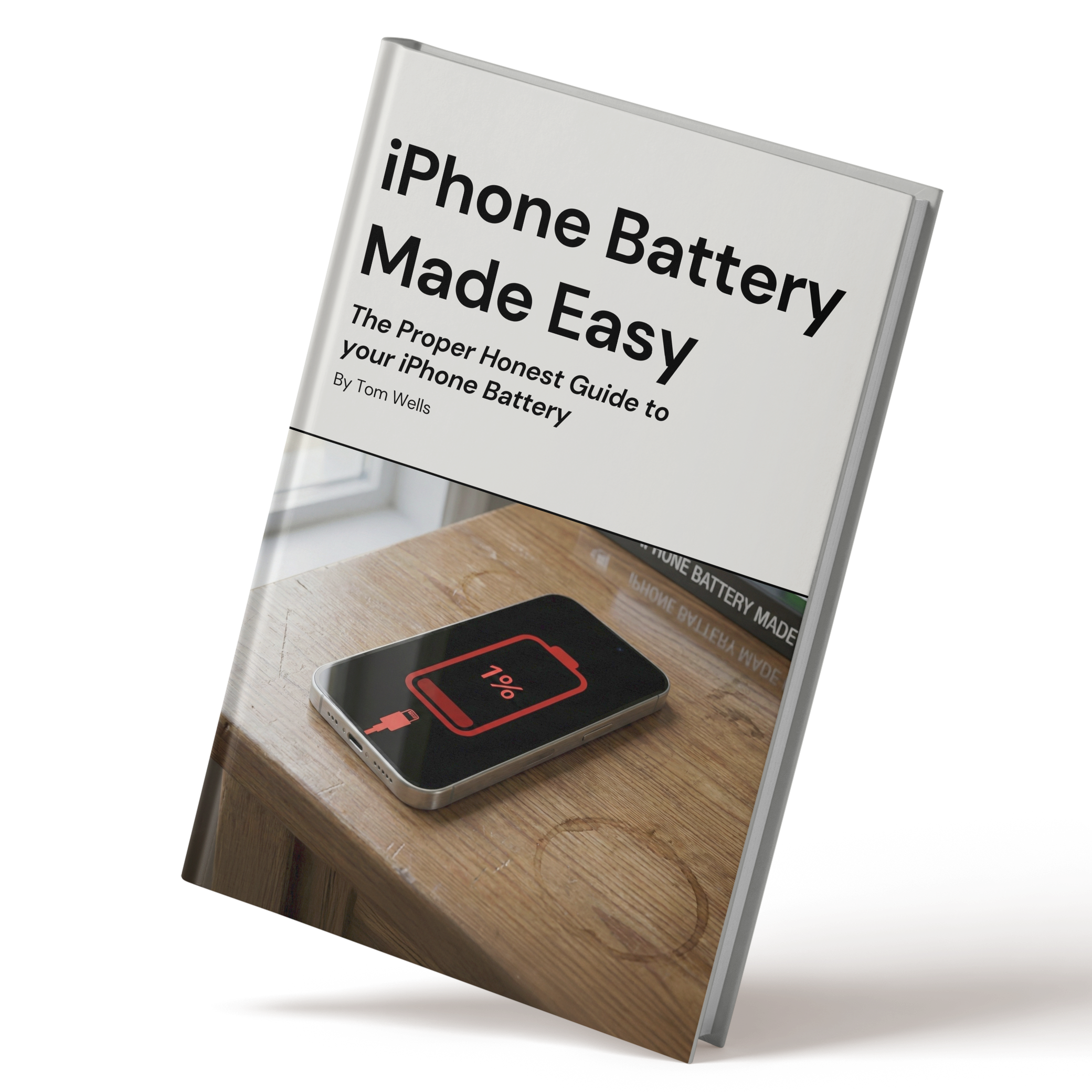
I’ve put together a new ebook called iPhone Battery Made Easy, which explains how your battery really works and the steps that genuinely help. It shows you how to slow down Battery Health loss, how to reduce hidden drain from apps and which settings to change if you want your phone to last longer during the day. Everything is explained clearly, with screenshots and examples you can follow in a couple of minutes.
If you want to look after your new iPhone properly, or keep your current one running better for longer, you can take a look at the guide here.
Tip of the week
Did you know that your iPhone can tell if your camera lenses are smudged? It'll even notify you to clean them! To turn this on, just go to Settings, then Camera, scroll down, and make sure "Lens Cleaning Hints" is enabled.

My new content
10 AMAZING things your iPhone can do RIGHT NOW!
|