This week, in the final newsletter of 2025, I look back at Apple's 2025, and look ahead to what Apple might have planned in 2026.
2025 - Apple's year of Big Promises, and Bigger Questions
If you believed the hype, 2025 was Apple's AI breakthrough year. In reality, it was more of a "we're working on it" year. Sure, there were highlights worth celebrating, but this was also when Apple's vulnerabilities became impossible to ignore.
Let's start with the good stuff, because there was plenty of it.
The Hardware Was Brilliant (Mostly)
In my opinion, and following years of pretty boring iPhone releases, Apple absolutely nailed it with the iPhone 17 lineup. The iPhone 17 Pro and Pro Max ditched the previous design for something far more utilitarian, with a chunky, full-width camera plateau and vapour chamber cooling. It's bold, it's functional, and it comes in orange. For people who make content with their phones, this is a proper tool, not just a pretty device.

Then there's the iPhone Air, which sits between the standard iPhone 17 and the Pro models. It's radically thin with a polished titanium frame, using Apple's custom C1X and N1 connectivity chips. Yes, it only has one rear camera and a single speaker, but the engineering that went into making something this slim is genuinely impressive. It feels like Apple is willing to offer proper choices again, rather than just nudging everyone towards the Pro. It was the first of the iPhone 17 range that I used as my daily driver, before switching to the Pro, before switching back to the Air this past week. It's my favourite iPhone ever made, despite it's flaws.
In February, we got the iPhone 16e, replacing the iPhone SE at £599. It packs the A18 chip, a 48-megapixel camera, and Apple's custom C1 5G modem, ditching Qualcomm for the first time. It's a solid upgrade from the SE, even if it feels like Apple is still figuring out what the "affordable iPhone" should be in 2025, with many commenters (myself included) saying that most folks should save a bit longer and go for an older Pro model instead.
The Mac lineup got some love too. The Mac Studio received M4 Max and M3 Ultra options in March, and while questions remain about Apple's silicon strategy (why is there an M3 Ultra launching alongside M4 models?), there's no denying the Studio is a beast. The MacBook Air got the M4 chip, and the M5 chip arrived in October for the MacBook Pro, iPad Pro, and Vision Pro. The M5 brings a faster Neural Engine and up to 153GB/s unified memory bandwidth, making it fully optimised for AI workloads.
Apple Watch got some much-needed updates. The Apple Watch SE now has an always-on display, the Series 11 got stronger front glass and a bigger battery, and the Ultra 3 finally gained satellite connectivity. The AirPods Pro 3 arrived with improved active noise cancellation, foam-enhanced ear tips, and heart-rate sensing.
Love Apple tips, but struggle to remember them all?
Then you should definitely take a look at iPhone Essentials Plus. It’s my dedicated iPhone training portal with more than 200 lessons covering every aspect of your device, and I’m adding new content all the time.

Each lesson includes a short video, a step-by-step guide with screenshots, and a downloadable PDF, so no matter how you like to learn, you’re sorted. There are no ads, no sponsors, just straight-up content, and it’s all available for a one-time payment, no subscription.
And if you’re a Mac user, I’ve recently launched a Mac version too. You can pick that up on its own or bundle it with the iPhone course to get the best value. If you’re interested, click the links below to get started.
Purchase Links;
- iPhone Essentials Plus
- Mac Essentials Plus
- iPhone & Mac Essentials Plus Discount Bundle
- iPhone & Lifetime PDF
- Mac & Lifetime PDF
- iPhone, Mac & Lifetime PDF
Liquid Glass: Beautiful, Controversial, Exhausting
At WWDC in June, Apple unveiled Liquid Glass, its most significant visual overhaul since iOS 7 in 2013. It's a translucent design language that reflects and refracts its surroundings, making UI elements look like they're crafted from actual glass. Controls dynamically transform, tab bars shrink when you scroll, and the whole thing is meant to bring "greater focus to content."
Liquid Glass extends across iOS 26, iPadOS 26, macOS Tahoe 26, watchOS 26, and tvOS 26, creating a unified look across all of Apple's platforms for the first time. App icons are redesigned with a layered system that applies translucency and a glass-like shimmer effect, reacting to device movement.
The problem? Legibility. Early betas were genuinely frustrating to use, with navigation bars and interface elements being so transparent that text became hard to read. Apple adjusted the transparency in subsequent betas, and by October, they added a toggle in iOS 26.1 to let users choose between "tinted" and "clear" Liquid Glass, giving back some control.
I actually quite like Liquid Glass, but the discourse around it has been exhausting. Every iOS update brings screenshots and hot takes, and Apple tweaking the design with each point release only adds fuel to the fire. It's beautiful when it works, but it feels like Apple shipped something that wasn't quite ready.
Apple Intelligence: The Promise That Wasn't
This is where things get messy. At WWDC 2024, Apple announced Apple Intelligence with a level of ambition that felt uncharacteristic. They promised features like a next-generation Siri with onscreen awareness, personal context, and the ability to take actions across apps. They promised Live Translation, visual intelligence, Writing Tools, Genmoji, Image Playground, and a whole suite of AI-powered features.
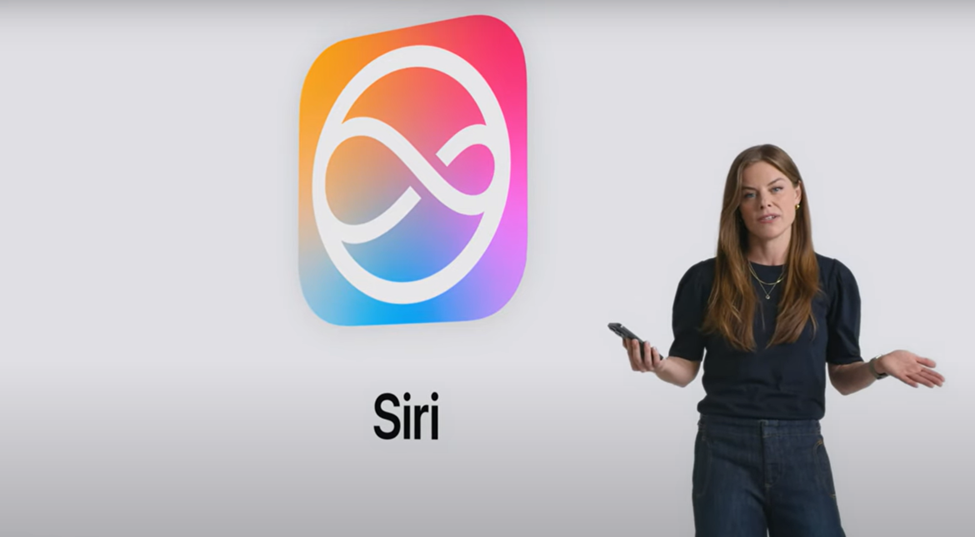
The further we get from that announcement, the more bonkers it seems. Most of those features weren't ready. Some still aren't.
What did ship in 2025 was underwhelming. Writing Tools can proofread, rewrite, and summarise text to a fairly basic level. Image Playground generates images of poor quality, and Genmoji creates custom emoji. Live Translation works across Messages, FaceTime, and Phone, and it's probably useful if you're travelling or communicating across languages. The Foundation Models framework lets developers tap into Apple's on-device AI, and apps like SmartGym and CARROT Weather have done some clever things with it.
But here's the thing: Siri is still truly awful. The promised next-generation version that can understand personal context, see what's on your screen, and take actions in apps? It's not here. It was supposed to arrive in spring 2025, but Apple pushed it back in March, with reports suggesting the company doesn't yet have its own technology to power it, and is now expected to partner with a company like Google or Anthorpic. That's embarrassing.
Apple clearly felt pressure to jump into AI, but they weren't ready. The result is a year of features that feel half-baked, and a growing sense that Apple is playing catch-up rather than leading.
The Executive Exodus
2025 was also the year Apple's leadership started changing in ways we haven't seen before. Sabih Khan became COO after Jeff Williams retired. John Giannandrea, who oversaw AI and machine learning, is retiring, with his role carved up between multiple executives. Lisa Jackson and Katherine Adams are leaving early next year, and Alan Dye, the design lead behind Liquid Glass, left for Meta.
Dye's departure didn't even get a press release, which tells you something about how Apple felt about it. Staff who worked for him are reportedly 'giddy' about his departure and subsequent replacement. And in the background, there's a clock ticking: Rumours are suggesting that Tim Cook might hand over the reins in 2026, likely to John Ternus, Apple's SVP of Hardware Engineering. My gut tells me that this won't happen, but it's a rumour that simply won't disappear.
This level of turnover at the top is unprecedented for Apple, and it's happening at a time when the company is under pressure from all sides.
The Low Points
It wasn't all bad, but there were some genuinely frustrating moments. macOS Tahoe launched with bugs that made early versions (26.0 and 26.1) genuinely annoying to use. There was a file-saving lag of three to seven seconds every time you tried to save a document, which was fixed in 26.2, but it shouldn't have shipped in that state.
Apple's legal battles continued. The company is under investigation in the EU for App Store practices, with regulators claiming the 30% commission and forced payment system are anti-competitive. In France, they're being investigated for data protection violations. In Germany, it's location tracking. Here in the UK, it's a class-action lawsuit over alleged iPhone throttling. The list goes on.
And then there's China. iPhone sales in China declined 11% year-over-year, a worrying trend for a company that relies heavily on that market. Apple Intelligence still isn't available in mainland China, and reports suggest the company is working with Alibaba to integrate Qwen language models, but regulatory delays keep pushing it back.
What Went Right
Despite the challenges, Apple's fundamentals remain strong. The iPhone is still the dominant smartphone in most Western markets, and Apple's ecosystem continues to be its greatest asset. The company is carbon neutral for the Apple Watch (though that's being challenged in court), and it's making genuine progress on renewable energy and recycled materials.
The M5 chip is a real step forward, and the Mac lineup has never been more compelling. The Vision Pro got the M5 upgrade in October, and while the headset still feels like a product searching for a purpose, the hardware is undeniably impressive.
And Apple Intelligence, for all its delays and underwhelming features, is built on a foundation of on-device processing and privacy that no other company can match. If Apple can actually deliver on the promises it made, it could be transformative. The question is whether they'll get there before everyone else moves on.
The Verdict
2025 was a year of contradictions for Apple. The hardware was excellent, the software was beautiful but deeply flawed, and the AI promises were ambitious and undelivered. It was a year that felt like Apple was trying to do too much at once, and not really succeeding at any of it.
The leadership changes add another layer of uncertainty. Tim Cook has been a steady hand for over a decade, but if he were to step down in 2026, it's going to be a defining moment for the company. John Ternus is a smart choice, but he'd be inheriting a company under pressure from regulators, facing stiff competition in AI, and dealing with a China problem that isn't going away.
Apple's 2025 wasn't a disaster, but it wasn't the triumphant AI year the company promised. It was messy, it was uneven, and it left a lot of questions unanswered. The good news is that, in theory, Apple still has the talent, the resources, and the ecosystem to turn things around. The question is whether 2026 will be the year they actually do it.
Picked up a new iPhone recently?
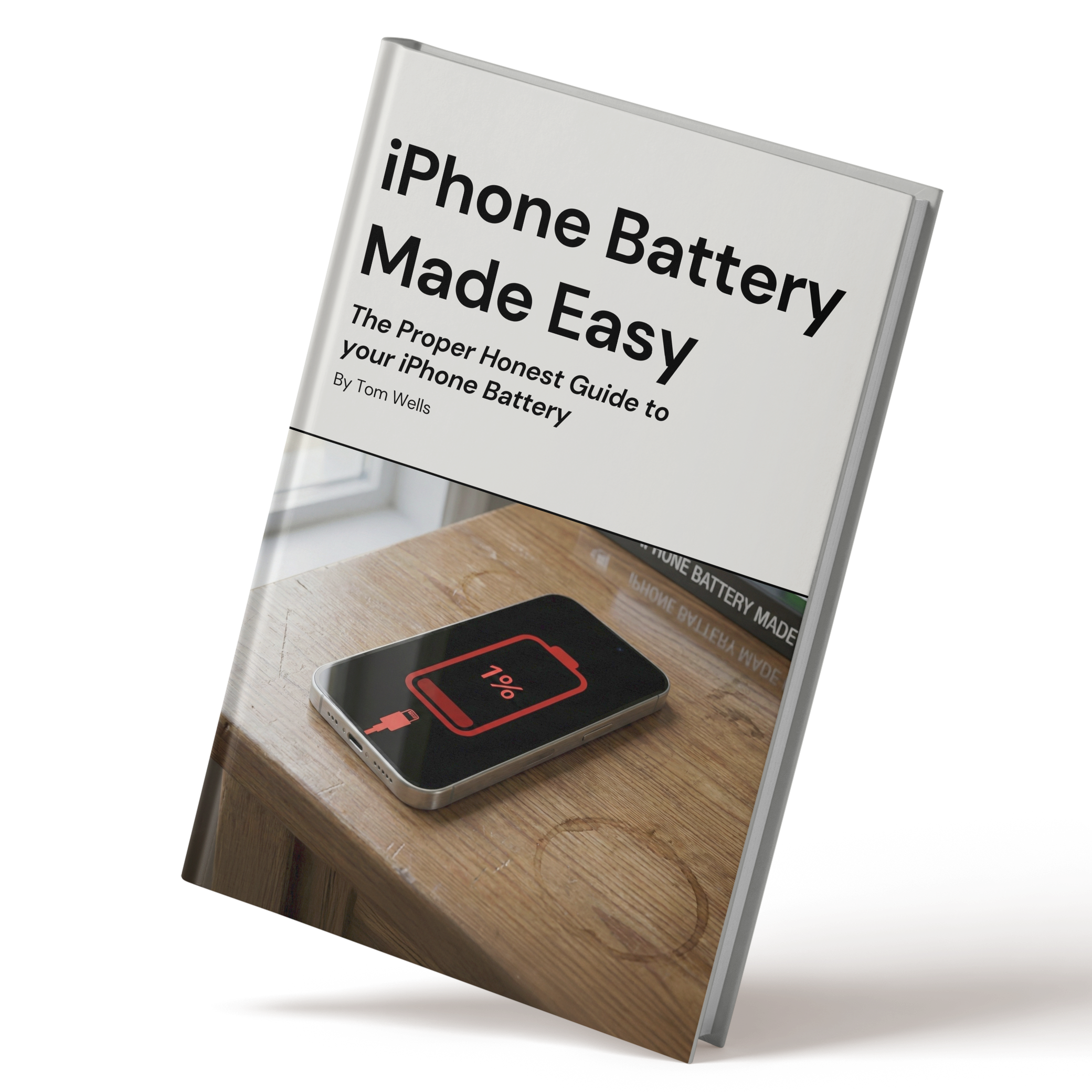
If you’ve picked up a new iPhone recently, or you’re planning to get one over the holidays, now is the best time to get into good habits with your battery. A lot of people notice that even a brand new iPhone can drain faster than expected, and it's not always obvious what is causing it or which settings actually make a difference.
I’ve put together a new ebook called iPhone Battery Made Easy, which explains how your battery really works and the steps that genuinely help. It shows you how to slow down Battery Health loss, how to reduce hidden drain from apps and which settings to change if you want your phone to last longer during the day. Everything is explained clearly, with screenshots and examples you can follow in a couple of minutes.
If you want to look after your new iPhone properly, or keep your current one running better for longer, you can take a look at the guide here.
What to expect from Apple in 2026
If 2025 was the year Apple stumbled, 2026 needs to be the year it delivers. The roadmap is ambitious, arguably the most packed product lineup Apple has had in years, but the question is whether the company can actually pull it off. Because if there's one thing 2025 taught us, it's that promises and delivery are two very different things.
Let's start with the big one.
Siri: Finally, Hopefully, Actually Good
Apple is targeting spring 2026 (likely March or April with iOS 26.4) for the next-generation Siri that was promised back at WWDC 2024. This is the version that's supposed to have personal context, onscreen awareness, and the ability to take actions across apps. It's the Siri that can look at your emails, texts, and calendar to answer questions like "When is my mum's flight landing?" and then suggest lunch options based on her dietary preferences.
It's also the Siri that Apple heavily advertised when selling the iPhone 16, which led to at least one class-action lawsuit when it didn't ship. So the pressure is on.
Apple switched to a new architecture called Siri LLM after realising the original approach wasn't working. The previous system tried to combine old and new functionality, which caused bugs and quality issues. The new architecture is supposedly more robust, but Apple has been wrong about this before. Craig Federighi admitted in June that the V1 architecture "wasn't getting us to the quality level that we knew our customers needed," which is corporate speak for "it was rubbish." It's also been widely reported that, however Apple try to package it, they're most likely dependent on a third-party provider, at least for the time being. Google and Anthropic are the names being thrown about.
If Apple nails this, it's transformative. If they don't, it's going to be another year of "Siri is still rubbish" articles, and by that point, people will have moved on to ChatGPT or Gemini, if they haven't already.
The Smart Home Push
Also allegedly arriving in spring 2026 is Apple's long-awaited smart home hub, codenamed HomePad. It's believed to be an iPad-like device with a square aspect ratio, powered by the A18 chip, with a 1080p camera that supports Center Stage, Face ID for multi-user switching, and full Apple Intelligence support.
There are reportedly two versions: one that's wall-mounted and another with a HomePod-like speaker base. This could finally be Apple's answer to the Amazon Echo Show, but it's heavily dependent on the new Siri actually working. If Siri can't control your smart home reliably or answer contextual questions, the HomePad is just an expensive photo frame, and Apple will almost certainly only get one shot at this.
Apple is also launching a HomePod mini 2 and potentially a smart home camera. The camera rumours are vague, but if Apple is serious about the smart home, it needs security cameras that integrate properly with HomeKit. The current third-party options are fine, but they're not Apple-quality, and Apple has really neglected it's support for third party devices these past few years.
The Foldable iPhone
This is the one everyone is watching. Apple is reportedly launching its first foldable iPhone in September 2026, and the leaks suggest it will open book-style with a 7.7-inch display when unfolded and a 5.3-inch display when closed.
The problem? Apple is reportedly seeing a high failure rate in current display production, which means this could easily slip to 2027. Foldable displays are notoriously difficult to manufacture at scale, and if Apple can't get the quality right, they'll delay it. They have to. Launching a foldable phone that breaks after six months would be a disaster. Apple is also insistent on fixing the 'crease' issue which has been a problem for pretty much every other foldable on the market. A bit like the new Siri, if Apple nails this, they could put a serious dent in the market.
If it does launch, expect it to be absurdly expensive. Samsung's Galaxy Z Fold is around £1,799, and Apple's version will almost certainly be more. But for people who want an iPad-sized screen that fits in their pocket, it's going to be compelling.
One last thing to consider here. The iPhone Air was believed by many to be a precursor to the Fold, allowing Apple to test some of the new technology, and see if people are willing to pay a premium price for a 'non-Pro' iPhone. Sales numbers for the Air have been dreadful, even worse than Apple anticipated.
iPhone 18 Pro: Under-Display Face ID
The iPhone 18 Pro and Pro Max, also expected in September, are rumoured to finally achieve under-display Face ID, eliminating the Dynamic Island. Rumours are suggesting that the front-facing camera will move to a top-left pinhole, (I don't believe this for a second) and Apple is reportedly testing "spliced micro-transparent glass" technology to make it work.
This would be a massive step towards the all-screen iPhone that Apple has been working towards since the iPhone X. It would also free up space for more battery or other components, which is always welcome.
The iPhone 18 Pro models will also reportedly ditch Qualcomm modems for Apple's own C1 chip, marking full independence from Qualcomm. That's been a long time coming and should be a win for performance and battery life.
The Mac Lineup: OLED and Touchscreens
2026 is shaping up to be a huge year for the Mac. In the first half of the year, expect the MacBook Air with M5, the MacBook Pro with M5 Pro and M5 Max, and possibly a new Mac Studio with M5 Max and M5 Ultra.
But the real story is the redesigned MacBook Pro expected in late 2026 or early 2027. It's rumoured to have OLED displays, a thinner chassis, no notch, and—here's the controversial bit—a touchscreen.
Apple has resisted touchscreen Macs for years, with Steve Jobs famously saying that computer touchscreens are ergonomically terrible. But with the success of the iPad and the popularity of touchscreen Windows laptops, it seems Apple is finally reconsidering. If they do it, it will be interesting to see how they implement it without compromising macOS's usability.
There's also a rumoured affordable MacBook powered by the A18 Pro chip instead of an M-series chip, with a display smaller than 13.6 inches. If Apple can make a proper laptop at £799 or less, it would open up the Mac to a whole new audience, specifically the education market.
iPads: Incremental Updates
The iPad lineup is expected to receive modest updates in 2026. The iPad Air is expected to get the M4 chip, and the base iPad will reportedly get the A18 chip, bringing Apple Intelligence support to the cheapest iPad for the first time.
The iPad mini 8 is still rumoured for late 2026 with the A20 Pro chip and an OLED display, but we've covered that already. The iPad Pro isn't expected to get an update until 2027, which makes sense given it just got the M5 chip in October.
Vision Air and Smart Glasses
Apple was reportedly working on a lighter, cheaper Vision Pro called Vision Air, but recent reports suggest the company has scrapped work on future Vision products to focus on AI-powered smart glasses. If that's true, we might see a preview of Apple's smart glasses by the end of 2026, though a full launch is likely 2027 or later.
The smart glasses would compete with Meta's Ray-Ban glasses, but Apple's version would presumably have more advanced AR capabilities. It's the long-term vision that Apple has been working towards for years, and if they can pull it off, it could be as transformative as the iPhone. But that's a big if.
The Bottom Line
2026 is either going to be Apple's comeback year or the year that they lose even more ground to their competition. The roadmap is packed, the ambition is high, and the pressure is immense. If the new Siri actually works, if the foldable iPhone doesn't break, if the smart home products are more than just expensive gadgets, then Apple could regain the momentum it lost in 2025.
But if 2026 turns into another year of delays, half-baked features, and unfulfilled promises, the narrative is going to shift from "Apple is playing catch-up" to "Apple is no longer leading." And with Tim Cook potentially stepping down in 2026 to make way for John Ternus, the stakes couldn't be higher.
Here's hoping they actually deliver this time.
That's all from me in 2025
There's no tip of the week, or new content mentions this week, as I'm taking some time off to spend with my family. Whatever you're doing, have a very Happy Holiday season, and I'll see you in 2026!